
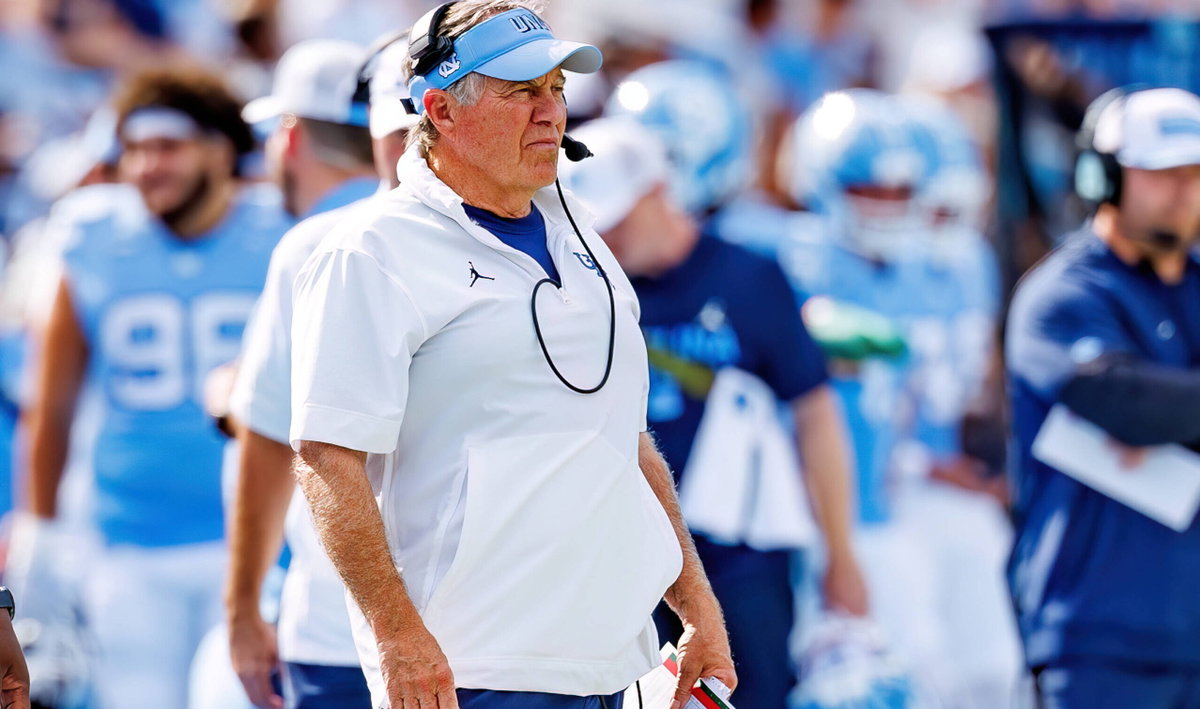
Bill Belichick spent nearly five decades in the NFL. He won eight Super Bowls (six as a head coach) and built his reputation on control, preparation, and attention to detail. Then, at 72, he moved to college football. His first season at North Carolina ended 4-8. Still, Belichick prefers coaching in college.
Watch What’s Trending Now!
“I like coaching in college. I mean, really,” Belichick said at the ACC Kickoff Breakout Session on July 17. “I didn’t know whether I would or wouldn’t, but I do. It’s been great. I enjoy the players. The interaction, the time we get to spend with the players, and the time we get to train the players from January all the way through to August. Certainly, there are breaks in between there, for academics and finals and things like that.”
“But that’s a way bigger window than you have in the NFL. When you have a nine-week offseason training program, and that’s it. So, it gives you more of an impact on the players. You get to know them better, and I love coaching. I love helping them, and I love the opportunity to do that, and there’s just more of it here.”
NFL athletes already arrive as professionals. Teams draft and sign them, and they have a limited time to prepare before the season. At UNC, Belichick can work with players who are still learning to train, study film, and handle the rigors of football life. He can influence a player’s development over several years. He also has to recruit high school players, use the transfer portal, and help build the roster.
Although UNC is Belichick’s first college stint, college football indirectly kindled his love for coaching. His father, Steve Belichick, worked at Navy football from 1956 to 1989. Bill grew up watching college coaches handle injuries, roster turnover, and young players. He specifically remembered the Navy managing Roger Staubach’s Achilles injury during the 1964 season.
He also watched coaches manage players graduating after four years. Those lessons stayed with him. Belichick later said he learned from observing how coaches made decisions when circumstances changed. In a strange way, the college game was already a part of his football education. So why did he wait almost 50 years to coach in college?
The simple answer: opportunity. Belichick graduated from Wesleyan in 1975 and immediately entered the NFL with the Baltimore Colts, reportedly earning $25 per week as a young assistant. He then moved through Detroit and Denver before joining the New York Giants in 1979. By the time he became a head coach, his entire professional network was in the NFL.
He coached the Cleveland Browns from 1991 to 1995, worked with Bill Parcells, and eventually took over the Patriots. His career never created a natural opening for a college job. In that process, he won those 8 Super Bowls and helped the Patriots become one of the greatest franchises of this era. It was only after he left the Patriots and NFL teams overlooked him because of his age that UNC made a $10 million-per-year offer. Now that the college journey has just started, with time, Belichick will show his excellence in college football.