
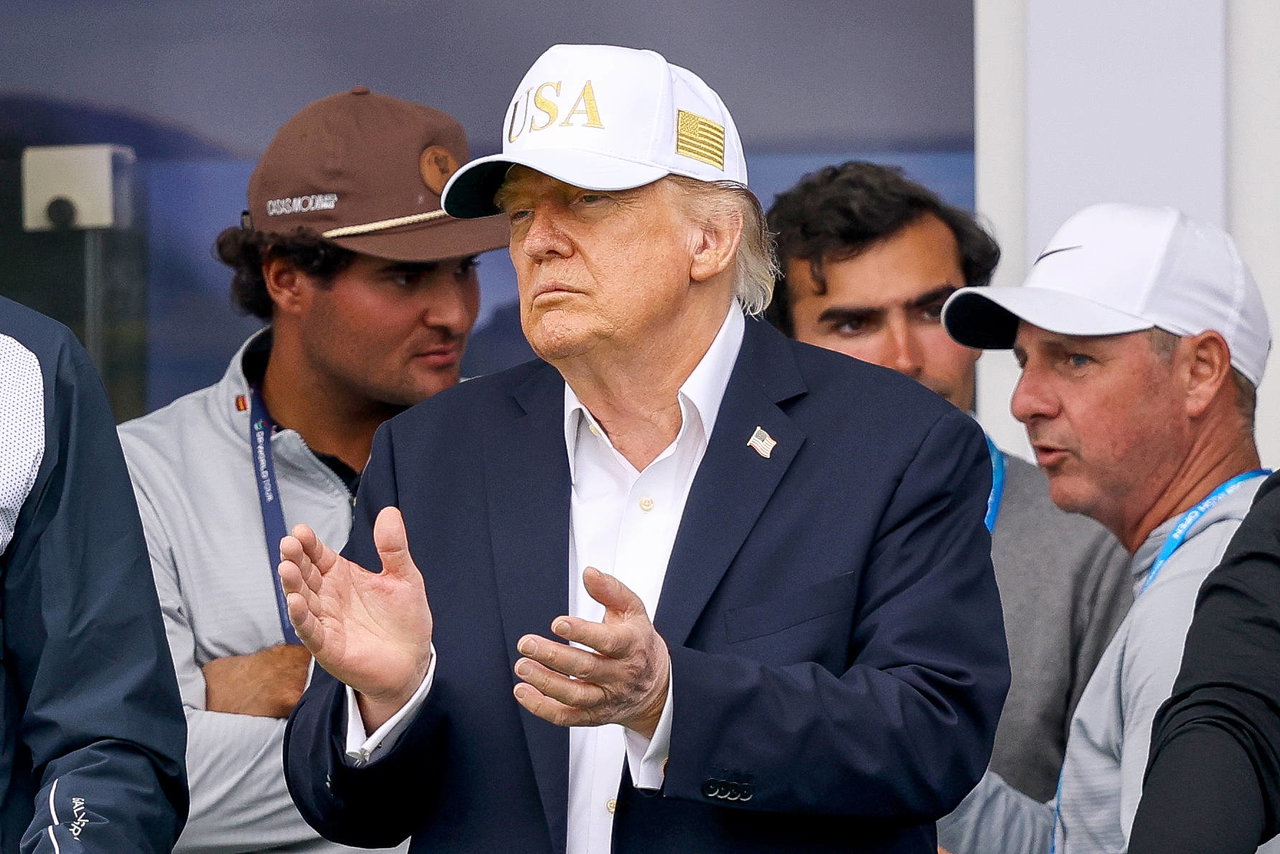
The Texas-Tennessee showdown had an extra layer of intrigue in Week 4, and it had little to do with football. President Donald Trump’s stadium appearance brought heightened security, prompting Tennessee officials to open the gates 30 minutes early.
Watch What’s Trending Now!
While that part went smoothly, concerns shifted to the sidelines, where potential radio interference threatened coach-to-player communication. Both teams, however, had alternative signaling plans ready.
“I have confirmation from both teams, Texas and Tennessee, that they work with the Secret Service to make sure that their radio frequencies are cleared with the Secret Service,” ESPN’s Laura Rutledge reported during the broadcast.
“They think that the comms should be perfectly okay, coach to coach. The one concern they have is coach to player, but they have worked on all kinds of signaling if that does go down communication-wise,” she added.
Rutledge further explained that the U.S. Secret Service was unwilling to take an official position on the matter. However, officials did clarify that, “at major events like this, there’s always going to be electromagnetic deconfliction. Spectrum deconfliction means coordinating radio frequency use so the events can operate without interfering with one another.”
Communication chaos seemed to unfold during the game, with commentary repeatedly interrupted by connection issues in the first quarter. At one point, it seemed like the booth didn’t know what was going on. ABC’s live TV feed suffered an audio breakdown.
That led to heavy static and crackling audio, suddenly disrupting commentators Chris Fowler and Kirk Herbstreit. Fowler even asked Herbstreit to be “quiet for a minute” as the production team figured out the issue. The broadcast didn’t have any issues after the first quarter.
But were the players and the coaching staff caught in the crossfire? That remains unclear. Interestingly, even before the game, Longhorns head coach Steve Sarkisian had warned his team to brace for potential communication breakdowns.
“They cut the headsets to coaches. They cut headsets for coach-to-player communication. So you have to have a plan for that, if and when it happens, and you get no warning. It just gets cut out. And “anytime” really means anytime,” Sarkisian said.
Sarkisian’s claims quickly caught the White House’s attention, prompting its Rapid Response team to fire back on social media. They specifically objected to the claim that an earlier President Trump appearance had caused issues during the national championship game.
“No, President Trump’s departure from the CFP championship in January did not cause headset or comms issues for the teams,” the account wrote on X.
However, the reality is that there were certainly some disruptions, as Miami assistants confirmed their communications went out, while Indiana head coach Curt Cignetti acknowledged, “We got a bunch of b.s., that’s what we got.”
That said, how do these disruptions happen, and why? Well, Donald Trump has attended more college football games than any other president, and communication disruptions have reportedly occurred during several of his appearances.
How Donald Trump’s visit may have disrupted sideline radio signals
Donald Trump’s presence at major sporting events has become increasingly familiar, from SEC showdowns and Army–Navy clashes to the NBA Finals, Daytona 500, and FIFA World Cup final.
He also became the first sitting president to attend a Super Bowl last year, departing at halftime. However, his latest appearance has sparked a fresh subplot: disruptions to headset communications.
During the 2026 CFP National Championship clash between Miami and Indiana, Donald Trump’s movements reportedly disrupted sideline communications. According to Steve Sarkisian, Miami head coach Mario Cristobal told him that the Hurricanes experienced significant communication issues after Trump departed in the fourth quarter of Indiana’s victory.
“Communication device came back right after the (Toney’s) touchdown,” Cignetti said. “And we had no problem the rest of the game.”
The media pool report detailed the timing of Trump’s departure from the stadium, noting that the president exited with “just under 8 minutes left in the 4th quarter.”
Whether Donald Trump’s presence caused any communication issues during the Super Bowl remains uncertain. Meanwhile, an NFL spokesperson declined to comment on Friday when asked whether the league coordinates with the Secret Service during presidential appearances to prevent potential interference with teams’ communication systems.