
The cart rolled slowly across the turf at Darrell K Royal-Texas Memorial Stadium, and for a moment the roar of the burnt-orange crowd felt distant. Trevor Goosby, the towering left tackle projected as a top-10 NFL Draft pick, sat on the back, holding his left knee, waving weakly as trainers guided him toward the tunnel. It was the first quarter against Ole Miss on October 24. Texas was in the middle of a gritty 34-27 win that snapped a two-game skid, but the image of their All-SEC anchor being wheeled off told a different story: the protection around Arch Manning had just taken a potentially season-altering hit.
Watch What’s Trending Now!
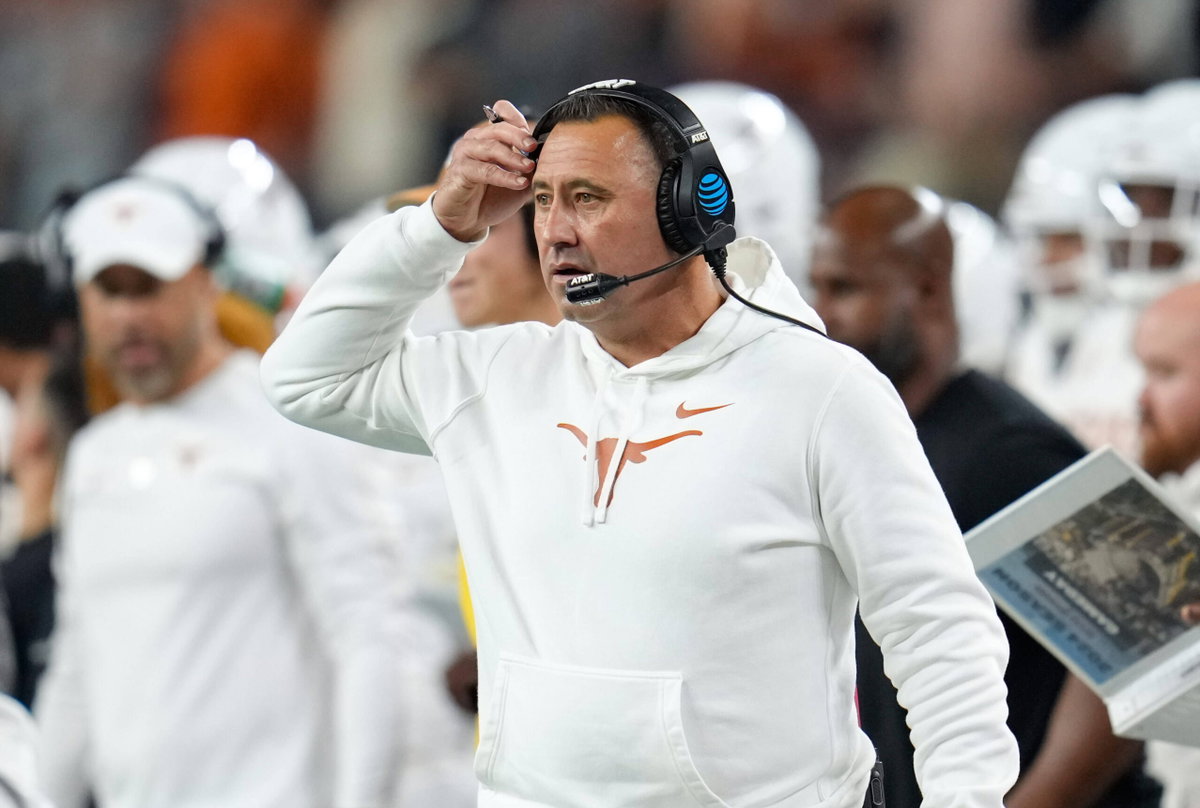
For weeks, questions had swirled about whether the Longhorns’ offensive line could keep their high-profile quarterback upright long enough for the offense to find rhythm. Manning, carrying the weight of a famous last name and the expectations that come with it, had shown flashes of wins over ranked teams and moments of dual-threat brilliance, but inconsistency and late-game mistakes had fueled criticism. Sarkisian had defended him publicly, noting that without the Manning name, the conversation would look different. Yet even the coach acknowledged the need for better versions of everyone on offense, including the men charged with giving the quarterback time.
Now, in mid-November, with Texas pushing through a critical stretch and a ranked showdown against LSU looming, Sarkisian has pointed to tangible progress on the line. Four injury-related updates and positional shifts have given the staff a measure of relief as the unit grows more comfortable in its reconfigured form.
The biggest change centers on the left side. After Goosby’s season-ending knee injury, a torn patellar tendon that required surgery and ends his year, Melvin Siani slid from right tackle to left tackle. The Wake Forest transfer, who arrived with a reputation as a tough run blocker and reliable pass protector (he allowed zero sacks across hundreds of snaps in the ACC), has taken on the blindside responsibility. Sarkisian has noted the improved comfort level as Siani settles into the role.
On the right side, senior Andre Cojoe has entered the starting lineup at right tackle. Cojoe, who filled in immediately for Goosby against Ole Miss and has dealt with his own past knee issues, brings experience and a growing sense of confidence. The staff has emphasized that while his first extended action wasn’t perfect, there were building blocks he could use.
Inside, left guard Dylan Sikorski’s rising comfort has been highlighted as another positive. The younger lineman has quietly become a stabilizing presence after the unit’s earlier struggles. Meanwhile, veteran Brandon Baker has moved from right tackle to right guard, a shift that leverages his versatility and experience while allowing the tackle spots to be manned by Siani and Cojoe.
These adjustments come against a backdrop of broader injury challenges. Texas has navigated stretches without key pieces such as running back Hollywood Smothers and, at times, edge rusher Colin Simmons and wide receiver Cam Coleman. Yet the team has found ways to win, including a convincing performance against Mississippi State and a solid outing at Missouri. Sarkisian has spoken of the group tightening under adversity, pointing to the connectivity built through road environments and the need to “pack all three phases” in November SEC play.
The doubts about Arch Manning’s protection have never been purely about one player. The offensive line entered the season with portal additions and position changes intended to address previous inconsistencies in both pass protection and run blocking. Early returns were mixed, and the loss of Goosby, who had posted strong pass-blocking numbers and allowed no sacks in extended snaps, tested the depth. Fans and analysts questioned whether the scheme and personnel could consistently give Manning clean pockets against SEC fronts that load the box or rush with speed.
Sarkisian’s comments suggest the staff sees the line trending in the right direction as the new combinations gain familiarity. That matters for a quarterback who has been asked to play with more aggression and poise while the surrounding talent fluctuates. When the protection holds, Manning has shown the ability to push the ball downfield and use his legs. When it breaks down, the timing issues and pressure that have drawn criticism become more pronounced.
For Texas, the November calendar offers little margin. A win over LSU would keep College Football Playoff aspirations alive and validate the resilience the staff has praised. The line’s ability to protect Manning, open lanes in the run game, and communicate through the noise of Death Valley will be central to that outcome. Goosby’s absence is permanent for 2026, but the four updates, Siani’s move, Cojoe’s expanded role, Sikorski’s comfort, and Baker’s interior shift represent the practical response.
In the days after that cart left the field against Ole Miss, the outlook felt heavy. A star tackle was gone, the quarterback’s protection was in question, and the season’s margin for error had narrowed. Weeks later, with players settling into new spots and Sarkisian noting progress, the Longhorns have a clearer path forward up front. Whether that relief translates into cleaner pockets and more consistent execution against LSU remains the next chapter. For a program that has leaned on toughness amid injuries, the current offensive line configuration is both a necessity and a developing strength. Hook ’em.