
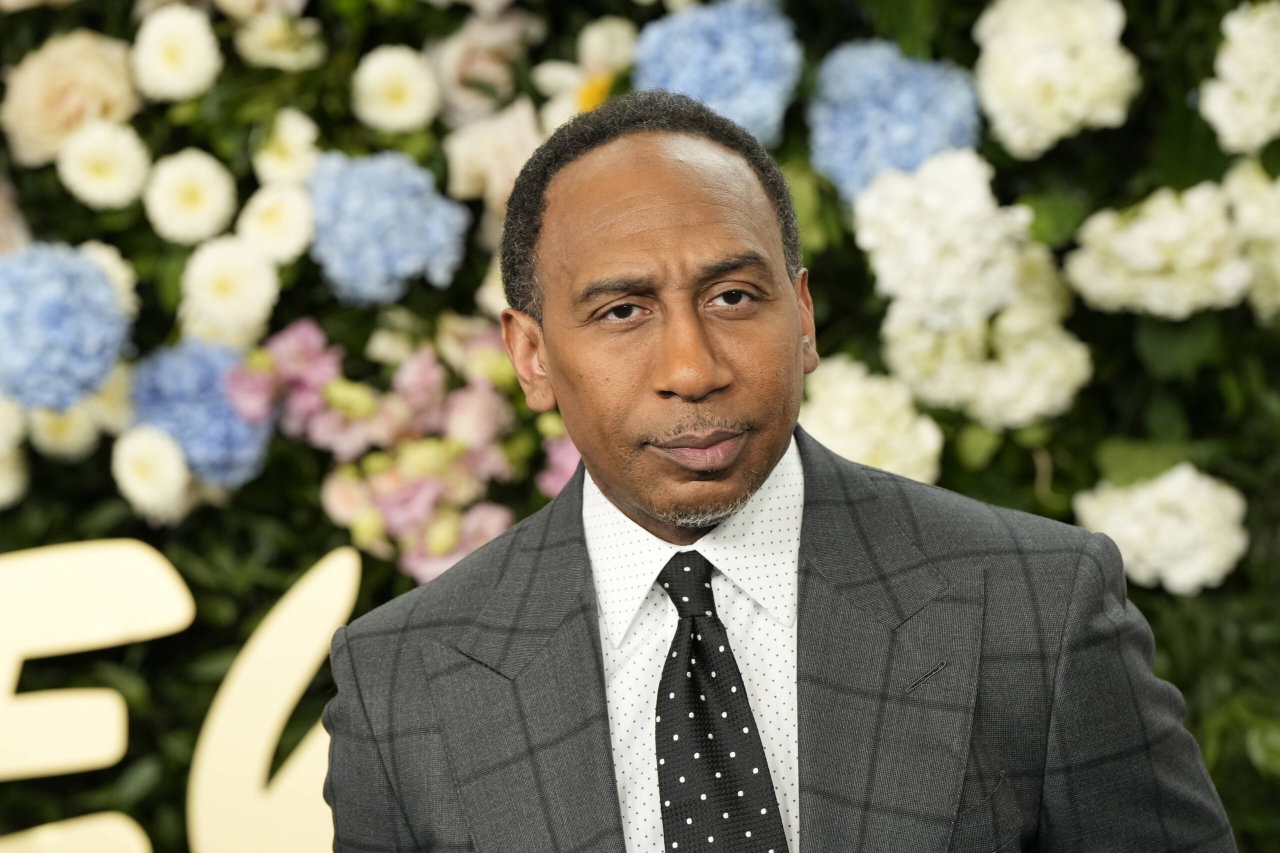
Sports television standard rules just got flipped upside down, and it started with an honest moment from ESPN’s biggest face, Stephen A. Smith. Speaking on Front Office Sports Tonight, Smith gave a rare peek behind the corporate curtain at Bristol. The veteran host opened up about why he never got the total creative control enjoyed by former NFL punter Pat McAfee, sparking an immediate firestorm among sports fans who feel Smith is making excuses for his own corporate choices.
Watch What’s Trending Now!
The structural divide between the two network titans comes down to corporate ownership versus independent production.
Smith explained his situation perfectly.
“Pat McAfee has a level of independence I’ve never had… He owns his own platforms. He leases that to ESPN. I’m employed by ESPN because ESPN owns First Take. I don’t own First Take, they do,” Smith said.
Smith pointed out that comparing their careers is completely unfair because he remains a traditional corporate employee whose flagship show is owned lock, stock, and barrel by the network. On the other hand, McAfee’s an independent entrepreneur who built his own digital empire and now licenses it to the sports giant.
However, the financial details behind this admission are where things get truly staggering.
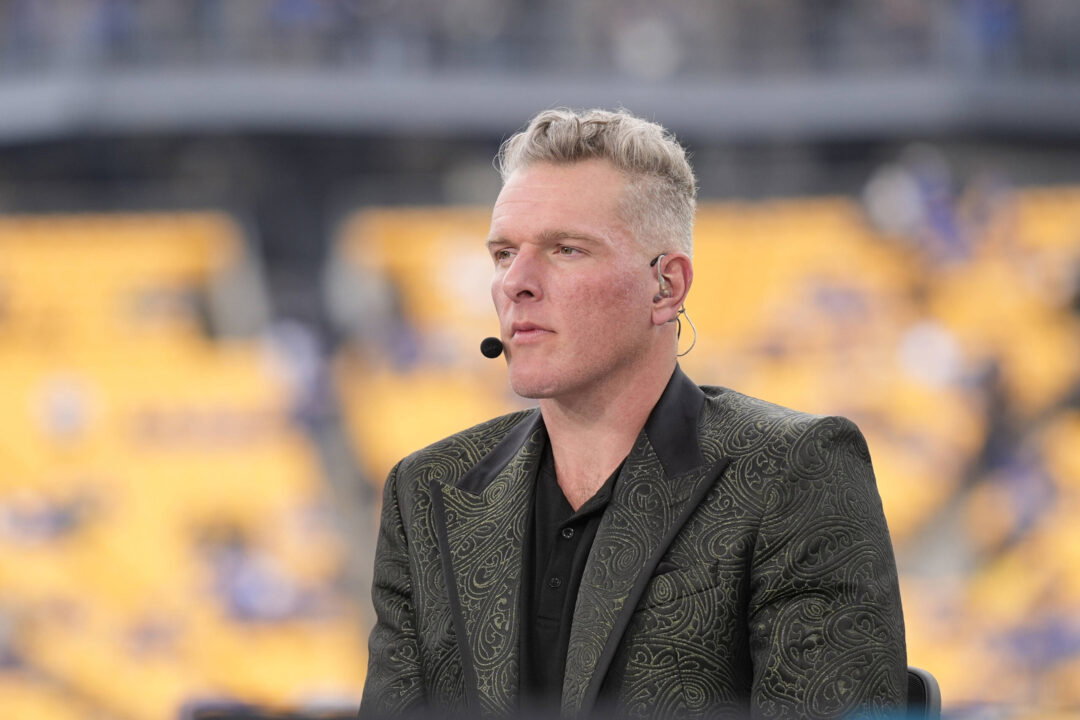
Right now, Smith is sitting on a five-year, $100+ million deal, which nets him about $20 million annually alongside some sweet side-project perks. But McAfee is already outpacing him, raking in roughly $30 million a year via a split deal ($17 million for leasing his show and another $13 million for appearing on College GameDay).
Imago
Credits: IMAGO
To make matters wilder, recent reports indicate that ESPN is actively negotiating a colossal contract extension with McAfee worth an unbelievable $60 million to $65 million per year.
However, that mega-money is meant to fund McAfee’s entire production crew, overhead, and studio staff; the sheer size of the contract completely shatters ESPN’s traditional salary structure and leaves Smith’s income in the dust. The First Take star doubled down on how the network applies its boundaries differently to its top talent.
This isn’t the first time Stephen A. has bumped heads with network bosses over his leash. Back in 2009, ESPN actually let him go after a bitter contract dispute over creative freedom and money, forcing him to rebuild his career from scratch before coming back as their main man.
Even as he fought for side-hustle rights in his recent $100 million deal to run his own podcast, Smith has always had to play by corporate rules that McAfee simply bypassed by building his entire show outside Bristol first.
“But there’s a different set of rules that we’re obligated and culpable and attached to that he’s not.”
Smith was incredibly direct when asked whether McAfee was simply following a path similar to his own legacy, quickly shutting down the comparison to give the former NFL punter some flowers.
“No, no, I don’t look at McAfee as emulating me. I look at Pat McAfee as somebody that’s charting his own path,” Smith openly admitted during the interview.
Smith openly admitted during the interview. He gave credit where it was due, adding, “I have to give respect and praise where it’s due. This is a man who bet on himself.” This public admission turned heads because it’s incredibly rare to hear ESPN’s ultimate alpha personality concede that a newcomer carved out a superior lane entirely separate from his blueprints.
Of course, Smith’s comments quickly sparked a wave of reactions online. Fans aren’t holding back, and many of them are reading between the lines and interpreting his public “compliments” to McAfee as low-key jealousy and bitterness over losing his spot as the undisputed, highest-paid face of the network.
The corporate-versus-independent divide struck a nerve. Audiences felt Smith had chosen a safe, legacy TV route for decades and was now complaining about the rules.
The internet quickly flooded the comment sections to call him out, and the reactions paint a picture of a fanbase that is thoroughly exhausted by the corporate complaining.
The immediate fan consensus was that Smith didn’t understand the difference between being a worker and a builder.
One fan commented: “Well, that’s cause Pat McAfee made the show first, and then it got so popular that ESPN bought it. Stephen A has always been just an employee of ESPN.” The internet is reminding everyone that building an independent brand from scratch gives you leverage that a regular network employee can never replicate.
Other viewers defended McAfee’s hustle and told critics to stop being bitter about his massive success: “Don’t hate the player, hate the game. You can’t be mad at Pat for doing things a different way. Be happy for the guy that he was innovative enough to do it his way.”
This side of the fanbase respects the fact that McAfee completely changed the formula for sports television.
Interestingly, some fans actually came to Smith’s defense, arguing that his breakdown was fair and professional: “I actually think this is one of the better takes by Stephen A. He didn’t see jealous in a negative way and just laid out the facts. It’s almost like he is like, ‘Damn, wish I thought of that.'”
For these viewers, Smith wasn’t crying; he was just giving a realistic look at a genius business model.
The breakdown of tax and corporate structures became a major talking point for people keeping it strictly logical:
“1099 vs W2. Freelancer vs employee. The company that employs you does business with pats company. He doesn’t work for espn.”
McAfee is essentially an outside vendor rather than a guy on the standard ESPN payroll, so obviously, he holds more privilege.
Finally, some critics used the moment to take a jab at Smith’s own history of wild sports analysis over the years:
“And Stephen A been giving the most egregious takes for years, so what’s the difference?”
Audiences are noting that if fans are tired of McAfee’s wild style, they shouldn’t forget that Stephen A. built his entire career on yelling hot takes.