
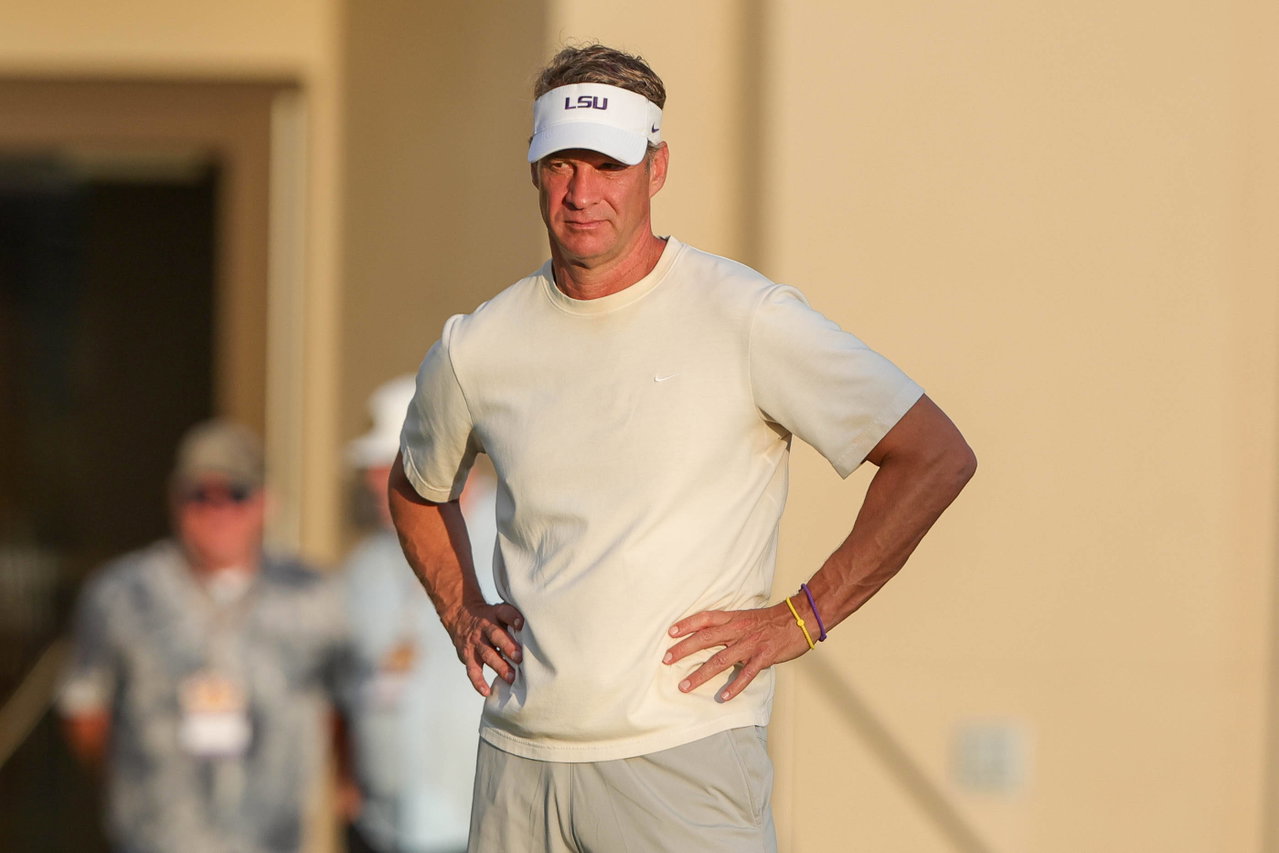
While Louisiana governors historically carry immense influence over LSU, Jeff Landry has taken hands-on management of the athletic department to unprecedented levels.
Watch What’s Trending Now!
Recall how back in October, after getting Kelly out of Baton Rouge, Landry famously stated, “I can tell you right now, Scott Woodward is not selecting the next coach,” and jokingly added that he would let Donald Trump pick the coach before letting Woodward do it. The former Athletic Director followed Kelly out of the building soon after that declaration.
Suffice to say Landry is a man who will speak his mind, and is not going to let such a thing as college football be operated by the people actually involved in the sport. Considering the entire legal quagmire Baton Rouge finds itself in, the moment appeared almost too perfect for the sitting governor to let go. Except this time, he may be right on the money with his opinion.
Landry’s Argument
Governor Jeff Landry’s argument is simple: the SEC has previously allowed court-ordered eligibility rulings involving players such as Diego Pavia and Trinidad Chambliss to stand, so why is LSU being punished for following a similar court ruling now?
Courts let Vanderbilt’s Diego Pavia and Ole Miss’s Trinidad Chambliss keep their eligibility. But when Lane Kiffin’s LSU moved to recruit players who regained eligibility through a Louisiana court order after signing with NFL teams, the SEC responded with a rule barring athletes with certain professional ties from competing at SEC schools.
“This whole thing is ridiculous. Don’t hate the player, hate the game. I’ve been saying for a year that college sports need to be fixed. The NCAA could have done it. Congress could have done it. Neither did. Now the SEC is creating a legal mess over athletes it told were out of eligibility, only to change the rules afterward. The SEC accepted the courts’ decisions on Diego Pavia and Trinidad Chambliss. Why is this different? You can’t tell athletes their college careers are over, watch them move on, change the rules later, and then punish them for not predicting the future,” the Governor said in a statement shared by sports reporter Amanda Christovich on X.
The Slippery Slope
The SEC and other conferences saw the writing on the wall. Despite what coach Kiffin or Governor Landry may claim, this case is different than the ones that came before. None of those players had put on an NFL uniform and attended professional level practice camps.
The dispute is bigger than one player, too. It traces back to an August 20 temporary restraining order out of Louisiana that cleared a path for players with existing pro contracts to return to college sports. Kiffin moved fast, landing commitments from former Cleveland Browns tight end Dae’Quan Wright and former New Orleans Saints defensive tackle Zxavian Harris within days, while LSU’s basketball program separately signed former St. John’s star R.J. Luis Jr., who’d been briefly under contract with the NBA’s Utah Jazz and Boston Celtics.
The SEC’s response was swift. “College sports are for college athletes,” presidents and chancellors wrote in a joint statement. “Individuals who choose to leave college athletics, sign professional playing contracts, and compete professionally should not then be permitted to return to college competition.”
The conference then voted 16-0, LSU included, to ban any athlete with NFL, NBA, or WNBA contract ties, before passing penalties 15-0, with LSU abstaining: a half-season coach suspension, a fine equal to 50% of the sport’s annual budget, and loss of league voting rights.
Kiffin has made nearly the same case as Landry. “Over 100 athletes in multiple sports were cleared and said you could go play. That is a court order,” he said on The Pat McAfee Show on Tuesday. “If you think back on all the different court orders of great players that were granted, whether that’s Diego Pavia or, now, Trinidad that were allowed to play a sixth year, we followed all court orders.”
The next round plays out in court. A preliminary injunction hearing is set for Monday, Aug. 31, at 1:30 p.m. CT in Baton Rouge, before Judge William Jorden.