Imago
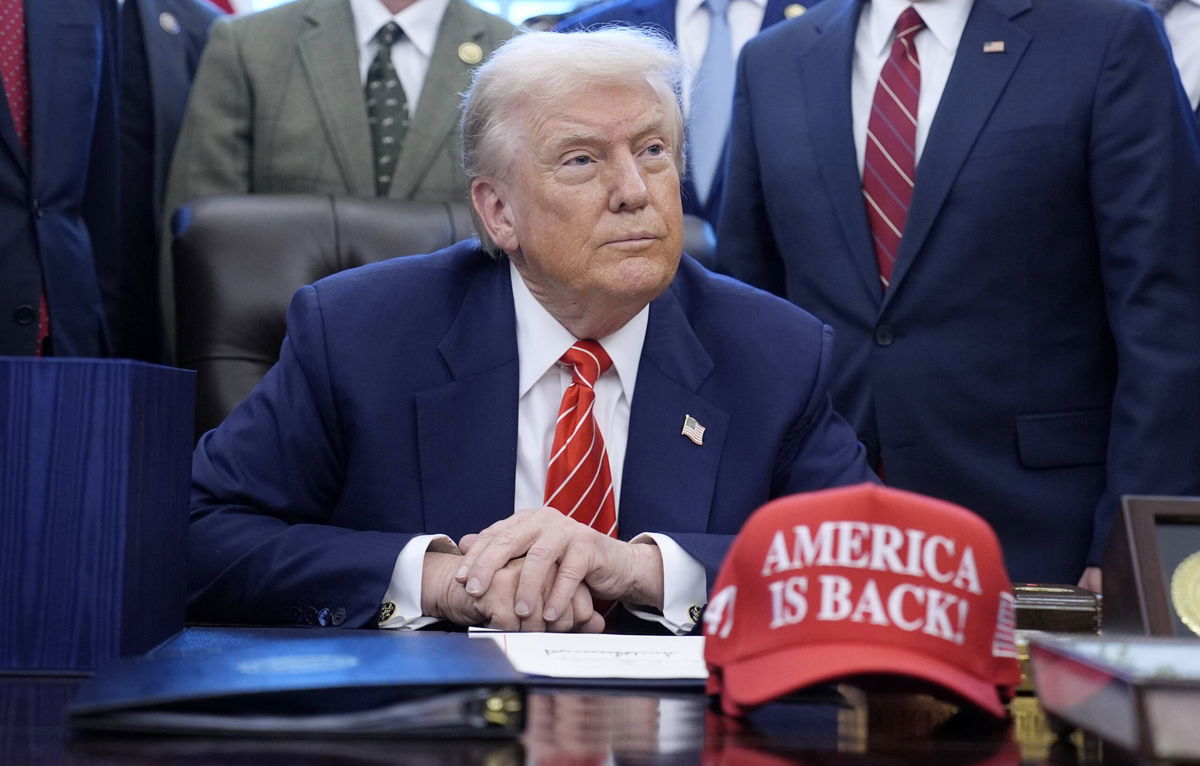
February 3, 2026, Washington, District Of Columbia, USA: United States President Donald J Trump answers questions after signing the bill ending the four-day partial government shutdown in the Oval Office of the White House in Washington, DC, USA, on February 3, 2026. A number of Republican lawmakers from both the US Senate and US House were present Washington USA – ZUMAs152 20260203_faa_s152_017 Copyright: xYurixGripasx-xPoolxviaxCNPx
Imago
February 3, 2026, Washington, District Of Columbia, USA: United States President Donald J Trump answers questions after signing the bill ending the four-day partial government shutdown in the Oval Office of the White House in Washington, DC, USA, on February 3, 2026. A number of Republican lawmakers from both the US Senate and US House were present Washington USA – ZUMAs152 20260203_faa_s152_017 Copyright: xYurixGripasx-xPoolxviaxCNPx
In a move that pits presidential power against the modernizing forces of college football, Donald Trump has drawn a line in the sand to protect one of the sport’s most revered traditions. His latest action aims to shield the historic Army-Navy game from the ever-expanding College Football Playoff, but it raises as many legal questions as it answers.


On March 20, President Donald Trump signed the “Preserving America’s Game” executive order, designed to ensure the Army-Navy Game remains a standalone event without competition from other college football broadcasts.
Watch What’s Trending Now!
Since their inaugural clash on the plains of West Point in 1890, the Army-Navy rivalry has evolved into a national institution. This 130-plus-year legacy is precisely what earned the matchup its exclusive television window, a historic precedent the new executive order seeks to shield from the modern playoff schedule.
“Nobody’s going to play football for four hours during that very special time of the year, in December,” Donald Trump said before signing. “It’s preserved forever for the Army-Navy game.”
Imago
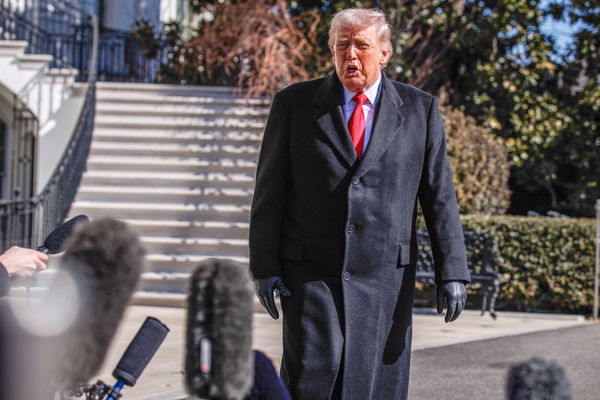
DC: President Donald Trump and First Lady Melania Trump Depart White House U.S. President Donald Trump speaks to reporters before departing from the South Lawn of the White House in Marine One on February 13, 2026 in Washington, D.C. The President and First Lady are heading to Fort Bragg in North Carolina to meet with U.S. military families before heading to the Presidents private club, Mar-a-Lago in Palm Beach, Florida for the weekend. Credit: CNP/ AdMedia Washington District of Columbia United States of America EDITORIAL USE ONLY PUBLICATIONxNOTxINxUKxAUS Copyright: xx CNP/xAdMediax admphotostwo968825
The order directs the Department of Commerce and the Federal Communications Commission (FCC) to establish a four-hour “exclusive window” on the second Saturday of December for the game. The FCC also needs to review whether TV licensees’ “public interest” requirements should include preserving this specific time slot for the service academies. They are further tasked with exploring whether the game can be officially designated as a “national service event” for regulatory purposes.
The game is more than merely football. Many of these games have served as milestones within the journey of the sport. The rivalry began when Army accepted a challenge from Navy, who had an established team since 1879. Cadets at West Point chipped in 52 cents each to help cover Navy’s travel costs. Navy won the first meeting 24–0.
In 1926, at Chicago’s Soldier Field, this game was played before 100,000 people to dedicate Soldier Field as a WWI memorial. Both teams entered undefeated. The game ended in a rare 21–21 tie, allowing Navy to claim a share of the national title.
In 1944, the game was held during WWII. This was the first time the No. 1 (Army) and No. 2 (Navy) teams faced off. In order to attend, fans also had to purchase a $25 war bond, which helped in raising $58 million for the national war effort. Army won that game 23–7.
Then in 1963, the game was postponed a week following the assassination of President John F. Kennedy. This game also marked the first ever use of instant replay in a television broadcast. Navy, led by Heisman winner Roger Staubach, won 21–15.
For decades, the Army-Navy Game has owned its window on the second Saturday in December. Nobody disturbed the two service forces, and since 1996, CBS Sports owned those exclusive rights and even had its audience peaking at 9.4 million viewers once. So what do you think happens if a CFP game gets right on top of that?
The CFP has already expanded to 12 teams, but there are still serious discussions underway for 16 or even 24 team playoffs. If an expansion happens, it could push first-round games to the Army-Navy weekend, which will create competition. Donald Trump is trying to prevent that with this legally sensitive order.
Donald Trump is aware of the legal concerns that might follow, including First Amendment concerns, federal overreach, and broadcast rights complications. He himself acknowledged the likelihood of lawsuits, saying, “Of course, we’ll probably get sued at some point.” He even hinted he’d have “much more power” in a second term to push this further. But inside the White House on Friday, none of that seemed to matter as Navy head coach Brian Newberry gave his stance.
“Thank you for signing that executive order protecting the sanctity of the Army-Navy game,” he told Donald Trump. “It’s a game with a soul, and it deserves to be protected.”
Trump signed the order in the East Room of the White House while hosting the Navy football team, who were there to receive the Commander-in-Chief’s Trophy following their 17-16 win over Army in December. Around them, the midshipmen who gathered there clapped and smiled. And the reason is that someone is finally stepping in to preserve their identity.
Donald Trump’s order: a boon for the Army-Navy
Army and Navy officials haven’t been waiting around for executive orders to settle this. Back in December, when the expansion talks were still going on, they had already started mapping out what an expanded playoff could mean. Navy Superintendent Lt. Gen. Michael Borschulte didn’t hold back his words.
“It is critical for our country, our nation, this should be the only game [in this slot],” he said.
He’s not the only one, as lawmakers like Senators Dan Sullivan and Jack Reed have already pushed for protecting the game’s calendar.
“It is the only sporting event in America where those playing the game are willing to sacrifice their lives for those watching the game,” Sullivan, a retired Marine, previously said. “It’s important to preserve this as the profit-focused NCAA looks to encroach on this special game and day.”
It’s going to depend on the future of the CFP. But decision-makers aren’t on mutual terms yet. SEC Commissioner Greg Sankey favors a 16-team model with a mix of champions and at-large bids. Meanwhile, Big Ten’s Tony Petitti is pushing hard with 24 teams and more automatic qualifiers. And right in the middle of it sits Army-Navy. Donald Trump’s order is about preserving America’s Game. If the system won’t protect its oldest stage, someone else needed to step up.
Written by

Edited by

Himanga Mahanta