Essentials Inside The Story
- College programs are seeing a jump in their valuations.
- Two Texas teams dominate a recently released list.
- But for Buckeyes' faithful, the team up north lags behind the one in Columbus.
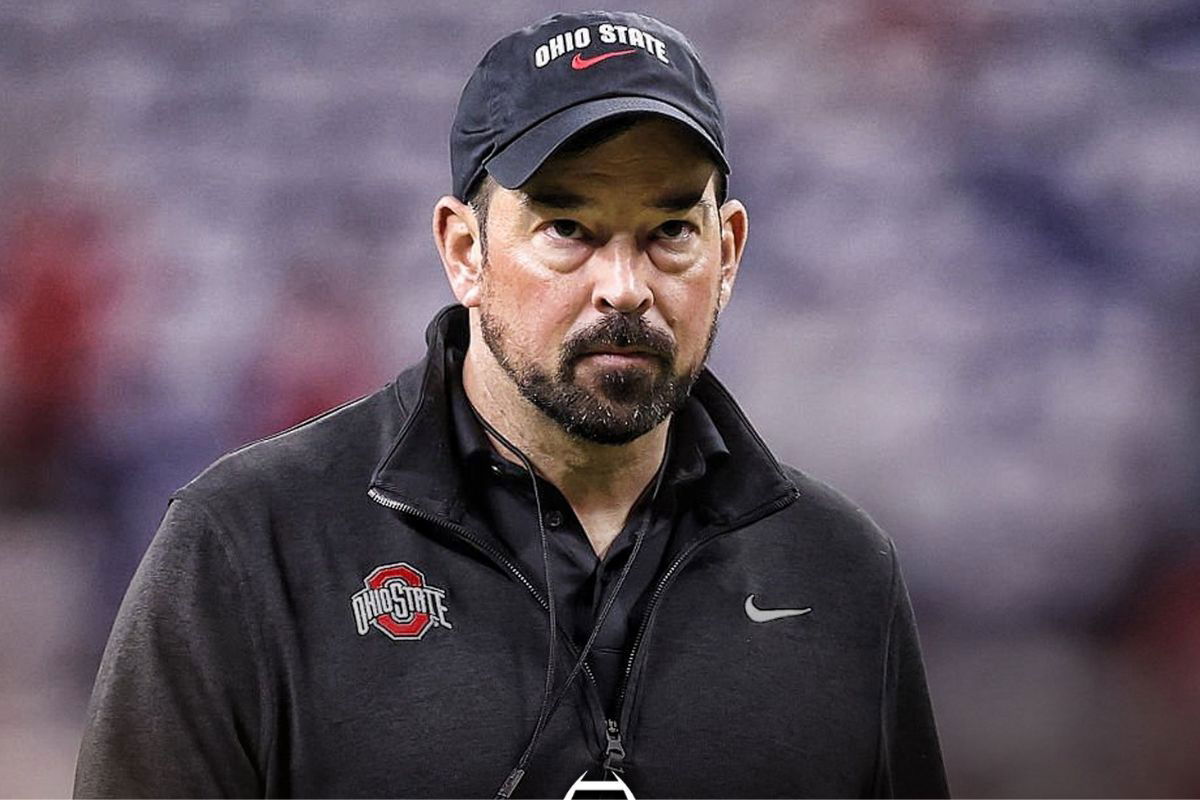
The landscape of college football has shifted entirely when it comes to program valuations. The powerhouses are worth billions now. While Ryan Day’s Ohio State couldn’t secure the top spot, they still edged out the Team Up North.


Ryan Brewer, an associate professor of finance at Indiana University Columbus, released his annual analysis of program valuations. Among CFB powerhouses, Texas takes the top spot with a valuation of $2.197 billion, followed by its in-state rival, Texas A&M, valued at $1.593 billion. Then come the Buckeyes, with a valuation of $1.547 billion. The Wolverines? They’re at the No. 6 spot ($1.463 billion).
Watch What’s Trending Now!
Brewer based his study on “industry trends, cash flows, revenue, and broader economic shifts” to arrive at numbers similar to those used to value sports franchises in pro sports. It doesn’t mean that college teams will be sold. Most programs are public universities, except for the likes of BYU and Notre Dame. The analysis is simply to see what the teams would draw if they were put in the open market, like your NBA and NFL teams.
This increase in the worth of college teams coincides with the amount the programs are spending on players. For instance, Ohio State’s national-championship-winning roster cost them around $20 million in 2024. That increased to $35 million for the 2025 season, and we’re likely to see a similar jump for the next season.
An annual analysis of programs found that valuations went up 46% over last year, as talent moves freely around the country and levels the playing field. https://t.co/VnNL54tiXC
— The Wall Street Journal (@WSJ) January 18, 2026
Moreover, contrary to the assumption that the newer landscape of college football is pushing fans away, there has been increased interest in the game. That is also directly linked to a jump in the valuations. We now have a deeper pool of potential champions. The national championship game will be decided between Indiana and Miami. The latter hasn’t won a natty in over two decades, and in the Hoosiers’ case, it’ll be their first.
This leveling of the playing field has come at the cost of some top teams in the SEC, but we’re seeing more participation from fans of the teams who used to switch off during the postseason. All of which can again be traced back to NIL.
NIL remains a significant factor
With the advent of NIL, we are witnessing a paradigm shift. Since 2021, student-athletes have been legally allowed to earn financial incentives for their hard toil on the turf. Furthermore, Judge Claudia’s 2025 NIL verdict introduced a groundbreaking change on the athletics level. Programs are now allowed to engage in a revenue-sharing model with players, subject to a $20.5 million cap.
That factor has proved to be phenomenal, driving the 46% surge in valuations since last year. The fight to land blue-chip prospects has become cutthroat. Before the NIL era, recruiting battles were intense.
“There’s more value in college football than there’s ever been,” Brewer says. “Even though they’re paying players and it’s more expensive, it’s also worth more.”
But it doesn’t mean the big programs are still not dominating the field. The expectation was that the revenue-sharing model would create a level playing field; however, top programs are strategically evading the $20.5 million cap.
Programs are going above and beyond, utilizing multimedia rights firms to push the limits. Texas is reportedly stretching to spend $40 million on the roster, according to On3’s Rusty Mannell. LSU has announced a $25-30 million budget, with Auburn and Penn State running the same mile.
As The Athletic’s Stewart Mandel writes, “Programs have already figured out a way around the restrictions, or they don’t believe the CSC is capable of enforcing them.”
This portal season has underscored that reality. ESPN reports that top returning quarterbacks are now commanding $3 million to $5 million, while offensive tackles and defensive linemen are receiving offers near $1 million.
In the coming seasons, this financial landscape is likely to become even more aggressive. It will become more uncomfortable for traditional, blue-collar fans, who value loyalty over players shifting teams every year. But will the programs complain when their valuations are going up?
Written by

Edited by

Amit