
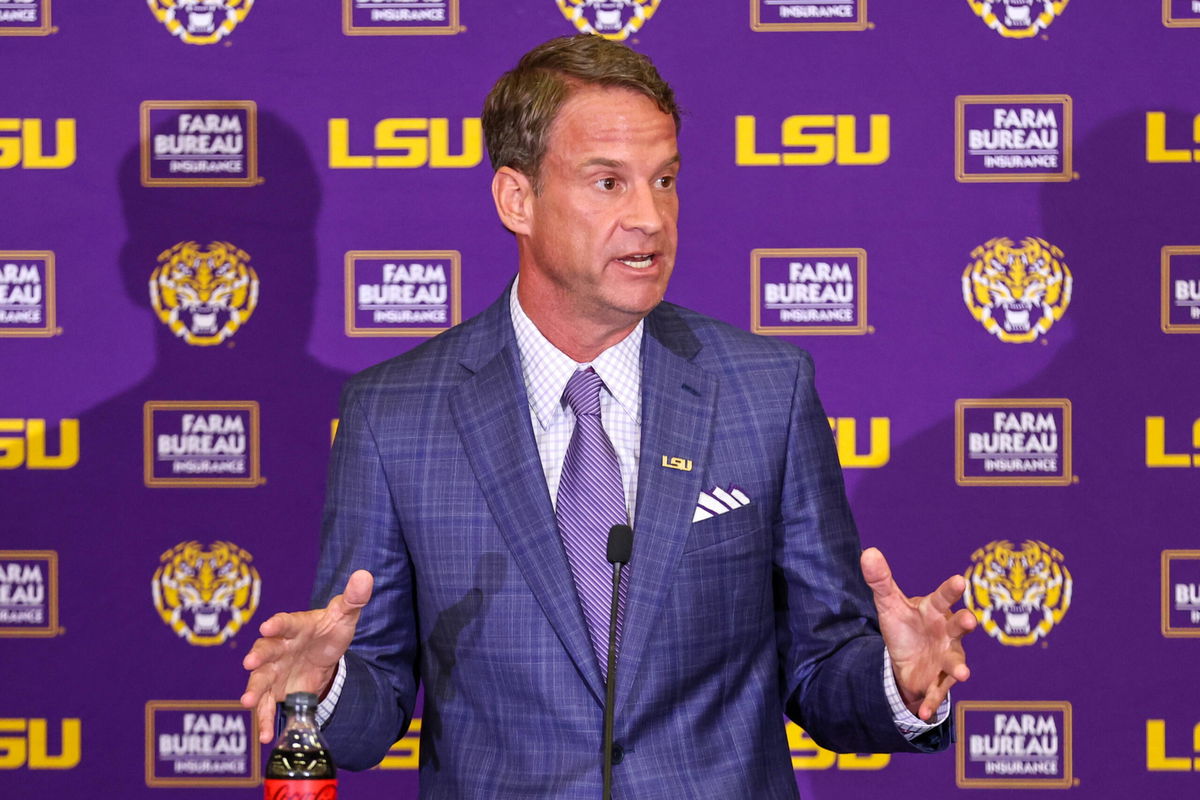
Lane Kiffin left Ole Miss for LSU in November 2025, signing a $91 million contract. His departure was highly controversial, as he chose not to coach Ole Miss in its first-ever CFP appearance. But his reason for leaving the Rebels was not just the money or a belief that the Tigers offered a higher ceiling for a national title. It’s also the racial diversity in Louisiana.
Watch What’s Trending Now!
“‘Hey, coach, we really like you. But my grandparents aren’t letting me move to Oxford, Mississippi.’ That doesn’t come up when you say Baton Rouge, Louisiana,” said Kiffin in a May 2026 interview with Vanity Fair, referring to the racial demography and lack of diversity he faced at Ole Miss during recruitments.
“Parents were sitting here this weekend saying the campus’s diversity feels so great: ‘It feels like there’s no segregation.’ And we want that for our kid because that’s the real world.”
“I just hope [my comment] comes across respectful to Ole Miss… There are some things that I’m saying that are factual, they’re not shots,” added Kiffin.
As per Kiffin, the racial demographic disparity between the two colleges directly affects the decisions of elite athletes and their families. With a roughly 51% Black population, Baton Rouge is perceived by recruits as more reflective of the “real world.” In contrast, Oxford is approximately 66% white; this demographic profile, combined with the school’s historical struggles to distance itself from Confederate imagery, creates a persistent “narrative” that can alienate Black recruits and their families.

Lane Kiffin isn’t going to win any friends in Oxford with this one.


In explaining his decision to leave Ole Miss for LSU, Lane Kiffin seems willing to invoke Ole Miss's struggle to distance itself from symbols like the Confederate flag, Colonel Rebel, and the nickname "Ole Miss" itself. When he was coaching there, Kiffin says, top recruits would
That’s why Lane Kiffin characterized these demographic differences not as an attack on Oxford but as a “factual roadblock” to building a national title-winning program in Mississippi. Even in recruiting results, this gap is clearly visible. Kiffin signed nearly 8 five-star recruits in 5 months at LSU. These included top-tier Louisiana talent, such as DL Lamar Brown and Richard Anderson.
Meanwhile, despite leading the Rebels to their most successful period in decades, including 3 consecutive 10-win seasons and a 2025 playoff berth, Lane Kiffin only signed three high school five-star recruits in six years at Ole Miss. Then, LSU’s status as a “blue blood” with superior NIL resources, reportedly over $40M in roster investment, made it possible to land elite players who simply wouldn’t consider Ole Miss.
LSU’s history of winning national championships with multiple different coaches (Nick Saban and Ed Orgeron) this century made it a more attractive “powerhouse” opportunity for recruits. Given all of this, Kiffin viewed LSU as a program with a much higher competitive ceiling. While Louisiana’s high concentration of elite in-state talent and the program’s ability to keep those players home made LSU a more sustainable job compared to Ole Miss, Kiffin’s departure wasn’t without drama.
The twist in Lane Kiffin’s LSU move
Lane Kiffin wanted to stay for the Rebels’ playoff run, but Ole Miss officials barred him from doing so once he signed with LSU. Interestingly, in a unique contract twist, LSU agreed to pay Kiffin any bonuses he would have earned had he coached Ole Miss in the 2025 playoffs, covering up to $1 million if his former team wins the championship.
Before taking the LSU job, he sought advice from mentors like Nick Saban and Pete Carroll. Carroll told him that his father, Monte Kiffin, would have encouraged him to “take the shot” on a job as prestigious as LSU. His move was about choosing the path that would make him the “person he was meant to be,” a championship-winning head coach on the biggest possible stage.
Despite taking over a team that went 7-6 the previous year, Kiffin challenged the Tigers to aim for a championship immediately. The new head coach stated that LSU did not assemble its current roster to wait three or four years to win, and he pushed a “why not let it rip” culture aimed at winning the 2026 national title in his first season.