
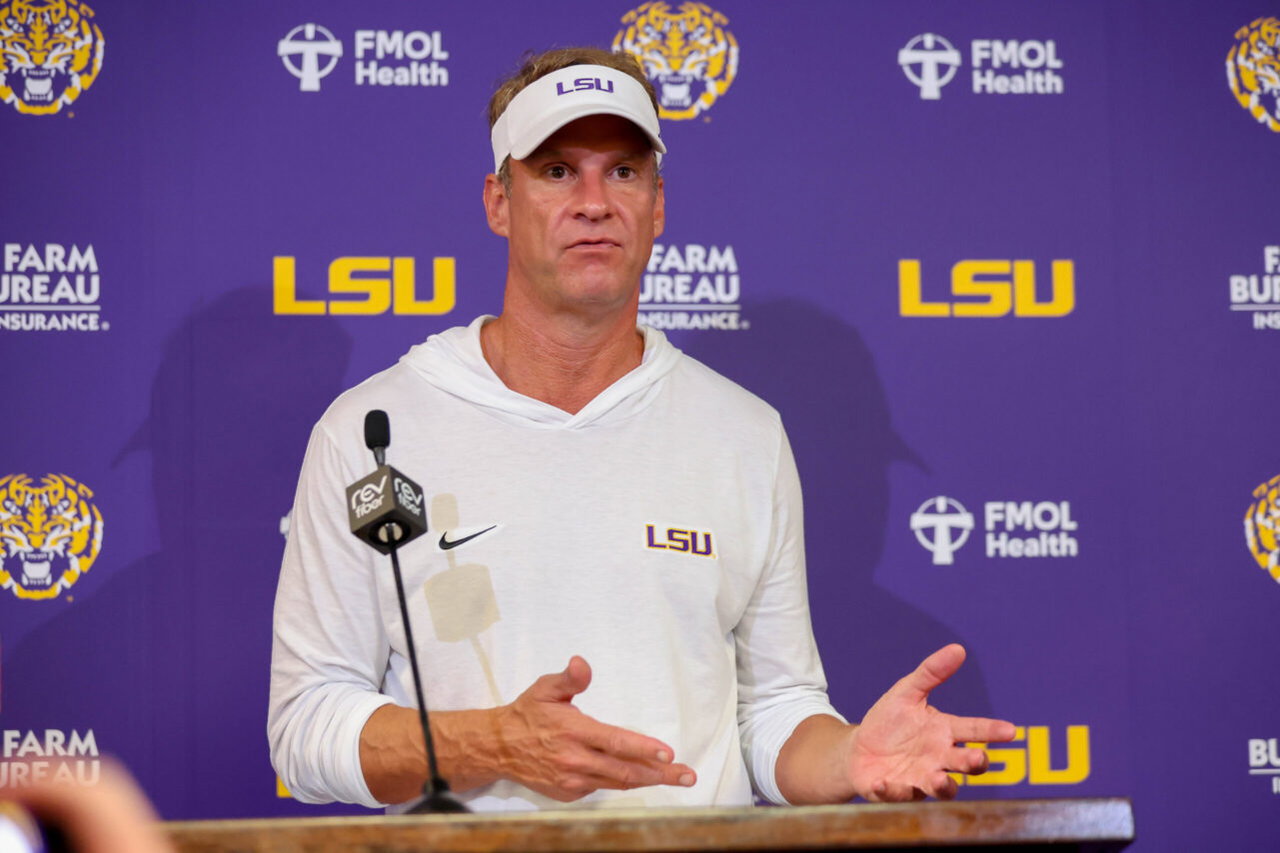
The SEC was clearly rattled in the offseason. But in a move to take back control, the self proclaimed ‘best conference’ might be shooting itself in the foot. In a bizarre twist, the voice of reason is coming from an unlikely source, the head coach at Baton Rouge.
Watch What’s Trending Now!
The problem started when the SEC decided it wants to stop their schools from poaching each other’s players. A fine idea by itself. But their solution could end up handing real talent over to the rival conferences on a silver platter.
The conference is now considering bringing back a one-year sit-out rule for players who choose to transfer within the SEC itself. They don’t want what happened to Ole Miss to repeat again. A coach’s selfishness should not affect entire rosters over one offseason.
But there is a more devious side effect to this policy. According to Lane Kiffin himself, this would make life easier for the Big Ten, ACC, and Big 12 to poach SEC players. During his Thursday evening radio show, the LSU head coach ripped into the proposal, making it clear that he had little patience for the SEC’s latest attempt to control player movement.
“That would be terrible. I can’t imagine a worse decision to be made,” he said, via The Advocate’s Jon Blau. “So we would just be handing away a lot of players every year and limiting them that they can’t go to the other 15 SEC schools that they’ve grown up fans of, or maybe in the same area where they’re from, and they’d be forced to go to other conferences and play against us and play for other conferences.”
The proposal is intended to discourage SEC programs from poaching one another’s players, but Kiffin believes it could achieve the exact opposite of what the conference wants. Instead of keeping talent within the league, the restriction could push players toward the other Power-4 conferences where the proposed one-year SEC sit-out penalty would not apply.
“When a kid goes to transfer from the SEC, he can’t go in the SEC. Well, he’s going to go to other conferences,” Kiffin said.

Lane Kiffin made the point with a professional football comparison, arguing that the other conferences would celebrate the change.
“I joked today,” he said. “The other conferences would celebrate that rule. It would be like in the AFC, there’s gonna be free agency coming up, but all AFC free agents, the other AFC teams can’t take when they become free agents. And they’d all go to the NFC.”
Back in 2021, the SEC went the other way, allowing players switching between league schools to compete immediately. Now, conference leaders are considering bringing back the sit-out rule.
But the SEC could be inviting more than just a recruiting problem. It could be walking straight into another legal battle. In December 2023, seven state attorneys general challenged the NCAA’s one-year sit-out restriction for athletes transferring more than once, arguing that it violated federal antitrust laws. The U.S. Department of Justice joined the lawsuit in January 2024, and by April, the NCAA had adopted rules allowing eligible athletes to compete immediately after transferring.
Now, roughly two and a half years later, the SEC is considering reviving a similar restriction within its own conference. And that could get messy. CBS Sports warned on October 8 that the proposed policy would almost certainly face a court challenge. Although the earlier lawsuit targeted a different NCAA rule, the SEC could find itself defending another restriction on player movement.
And the timing only complicates matters. With the spring transfer window gone, players already have fewer opportunities to move. Add a one-year wait for SEC-to-SEC transfers, and staying within the conference becomes less attractive. Supporters may see it as a way to discourage poaching and tampering. Kiffin, however, sees a rule that could push SEC talent directly into the arms of competing conferences.
One SEC school source told On3 that restoring the old transfer restriction could put conference programs at a competitive disadvantage. Although it may or may not be LSU, Lane Kiffin’s criticism shows that same concern.
At the heart of it is the SEC’s desire for more say over its own rules, and this transfer proposal is part of that fight. Lane Kiffin has pushed back before, including over the league’s plan to play nine conference games. He’s not buying this idea either. Keep players from moving around the SEC, and they may simply head elsewhere.
The rule is still up in the air. Yahoo Sports reports SEC presidents will discuss it next week. They need to figure out if blocking transfers fixes anything or just drives players straight into rival conferences.