
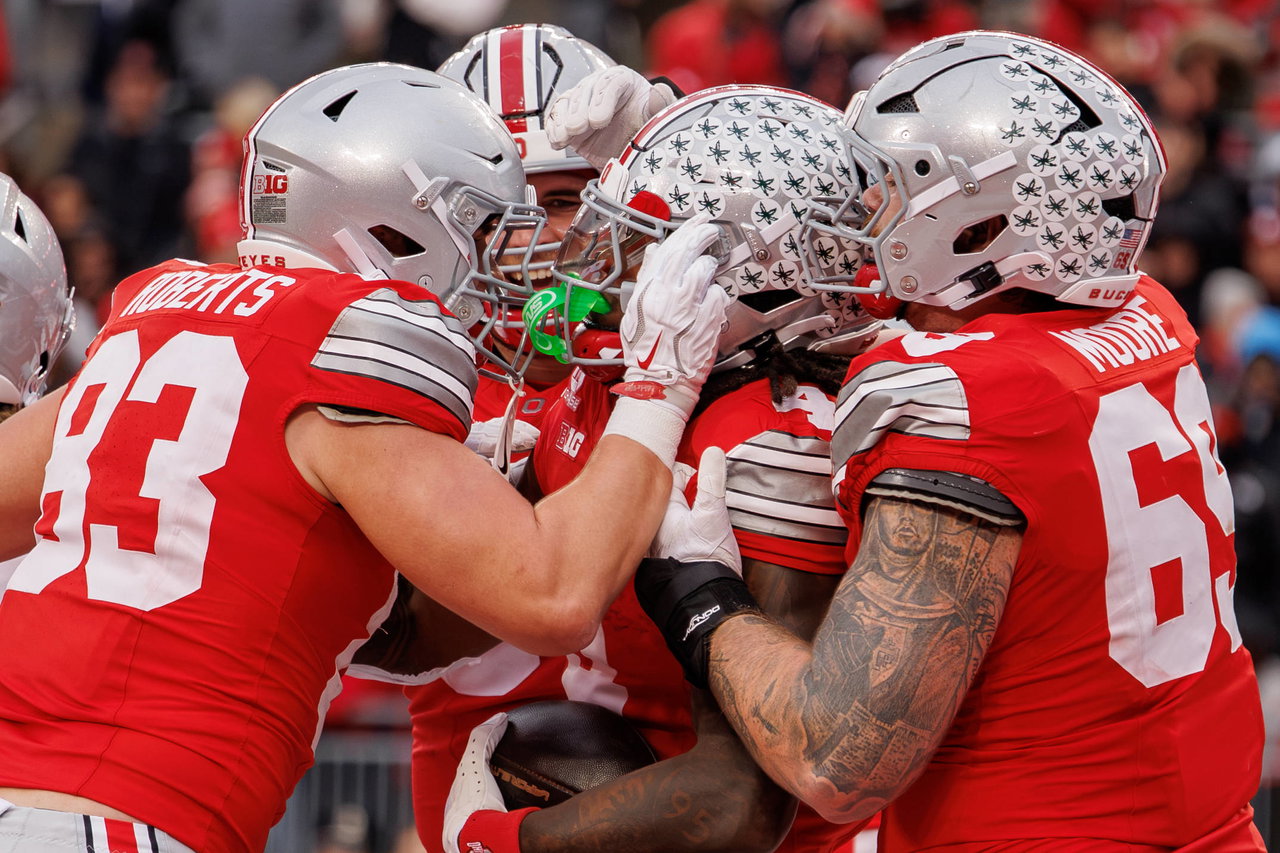
The play clock was winding down in Lincoln, and Ohio State’s sideline was in chaos. Substitutes were still racing onto the field. Nebraska’s defense was set, then Jeremiah Smith, the Buckeyes’ star wide receiver and a Heisman Trophy contender, suddenly dropped to the turf, clutching his leg.
Watch What’s Trending Now!
FOX College Football captured the moment and posted the clip with a simple caption: “Jeremiah Smith goes down with a cramp, and Ohio State avoids a too-many-players penalty.”
The reaction was immediate. “Should be 15 yard penalty. Bush league,” one Nebraska fan fired back. “And by ‘cramp’ you mean Fake Injury,” another wrote.
“He just lost a Heisman right there on fake crap like that! Cramp my ass!” a third added. “How is this not a penalty? I thought it was addressed 2-3 years ag,” another fan added to the heat.
The sequence unfolded late in the first half of Ohio State’s Saturday matchup against Nebraska. The Buckeyes had 12 men on the field during a substitution scramble. With officials poised to throw the flag, Smith went down. The clock stopped. Ohio State used a timeout. The potential too-many-men penalty never came.
Critics saw it as gamesmanship at its most obvious. Supporters called it awareness. One fan labeled it “1000 IQ play,” while another noted that rules have long allowed teams to stop the clock with an apparent injury, though they added that clear faking can draw a delay-of-game call if no timeouts remain.
Smith, a junior who entered the game as one of the most dynamic receivers, had already delivered for the Buckeyes. He caught a 67-yard touchdown on the opening drive and later added a 31-yard score despite dealing with real cramps earlier in the game.
The timing of this particular “cramp,” however, stood out. It arrived precisely when Ohio State needed a stoppage. The Buckeyes entered the week ranked No. 14 in the College Football Playoff rankings and fighting to stay alive in the playoff race after a turbulent season. Starting quarterback Julian Sayin had gone down earlier in the year, forcing Luke Fahey into the lineup. Losses, including a heavy defeat to Oregon, had stripped away much of the goodwill that once surrounded Ryan Day’s program.
Day himself was already under the microscope. Earlier in the same game, he was flagged for sideline interference on the 67-yard touchdown to Smith. Day was standing in front of an official as the ball was snapped; the personal foul was enforced on the kickoff, but the score stood. For a coach already facing questions about discipline and execution, the optics of both incidents compounded.
College football has spent years trying to curb fake injuries. Under a rule that took effect in 2025, a team is charged a timeout if medical personnel enter the field to evaluate a player after the ball has been spotted, and is assessed a five-yard delay-of-game penalty if it has none left. Ohio State was charged a timeout here, but avoided the five-yard penalty it would have faced for having too many players on the field.
Smith’s size and talent have long created their own officiating debates. Day has publicly complained that defenders can be more physical with the 6-foot-4, 222-pound receiver because officials sometimes treat contact differently against bigger players. The receiver has gone stretches without drawing pass interference calls despite constant physical coverage. Against Nebraska, the conversation flipped: instead of arguing he doesn’t get enough flags, critics accused him of avoiding one by dropping to the ground.