‘I Don’t Respect That’: Pete Golding Reveals His Biggest Issue With Lane Kiffin Amid Ole Miss Controversy

Add us on Google
‘I Don’t Respect That’: Pete Golding Reveals His Biggest Issue With Lane Kiffin Amid Ole Miss Controversy
Add us on Google
USA Today via Reuters
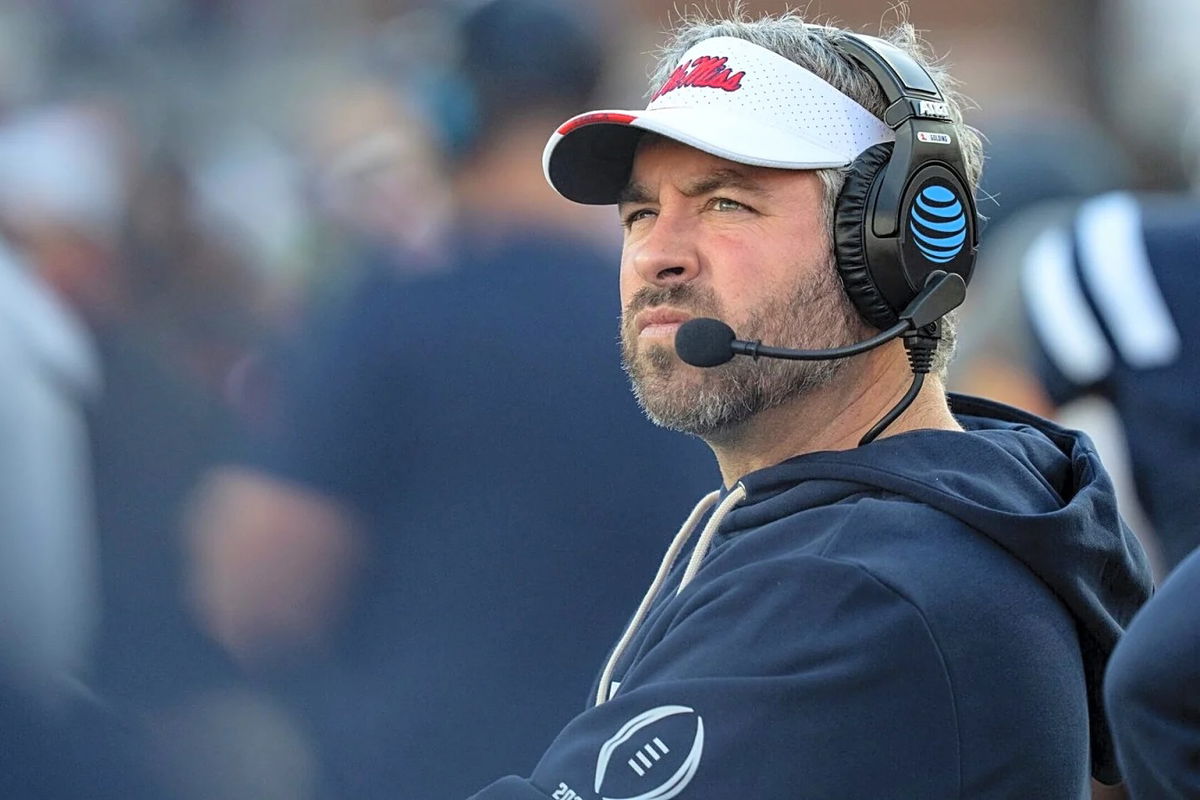
Ole Miss Head Coach Pete Golding watches on the sidelines during the first round of the College Football Playoff against Tulane at Vaught-Hemingway Stadium in Oxford, Miss., on Saturday, Dec. 20, 2025. USA TODAY SPORTS
USA Today via Reuters
Ole Miss Head Coach Pete Golding watches on the sidelines during the first round of the College Football Playoff against Tulane at Vaught-Hemingway Stadium in Oxford, Miss., on Saturday, Dec. 20, 2025. USA TODAY SPORTS
College football thrives on drama. But the current beef between Ole Miss head coach Pete Golding and his former boss, Lane Kiffin, is on a whole different level of personal. At this point, the fans are used to coaches jumping ship for bigger paydays. Golding recently sat down with reporter Chris Low of On3 and pulled back the curtain on how toxic things actually got behind the scenes.
Watch What’s Trending Now!
Golding wanted to clear the air and make one thing completely obvious: he doesn’t lose sleep over the fact that Kiffin took the LSU job. What actually makes his blood boil is the absolute trail of wreckage and collateral damage Kiffin left behind.
“I could have written a book on how it was going to happen. I knew what was going to occur,” the Ole Miss Rebels head coach told On3.” I know that side of him really well, and we complemented each other, I felt like, when we were both here. So I get there’s a competitive part of the job, and you do what you need to do, and that’s the environment we’re in. I get that type of stuff. But my issue with Lane was what he did to the other people around him, the position they were put in, and then the perception of what it was.”
“I just told him, ‘I’m not going to sit here and tell you I can respect that because I don’t. I can understand the competitive part, but not the rest of it with the players and other people in this building,’” he further stated.
NEW: Pete Golding tells @Clowfb his biggest issue with Lane Kiffin was how the process impacted people at Ole Miss:
“My issue with Lane was what he did to the other people around him, the position they were put in and then the perception of what it was. I just told him, ‘I’m not… https://t.co/5t4nFwa4uF pic.twitter.com/b9m8ESJaWY
— On3 (@On3) June 1, 2026
Pete Golding believes there is a competitive side to Lane Kiffin that makes it hard to completely root for him. He wasn’t saying Kiffin wants bad things to happen to the program, but that many coaches like to feel they were the reason a team had success. If Ole Miss struggles after he leaves, it can make people think he was the reason the Rebels were too good in the very first place.
The breaking point happened right as Ole Miss was gearing up for the high-stakes College Football Playoff. Instead of prepping for their first-ever playoffs, Kiffin was apparently going behind their backs and secretly finalizing his contract with the Tigers. He was also allegedly cherry-picking the Rebels roster and some of their coaching staff to bring with him to Baton Rouge.
Golding called out this backstage maneuvering as incredibly selfish, explaining that Kiffin wanted to have his cake and eat it too by coaching the Rebels in the playoffs while actively dismantling their future. When Golding realized what was happening, he looked Kiffin dead in the eye and told him that he loved him as a brother, but made it clear that he didn’t move his own family to Oxford just to be a Kiffin follower.
Once Ole Miss leadership learned of Kiffin’s dual negotiations, they deemed the situation untenable. Ole Miss Athletic Director Keith Carter stepped in, stripped Kiffin of his duties, and banned him from coaching the team in the postseason. Golding was then tasked to take over.
Golding was so fiercely loyal to the school and the town of Oxford that he told Carter he would stay even if they hired an outside coach over him. Golding joked he’d rather sell insurance than follow Kiffin to LSU.
Anything to stroke his ego
Even after Kiffin packed his bags for Baton Rouge, the pettiness didn’t stop. The Ole Miss insiders accuse him of trying to completely burn down the program on his way out just to stroke his own ego.
Kiffin later went to the media and publicly claimed that if Ole Miss had just let him coach the playoff games with Golding up in the booth, the Rebels would have easily marched right into the National Championship game.
Golding and Carter viewed this as a public slap in the face to the remaining staff. This only proves even more that Kiffin was bitter about how he was kicked out and wanted the public to think Ole Miss couldn’t win a single big game without him.
The feud got even uglier when Kiffin decided to take shots at the actual culture and history of Oxford, Mississippi, during his Vanity Fair interview. Kiffin tried to excuse his recruiting struggles by claiming that it was hard to lock down top talent because players’ grandparents were deeply uncomfortable with the historically sensitive and racially tense background of the local area.
Golding was absolutely disgusted by these comments, firing back that Kiffin acts like a ‘Two-Face’ from the Batman villains.
Ultimately, this explosive fallout has turned the upcoming Ole Miss versus LSU matchup into the most anticipated, must-watch grudge match on the college football calendar. Some officials are even planning to call the National Guard for security at this game. Kiffin is coming to Mississippi on September 19 with a roster reportedly worth around $40 million. It would be a generational embarrassment if he heads back to Baton Rouge without a win.
Written by

Edited by

Himanga Mahanta