
Conference reshuffling has destroyed many traditional rivalries. But Indiana’s refusal to play out of the conference power-4 teams has laid the ground for one of them to make a comeback.
Watch What’s Trending Now!
The legendary Notre Dame vs. USC rivalry, born in 1926, is officially returning for 2030. This historic comeback happened after Curt Cignetti’s Indiana requested to drop its future non-conference series with Notre Dame. Indiana’s sudden schedule opening gave both powerhouse programs the perfect opportunity to save their iconic intersectional matchup.
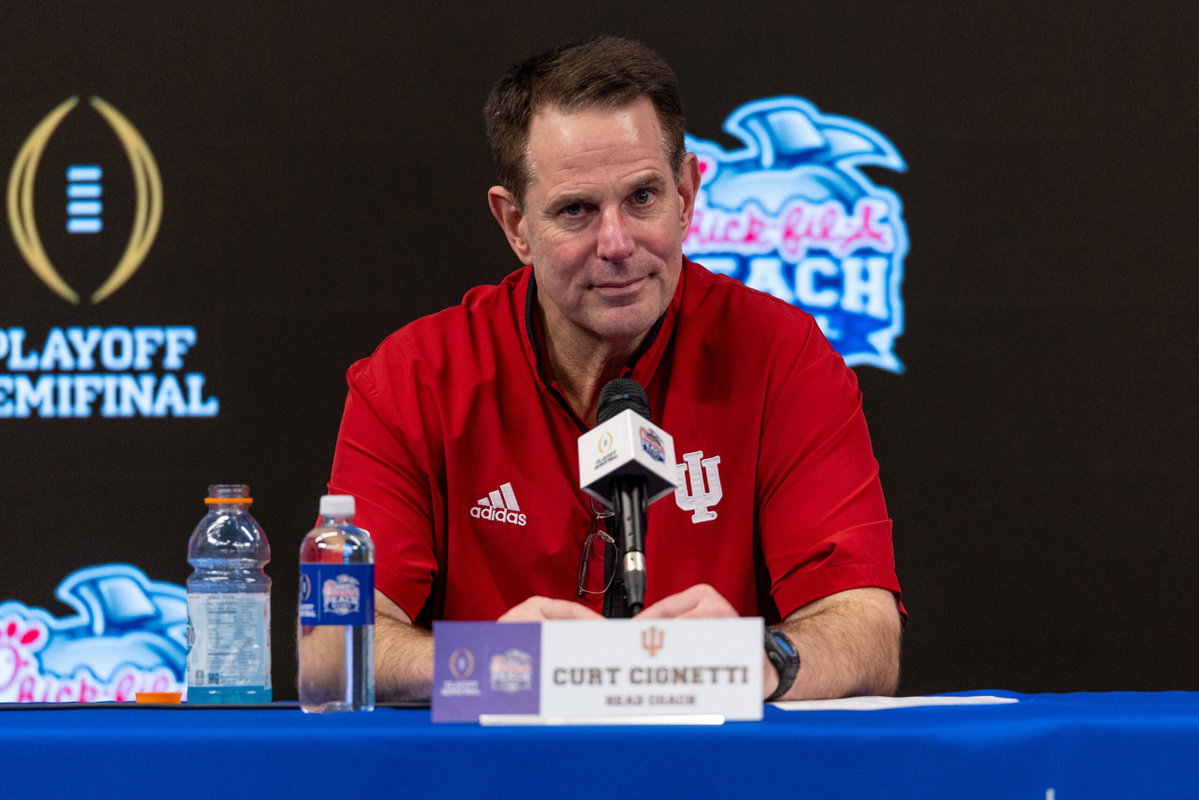
Indiana head coach Curt Cignetti changed how the Hoosiers build their calendar. After leading Indiana to a national championship run, his strategy focuses on reaching the playoffs with minimal wear and tear. Beat writer Pete Sampson noted Cignetti avoids heavy non-conference games because his team already navigates a tough weekly Big Ten schedule.
Following that game plan, Indiana asked Notre Dame to release them from their scheduled 2030 and 2031 games. This follows a growing pattern under Cignetti, as Indiana previously canceled non-conference matchups with Louisville and Virginia. As a result, the Hoosiers currently have no non-conference major conference opponents on their future slates.
Although Indiana fans might be split on the move, it handed Notre Dame the perfect opportunity to solve a scheduling headache. The traditional matchup against USC had recently hit a major wall. After USC moved to the Big Ten, its travel schedule got exhausting, and Lincoln Riley pushed back against late-season Notre Dame matchups.
Imago
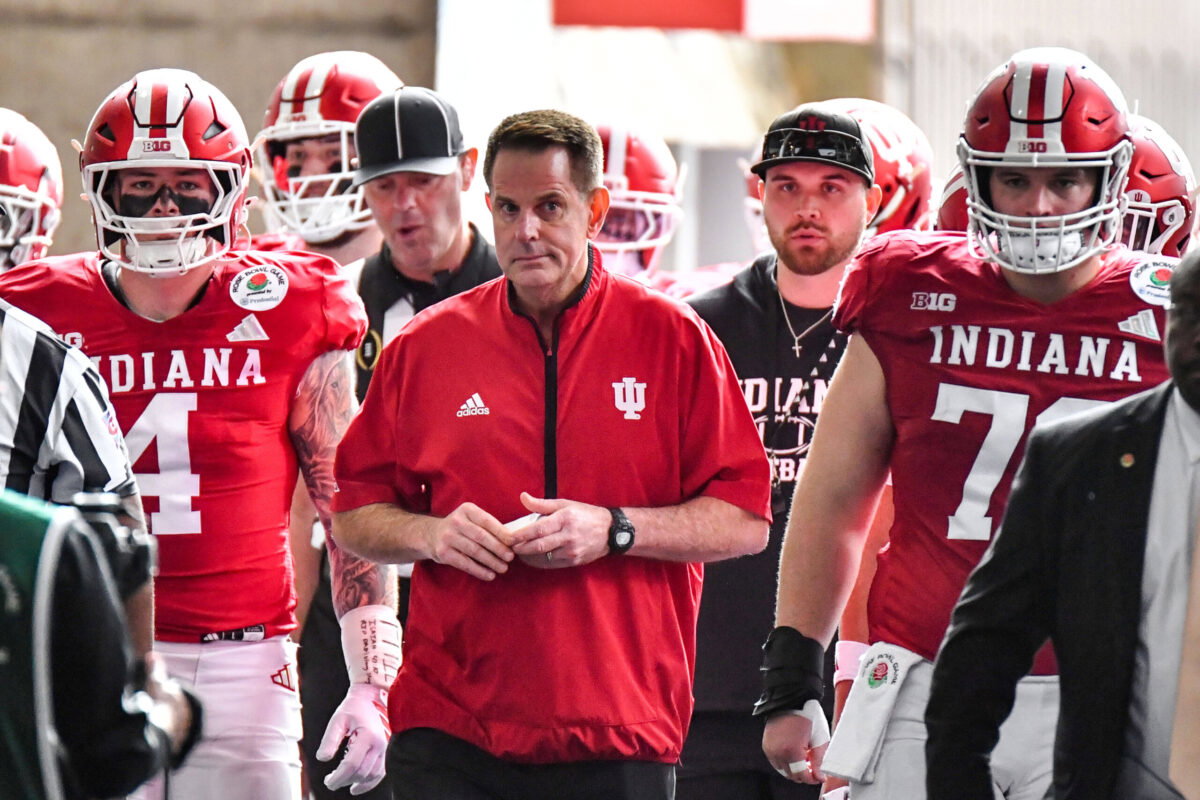
January 1, 2026 Pasadena, CA.Indiana Hoosiers head coach Curt Cignetti leads his team onto the field before the CFP QuarterFinal at the Rose Bowl Game between the Indiana Hoosiers and the Alabama Crimson Tide..January 01, 2026 in Pasadena, California..Mandatory Photo Credit: /Cal Media Pasadena United States of America – ZUMAc04_ 20260101_zma_c04_094 Copyright: xLouisxLopezx
USC’s move to the Big Ten created heavy travel demands, leading head coach Lincoln Riley to prefer avoiding non-conference battles late in the autumn. Notre Dame needed early-season dates to keep their biggest rival happy. Indiana stepping aside created the exact early September opening both schools needed to finalize a deal.
Lincoln Riley was already under immense pressure to make the playoffs. This rivalry, though filled with tradition, offered little incentive towards that goal. Furthermore, the rivalry itself as it stands is lopsided. 53 losses to only 37 wins for the Trojans, along with 5 ties.
The Fighting Irish have won 4 of the last 5 as well. The last time they met was on October 18, 2025, where No. 13 Notre Dame defeated No. 20 USC 34-24 in South Bend, powered by running back Jeremiyah Love’s career-high 228 rushing yards.
Considering the way Marcus Freeman has been recruiting these days, this gap is only going to grow larger. But thankfully Riley and the Trojans staff understood the need to preserve such traditions.
The two schools quickly capitalized on the open dates and shook hands on a four-year contract running from 2030 through 2033. To make it work, they moved the games to Week 1, breaking a century of tradition. The 2030 game in Los Angeles and the 2031 game in South Bend will officially serve as Week 1 blockbusters.
The rivalry actually began in 1926 due to an alleged conversation between the wives of USC athletic director Gwynn Wilson and Notre Dame coach Knute Rockne, who convinced her husband that a biennial trip to sunny Southern California was better than traveling to the frozen grounds of Nebraska.
The teams play for the Jeweled Shillelagh, a trophy that goes to the winning team each year. It is a a Gaelic war club made of Irish blackthorn. Every victory adds a jeweled ornament on it. An emerald-studded shamrock for Notre Dame or a ruby-studded Trojan head for USC.
The history is also defined by massive swings in momentum. USC dominated from 1967 to 1982 (going 12–2–2). Notre Dame responded with an 11–0–1 undefeated streak from 1983 to 1995. Pete Carroll later led the Trojans to an 8–1 run through the 2000s. Carroll and USC’s eight-straight wins over Notre Dame from 2002-2009 are the most by the Trojans in the long history of the rivalry.
In the end, Indiana’s desire to play it safe gave the rest of the college football world exactly what it wanted. A historic rivalry that looked like it was on life support has been completely saved by a bit of schedule shuffling.
Who could be Indiana’s replacement opponent?
The Indiana Hoosiers have not yet named an official replacement opponent. Dropping Notre Dame leaves Indiana with one non-conference slot in 2030 and zero in 2031. Because this schedule reshuffle literally just went public, the university’s athletic department is taking its time before locking anything in.
Looking ahead at their tentative schedule, the 2030 season currently features only two non-conference matchups on their home turf against Indiana State and Delaware. With Notre Dame out of the mix, the Hoosiers are still missing a third non-conference opponent to round out that year.
The situation gets even emptier when you look at the 2031 season. Stripping the Fighting Irish from the itinerary leaves Indiana with absolutely zero out-of-conference games scheduled. They will need to track down multiple opponents to build a complete calendar for that fall.
Although fans await official news, head coach Curt Cignetti’s strategy gives us a hint. Since he prefers to protect his roster for tough Big Ten stretches, don’t expect them to book another Power Four powerhouse. They will almost certainly look toward mid-major Group of Five or FCS programs to fill those gaps safely. As long as you deliver, nobody’s going to bat an eye. Cignetti is living proof.