
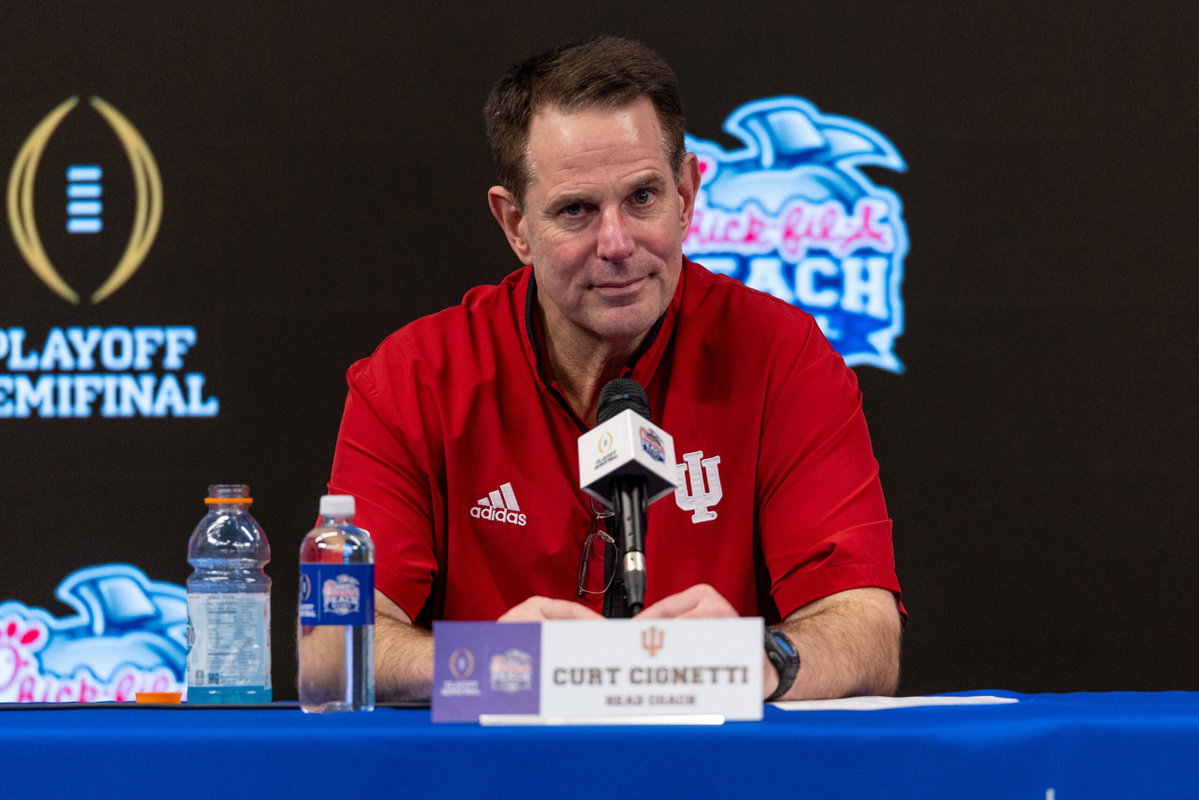
Winning teams used to be preferred by the top recruits the following year. Those old ways no longer work and Curt Cignetti found out about it this offseason. Getting the Hoosiers their first national championship and their first ever Heisman did give them a little boost in recruitment. But while his team was playing in the postseason, the eliminated team were getting ahead by meeting blue chip prospects.
Watch What’s Trending Now!
“That’s a key right there,” said Cignetti during his June 24 appearance on Next Up with Adam Breneman when asked about IU’s strategy adjustment in the modern era of CFB for securing high-ranked recruits. “It’s nice to be in the dance nationally, but at the end of the day, it’s who did you get. And you’ve got to take care of that 4-to-6-hour radius. Playing that late in the season, you lose a couple weeks of recruiting, putting you behind the eight ball.”
In this new era of NIL, banners do not automatically translate into signatures. It’s money that sets the pace, but the Hoosiers are sticking to a simple plan. They are chasing the right fit, not just the biggest stars, to build a roster that can continue to win.
“This year, the high school market has blown in terms of pricing. And so, you’ve got to make sure you got to have money for retention and portal. So you may see a lot of them out there you like, but you maybe can’t go full bore on all of them because at the end of the day you’ve got to put the best roster together for the ’27 team,” added the IU head coach.
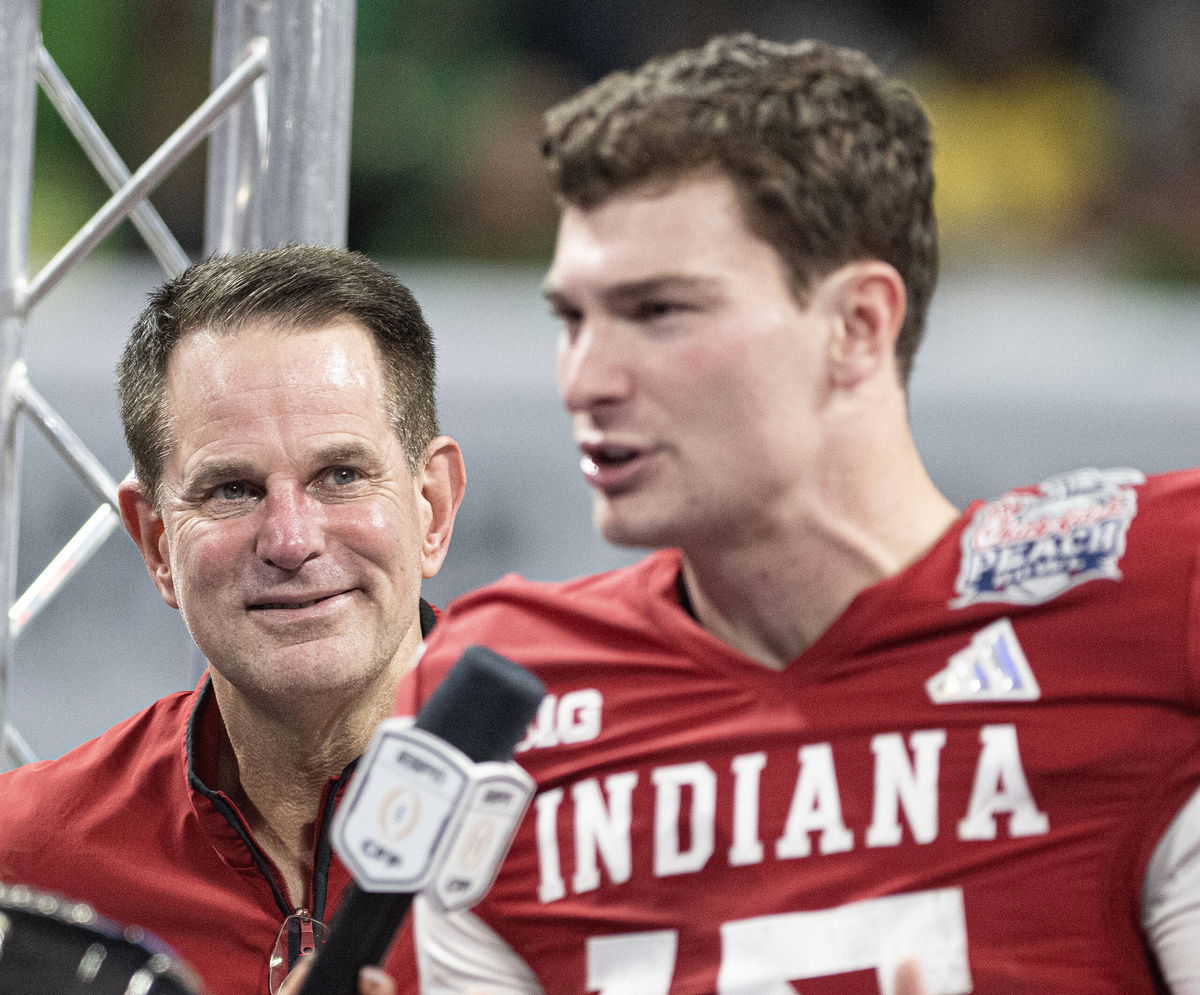
Imago
January 10, 2026, Indianapolis, Indiana, USA: Indiana University head coach Curt Cignetti listens to quarterback Fernando Mendoza on the victory stand after the CFP Semi-Final Chic-Fil-A Peach Bowl in Atlanta, GA. Copyright: xThomasxJ.xRussox
Last season, Indiana won the title with a lighter checkbook. This year, the price tag is higher. That forces a choice. Pay up for a high-school star now, or save for players who already know the system. Cignetti is choosing to protect the core and be selective. Indiana’s 2027 class has six 4-star prospects, including Brady Scott and Myles Smith, but no five-star till now, reflecting Cignetti’s fit-over-ratings philosophy.
The coach also focused on getting local talent first, and IU’s 2026 recruiting class has six homegrown talents like DT Trevor Gibbs and DB Kasmir Hicks. Local talent helps, but national competition still comes down to money.
The 2027 recruiting class reflects this hyper-monetised environment. Almost all five-star prospects have already committed before their high school junior seasons. Roster values across elite college football programs are hovering between $30 million to over $40 million annually, elevating the individual market value of premier 2027 prospects into seven-figure territory.
A clear example are the Aggies. Texas A&M holds the No. 1 ranked recruiting class for 2027. Cignetti’s point around day-one trench starters is coming correct, and the Aggies’ donor base has responded. Premium left-tackle prospects command immense leverage. The Aggies secured Kennedy Brown with a projected valuation of around $1.3M to $1.5M.
There are other examples which illustrate this point further. The Longhorns used one of the most robust donor-backed NIL ecosystems in the country to bring John Meredith III to Austin. High-end defensive backs are an expensive premium. Meredith’s market value is comfortably hovering near the $1.2M mark as the Longhorns aggressively secure their secondary.
But few programs represent rapid growth in this era than Texas Tech. Before the Brendan Sorsby saga, they still comfortably held on to the best prospect in the 2027 Class, DT Jalen Brewster. Landing him was a historic coup for Texas Tech. To stave off traditional SEC powers, the Red Raiders’ collective backed a massive financial framework. Elite interior defensive linemen command some of the highest premiums on the market, putting Brewster’s projected freshman-year NIL valuation securely in the $1.5M to $1.8M range.
Despite postseason success delaying recruiting, Indiana’s 2026 class ranked No. 9 in the Big Ten via 247Sports. Regardless, the Hoosiers’ 2026 roster contains recruits like Gabriel Hill, Henry Ohlinger, Ja’Dyn Williams, and Parker Elmore.
Public valuations place Indiana’s 2026 roster near $32.4M. That is above many Big Ten peers, yet below Ohio State’s football-heavy spend near $20M in institutional NIL plus collective money. The figure reflects portal adds like Josh Hoover and retention deals like Carter Smith, not just high-school recruiting. It shows the scale of the choice.
Building a title-caliber roster required Indiana to invest $32.4M, including portal additions like Josh Hoover ($2.5M) and retained players like Carter Smith ($1,545,325) for the Hoosiers’ 2026 season. Now, if Indiana can convert those talents into on-field success, Cignetti’s approach to recruitment could be the blueprint for many in the future.
Still, there’s concern about getting a high-level high school prospect while competition is neck-and-neck. Indiana recently lost 4-star talents like WR Ja’Hyde Brown and CB Monsanna Torbert Jr. Now we will see how Indiana builds an elite 2027 class with its roster budget.
The sport is currently operating under a volatile hybrid system: direct school revenue sharing is rolling out, but external booster collectives are still aggressively weaponizing millions to outbid each other. High school stars now require immediate seven-figure guarantees, even though they might sit on the bench for two years. Consequently, coaches are increasingly forced to divert their financial reserves away from unproven teenagers to retain their current stars or purchase proven plug-and-play starters out of the transfer portal.