Imago
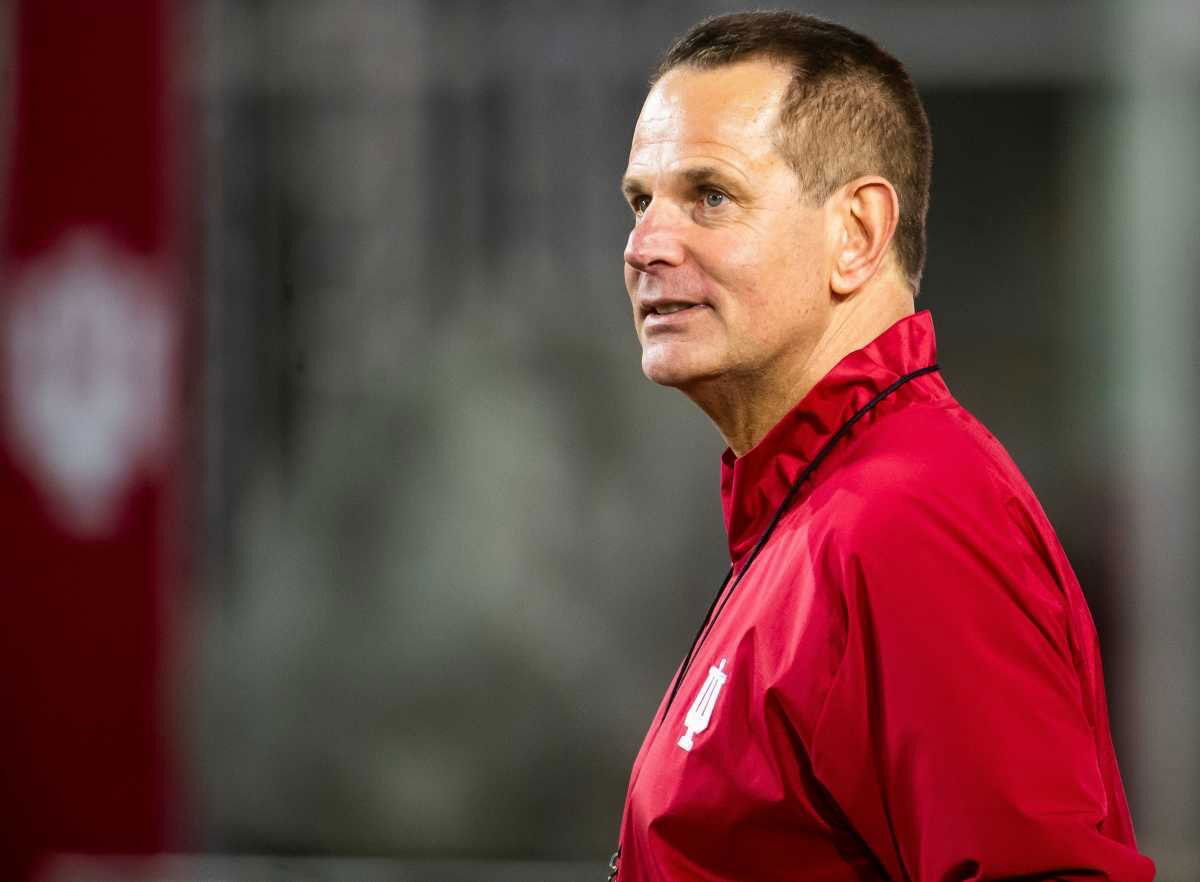
Curt Cignetti has turned Indiana Hoosiers into one of the top sides in college football this season.
Imago
Curt Cignetti has turned Indiana Hoosiers into one of the top sides in college football this season.
Before Curt Cignetti walked into Mercedes-Benz Stadium to coach Indiana against Oregon in the CFP Semifinal, he made a stop that meant far more than any football game ever could. He visited his father’s enshrinement at the College Football Hall of Fame in Atlanta. It was the first time he’d been there since Frank Cignetti Sr. was inducted in 2013. Less than 24 hours later, Indiana beat Oregon 56-22. If you believe in that kind of thing, the timing wasn’t accidental.
Watch What’s Trending Now!
But to truly understand what Frank Sr. meant to Curt, you have to go back to the winter of 1978. It was when a phone call, a diagnosis, and a near-death experience changed everything. Frank was in his third year as West Virginia’s head coach when doctors told the family he had lymphomatoid granulomatosis, a rare, aggressive form of cancer. The mortality rate was close to 100 percent. Curt was a senior in high school.
“He actually was diagnosed and beat it in December of my senior year of high school,” Cignetti recalled on Yogi Roth’s March 11 podcast episode. “He was in remission, and he had gone from about 215 to 163 pounds. And he coached in the fall. I don’t think he was at full strength.”
ADVERTISEMENT
What Frank went through physically was brutal. He underwent three operations. One of them was a splenectomy, the removal of his spleen, that nearly killed him outright. He spent 35 days in the hospital and more than two months bedridden. He had his last rites administered not once, but twice.
The family was summoned to the hospital close to midnight on at least one occasion, expecting the worst. But there was something sitting on Frank’s dresser through all of it. It was a tiny wooden holy cross, small enough to fit in the palm of your hand, sent by former Indiana head coach Lee Corso, along with a letter saying it had special healing powers.
The two coaches were competitors in the 1970s as part of different programs. A popular story of that relationship happened in 1972 when the final bowl spot for the Peach Bowl came down to West Virginia, where Frank was an assistant under Bobby Bowden, and Corso’s 9-1 Louisville team. West Virginia ultimately won the bid, after which Corso notoriously remarked about the Mountaineers’ weak schedule.
ADVERTISEMENT
“My dad overcame cancer when I was a senior in high school,” Curt later said at College GameDay. “Lee sent a holy cross that, in the letter, had special healing powers, that sat on top of his dresser from surgery through his recovery. He beat cancer and lived 43 more years.”
Imago
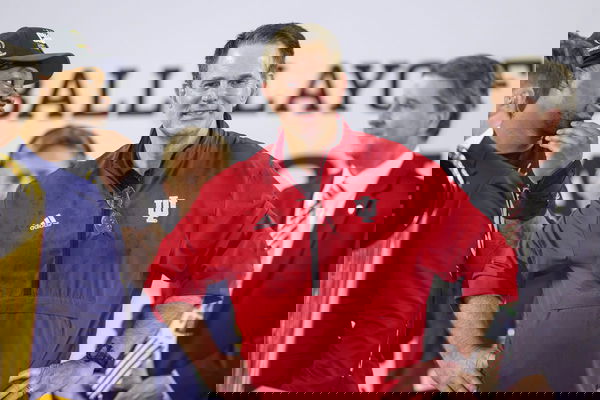
MIAMI GARDENS, FL – JANUARY 19: Head Coach Curt Cignetti of the Indiana Hoosiers smiles after the Indiana Hoosiers versus the Miami Hurricanes College Football Playoff National Championship Game Presented by AT&T on January 19, 2026, at Hard Rock Stadium in Miami Gardens, FL. Photo by Doug Murray/Icon Sportswire COLLEGE FOOTBALL: JAN 19 College Football Playoff National Championship Presented by AT&T Indiana vs Miami EDITORIAL USE ONLY Icon796260119023
For the Cignetti family, that cross was a lifeline they held on to when every medical statistic said to let go.
ADVERTISEMENT
The cancer quietly dismantled what Frank had spent years building at Morgantown. Frank was also forced to lean on a roster full of redshirted freshmen and sophomores who weren’t ready. The program staggered, and the record reflected it. And yet, Frank dragged himself off a hospital bed and coached the entire 1979 season anyway.
“I think he won five of his last seven games,” Curt said. “My dad was a fighter, tough, never met a challenge he didn’t think he couldn’t overcome, and really competitive, really disciplined, great work ethic, and, I guess, those are the things I learned from him.”
ADVERTISEMENT
Following a 42-7 thrashing against Arizona State, Frank was fired. But what looked like an ending was really just a detour. After a brief step away from the sideline, Frank returned to his alma mater, Indiana University of Pennsylvania, and turned it into one of the most dominant programs in Division II history. He went 182-50-1 over 19 seasons, earning 13 playoff appearances along the way. In 2013, the university renamed its football field Frank Cignetti Field in his honour.
“Back then, he grew up in western PA, everybody worked in the mill or the mines, and he went to college and became an assistant at Pitt, Princeton, West Virginia for Bobby Bowden,” Curt said during CFP media day. “He became the head coach and then came down with cancer my senior year of high school, and was given his last rites twice. He didn’t really get to finish what he started there. But yeah, he was my inspiration.”
Frank Cignetti Sr. died in September 2022 at 84 years old, 43 years after the night his family was called to his hospital bedside at midnight. That alone is the legacy. The Hall of Fame plaque in Atlanta is just the paperwork.
ADVERTISEMENT
Curt Cignetti is now taking forward his father’s blueprint
After his dismissal from West Virginia University, Frank Cignetti Sr. stepped away briefly before later serving as the athletic director at Indiana University of Pennsylvania in 1982. Subsequently, in 1986, he took over the program’s football team as head coach and transformed it into a national powerhouse. The Pennsylvania native won 2 PSAC championships and 14 PSAC Western Division titles with the program and Frank stayed with the team till 2005.
The College Football Hall of Famer not only instilled his strong Catholic beliefs in Curt, which helped Frank battle cancer. But also showed him how to be a good coach and build dynasties, as he did at IUP. “My dad was a great role model growing up. I was the oldest of four, and he led by example,” Cignetti said. “He had a presence about him, and he had a great work ethic, disciplined commitment.”
ADVERTISEMENT
Frank Sr. retired as the third-winningest head coach in Division II and led the team to 10 Lambert Cups. Cignetti Sr. also compiled an overall college coaching record of 199–77–1 over 24 seasons. Now, Cignetti is following the same path, achieving the same blueprint he learned from his dad. To continue his dad’s legacy, Curt, too, started his head coaching career at IUP in 2011 and led the team to the 2012 PSAC championship win. The rest is, of course, history!
ADVERTISEMENT
ADVERTISEMENT
ADVERTISEMENT
Related Newsletters