Imago
Credits: Imago
Imago
Credits: Imago
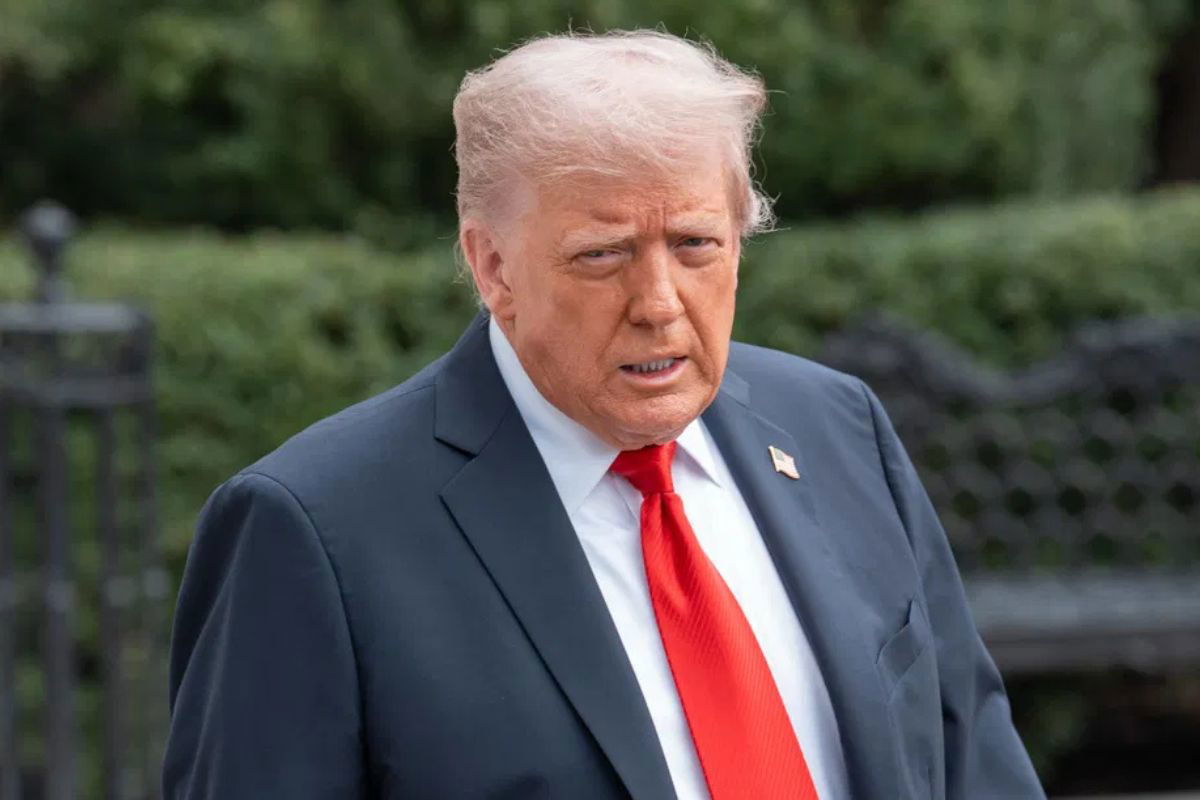
A week ago, President Donald Trump announced a panel discussion titled the “Saving College Sports Roundtable,” with attendance expected from across the sport. The agenda was simple: what’s going wrong in college football? The meeting took place on Friday. Now, with a single promised executive order, President Trump is threatening to upend the entire landscape of college athletics, leaving the NCAA and its member institutions in a state of high alert.


“I will have an executive order within one week, and it will be very all-encompassing,” President Trump said. “And we’re going to put it forward, and we’re going to get sued, and we’re going to see how it plays, OK. But I’ll have an executive order, which will solve every problem in this room, every conceivable problem, within one week, and we’ll put it forward. We will get sued. That’s the only thing I know for sure.”
Watch What’s Trending Now!
Given the current state of college football, a decision like this was inevitable. The people present in this meeting, like Nick Saban and Urban Meyer, have explicitly called out the changing landscape of NIL for the past few years. Just last month, the portal window saw players leaving their teams for money, teams tampering with college athletes, and the influence of agents. The former Alabama head coach, Nick Saban, was the first to address it in the meeting.
“I think we need to come up with a system,” Saban said. “And we obviously have to do it with the president’s leadership and also Congress, probably, whether it’s antitrust legislation or whatever it is, to allow student-athletes in all sports, including women’s and Olympic sports, to enhance their quality of life while going to college.
“But still provide [an] opportunity to advance themselves beyond their athletic career. Which is what the philosophy of college athletics and getting a college education has always been about.”
President Donald Trump said Friday he would write an executive order within a week to address the future of college sports after an unprecedented roundtable meeting at the White House.https://t.co/mxdowItd1L
— ESPN (@espn) March 7, 2026
Saban also argued that student-athletes now treat the sport like a job and no longer focus on their education. The pay-for-play model has attracted students who just want to earn money. They don’t really care about their degree anymore. In the case of Luke Ferrelli, we have seen players leave lucrative deals, even after they have already started classes at a school.
On top of that, the brand-new revenue-sharing system explicitly allows students to get their money directly from their schools, which doesn’t seem fair. In the meeting, former Ohio State head coach Urban Meyer also voiced his concern about this.
“That’s cheating,” he said. “Donors put money in a pot. It’s distributed to the players through coaches and managers. That’s not allowed. Not supposed to do that. That’s pay-for-play.”
There are multiple problem areas that this future executive order is expected to tackle. One of the aims is to create federal-level guardrails for Name, Image, and Likeness (NIL) deals to end the bidding wars for recruits. There is to prevent a “financial arms race” in football and basketball which will further drain resources away from women’s sports and Olympic talent pipelines. There is also a need to provide a unified federal framework to shield universities from ongoing antitrust lawsuits amid conflicting state laws.
Title IX will provide plenty of ground for future lawsuits if things keep going the way they do. Under current Title IX rules, “financial assistance” must be substantially proportional to participation rates. But a major part of the athletic revenue is generated by football and men’s basketball.
The current breakdown of revenue distribution can stand in violation of the laws. Specifically, Title IX’s proportionality requirement. For example, if 45% of a school’s athletes are women, they should receive approximately 45% of the total athletic scholarship dollars. Some schools argue that NIL and revenue sharing are based on market demand, not “financial aid,” and therefore shouldn’t be subject to 50/50 splits.
Organizers scheduled the meeting for an hour but allowed it to stretch to nearly two, while reporters stood in the back of the room throughout. Notably, the only major group absent from the discussion was the student-athletes themselves. However, Donald Trump later addressed their absence and explained why the organizers did not include them in the meeting.
Donald Trump on the absence of current student-athletes from the table
Last week, when organizers announced the meeting, the absence of any current student-athletes raised a few eyebrows. The debate made sense, as current athletes could have explicitly defended their standpoint on this topic. And how the short 15-day transfer window made it very difficult for them to decide on a proper landing spot. But Trump addressed their absence head-on.
“They’re very well-represented,” Trump said. “You know why? Because people like Nick Saban and Urban Meyer, all of the people that I know in the room—and the people probably I don’t know—they all care very much about the student-athlete more so than they care about themselves, so I think they’re really here. In that sense, they’re represented very well here.”
There is a rich history of football students advocating for themselves. A prominent case came up in 2014 when Northwestern University quarterback Kain Colter made history by leading a movement to form the first-ever labor union for college athletes, called the College Athletes Players Association (CAPA). Colter argued that the 40–50 hours per week players spent on football-related activities made them employees of the university, entitled to collective bargaining for better health protections and multi-year scholarships.
“This is about finally giving college athletes a seat at the table,” said Ramogi Huma, a former UCLA linebacker who became the president of the National College Players Association. “Athletes deserve an equal voice when it comes to their physical, academic and financial protections.”
Both Nick Saban and Urban Meyer do have more than two decades of coaching experience. They have seen the landscape of CFB change before their eyes. Moreover, Saban addressed this situation earlier when officials asked him to lead a presidential commission on college sports alongside Cody Campbell, who was also present yesterday. But Saban turned it down because he just wanted a discussion.
However, do they really represent student-athletes? The head coaches were part of the system that had earlier failed to make the latter a part of the financial ecosystem of college football.
Written by

Edited by

Amit