
On May 30, reports emerged that the majority of Big 12 programs were beginning to participate in the College Sports Commission. Upon signing the agreement, the conference and the school members would waive their rights to file lawsuits against the regulator, effectively giving CSC a wide latitude of powers to govern the conference. Now, there seems to be a consensus in the Big 12 regarding the issue.
Watch What’s Trending Now!
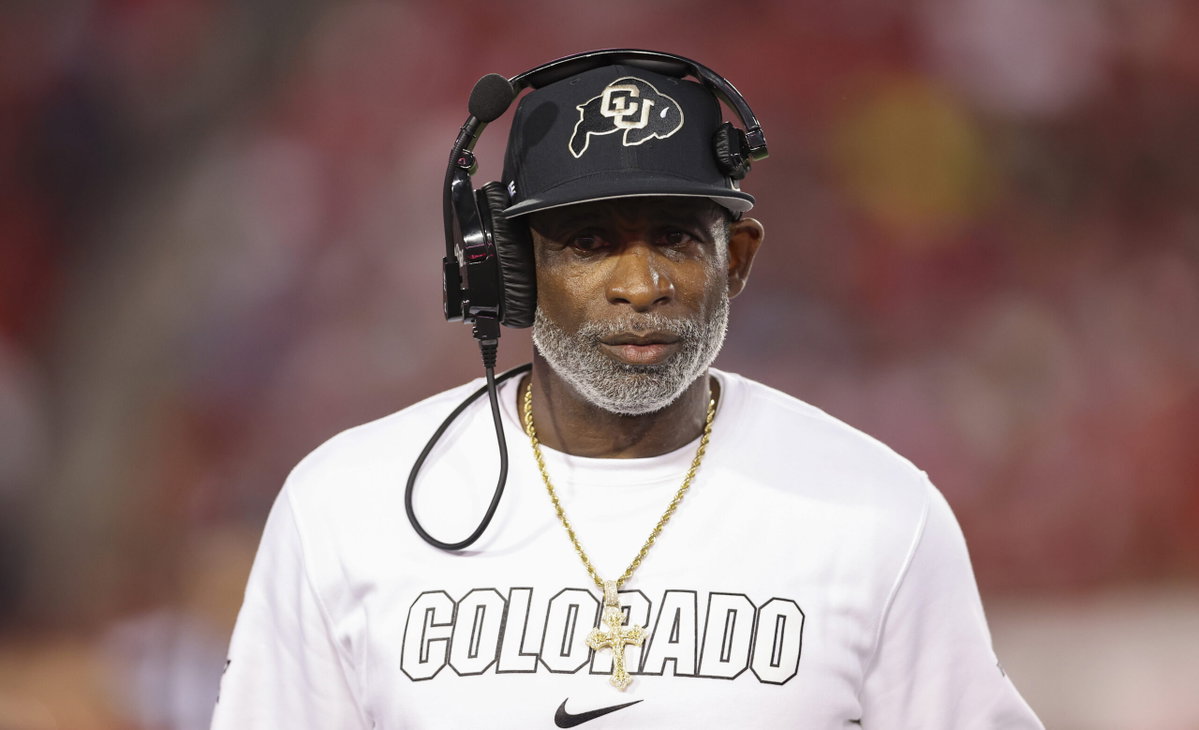
As per ESPN’s Pete Thamel, all 16 Big 12 schools have finally signed the CSC participation agreement, including Deion Sanders’ Colorado. The decision comes after the Big 12’s May 29 meeting, in which the conference’s members decided to initiate the CSC participation agreement. Now that all Big 12 programs have signed it, the conference has become the first to do so.
“The Big 12 wants rules and enforcement, and we want to be a leader in that area,” Big 12 commissioner Brett Yormark said on Friday. “I think signing the participation agreement certainly is indicative of that. I can’t speak for the other conferences. And I mean, obviously, they all say they want rules and enforcement, but they haven’t signed the participation agreement.”
The College Sports Commission is an independent regulatory body established as per the House vs NCAA settlement. Its main objective will be to oversee the revenue-sharing model, set roster limits, and validate NIL deals for programs. Not just that, CSC will also have powers to investigate potential rule violations, ensure compliance, and can also administer penalties. That can include post-season bans, transfer limits, and heavy fines. It’s a move that aligns with Deion Sanders’ demands.
Update: Per ESPN sources, all 16 Big 12 schools have now signed the CSC participation agreement.

Sources: All of the Big 12’s presidents and chancellors in attendance at Big 12 spring meetings are in the process of signing the College Sports Commission’s Participation Agreement. They’d become the first power conference to get all of the schools to agree to do this.

“What the NIL is presenting is not sustainable,” Deion Sanders said to ESPN on February 6. “Oftentimes, it seems like you see the same consistency of teams winning and winning and winning because of the finances that some of the boosters and the donors can give. But that needs to be fixed, and we need some type of commissioner. And we need somebody to step up and make sure we’re doing this thing in unison.”
The transfer portal significantly impacted Deion Sanders’ 2026 roster through numerous departures. A total of 64 players decided to ditch his camp to join other programs, which also included prominent names like Jordan Seaton (to LSU), WR Omarion Miller (to ASU), and DL Jahiem Oatis (to Ole Miss). Because of other programs pursuing Sanders’ players through heavy NIL pull, the head coach has long demanded strict enforcement, including a stern cap on roster spending.
Big 12’s CSC decision aligns with Deion Sanders’ roster cap demands
So far, the CSC agreement isn’t valid and requires the approval of all 68 Power Four schools to come into force. Initially, the commission had asked all schools to sign the agreement by last December. However, no conference has reached a consensus except the Big 12. Despite not having various powers for now, CSC has still processed more than 26,000 NIL deals till now worth $243.3 million since it was established. Colorado head coach Deion Sanders has echoed in favor of the regulatory body, urging some kind of a cap on programs’ total roster spending.
“I wish there was a cap,” Sanders said in July last year at the Big 12 Media Days. “The top-of-the-line player makes this, and if you’re not that type of guy, you know you’re not going to make that. That’s what the NFL does. So the problem is, you’ve got a guy that’s not that darn good, but he could go to another school, and they give him a half-million dollars, and you can’t compete with that. And it doesn’t make sense.”
For now, CSC is still a toothless tiger, overseeing NIL deals but not being immune to lawsuits and court injunctions. Once all Power-4 conferences sign an agreement, only then will Sanders’ demands have some kind of resolution. Until then, the Big 12 will surely try to bring other conferences into the fold. But considering the SEC and the Big 10 dominate the discourse and decisions, it might take a long time for CSC to function at its full potential.