
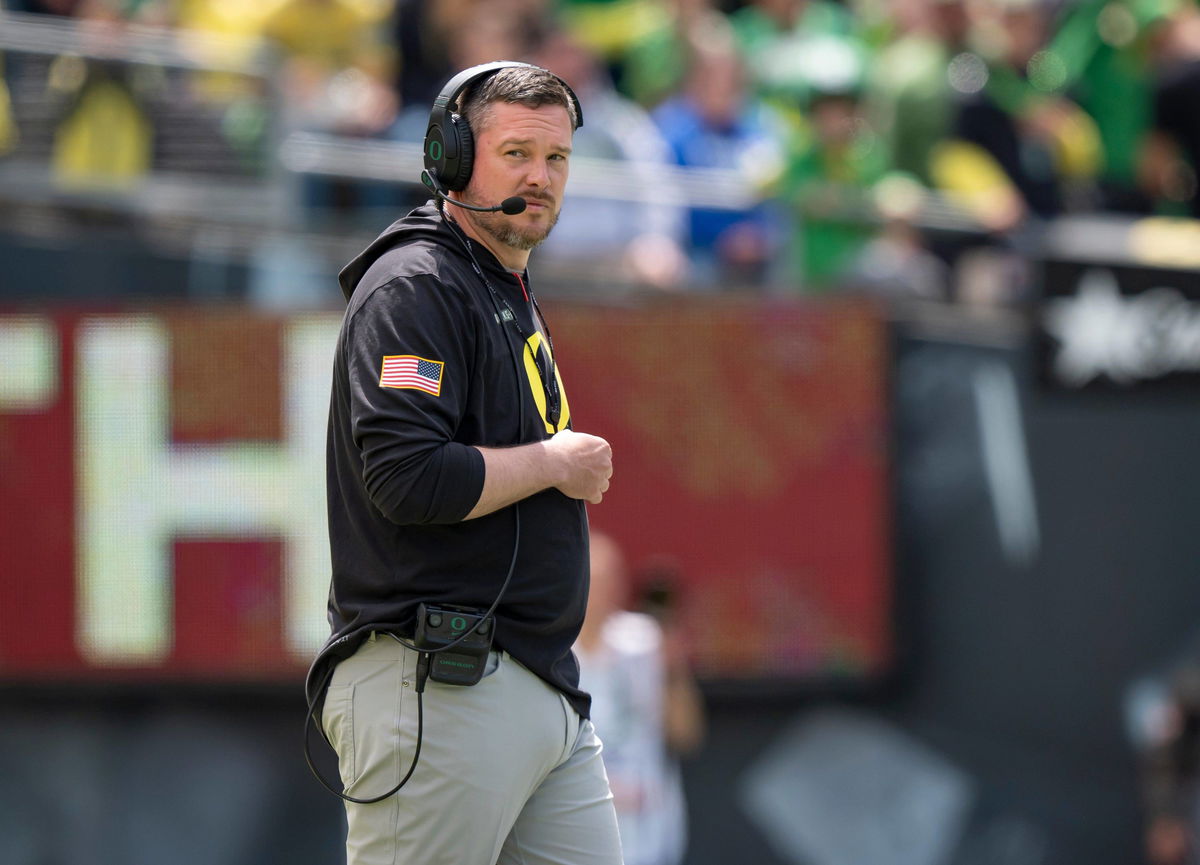
The No. 6 Oregon Ducks walked into Stillwater expecting to dominate. Instead, they left with a shocking 39-31 loss to an Oklahoma State team that had just lost to Tulsa, raising immediate questions about Oregon’s tactical execution under head coach Dan Lanning and his newly promoted assistant coaches. While a visibly hurting locker room searches for answers, growing scrutiny has quickly shifted toward offensive coordinator Drew Mehringer and defensive coordinator Chris Hampton after a night where both sides of the ball looked completely outmatched.
Watch What’s Trending Now!
“If it wasn’t for the takeaways that we had on defense, it doesn’t even look like it looked,” Lanning said during the post-game presser, according to Tyson Alger’s YouTube video. “That being said, there’s a lot of opportunity for improvement. You look overall as a team; we didn’t tackle well in Week 1. We didn’t tackle well in week 2, right? We didn’t win the line of scrimmage on either side of the ball. Had to do a better job there.”
“Ultimately, on the same note, every single goal is still in front of us, right?” Lanning said. “And we control our destiny, but this is a game that we needed to show improvement. We didn’t show improvement. So, we have to see that now, moving forward with our team. We got a locker room that’s hurting, obviously.”
That’s two straight weeks of the same issues as shown on the tape, hinting that it wasn’t just a bad afternoon for Oregon, and Lanning wasn’t pleased by the loss either.
Losses like this are virtually unprecedented in the Dan Lanning era, where Oregon was previously 35-0 against unranked opponents and only ever lost to national title contenders. But while outright upsets are rare for Lanning, the underlying issues, overly aggressive fourth-down gambles, defensive eye-discipline errors, and missed tackles, have reared their heads in his biggest losses before, most notably against Washington in 2022.
Promoted coordinators face growing pain transitions across college football all the time, but when high-risk calls fail to mask basic execution flaws, it stops being a first-year coordinator problem and starts looking like a recurring program habit.
Oregon’s offense struggled to find any rhythm for long stretches against a Cowboys defense that struggled in Week 1 against Tulsa. The Ducks’ defense had its own problems: Oklahoma State hit Oregon with explosive plays and extended drives at key moments. Lanning pointed out that both sides of the ball had one of the worst performances of the program and took it upon himself to learn from the mistakes.
“Oklahoma State went and won that game, and we didn’t do the things that you have to do to win that game, right?” Lanning said. “And we owe that result to ourselves. So that’s what happened. We can be a team that goes and learns from it, and becomes a lot better. I know there’ll be a lot of questions about fourth-down situations. I think you have to be aggressive in those moments, especially when you’re not having success, to keep it going.”
Oregon had a chance to tie the game late or at least keep within the score, but Lanning felt the execution wasn’t simply there, as he pointed out poor eye discipline, lack of coordination among players, and less rhythm on both sides of the ball
Lanning took accountability for the loss upon himself, stating that as the head coach, he should’ve paid more attention to details and focused on preparing the team with the “right mindset.”
“So all that starts with me, right?” Lanning said. “Every bit of that starts with me. I didn’t prepare our guys well enough to play. We didn’t come in with the right mindset. We didn’t have a good enough plan on either side of the ball to be able to execute at a high level, and that cost us today.”
Lanning’s response also made it clear that he wasn’t going to let the criticism fall solely on his coordinators. While his decision to promote Chris Hampton as defensive coordinator and Drew Mehringe as offensive coordinator was under scrutiny, after two games, Lanning framed the problems as shared responsibility across the coaching staff and the players executing the plan.
He admitted that Oregon could have made better plays on both sides of the ball, but he also stressed that even the right call wouldn’t mean anything if the players didn’t execute it. Lanning believes that the early struggles of the team is a program-wide issue rather than something that should be pinned on each of the coordinators.
Oregon has found certain key issues that need to be fixed fast ahead of Week 3 against Portland State. Lanning knows the Ducks have work to do, but he is standing behind his staff and expects the team to respond better on the field.