
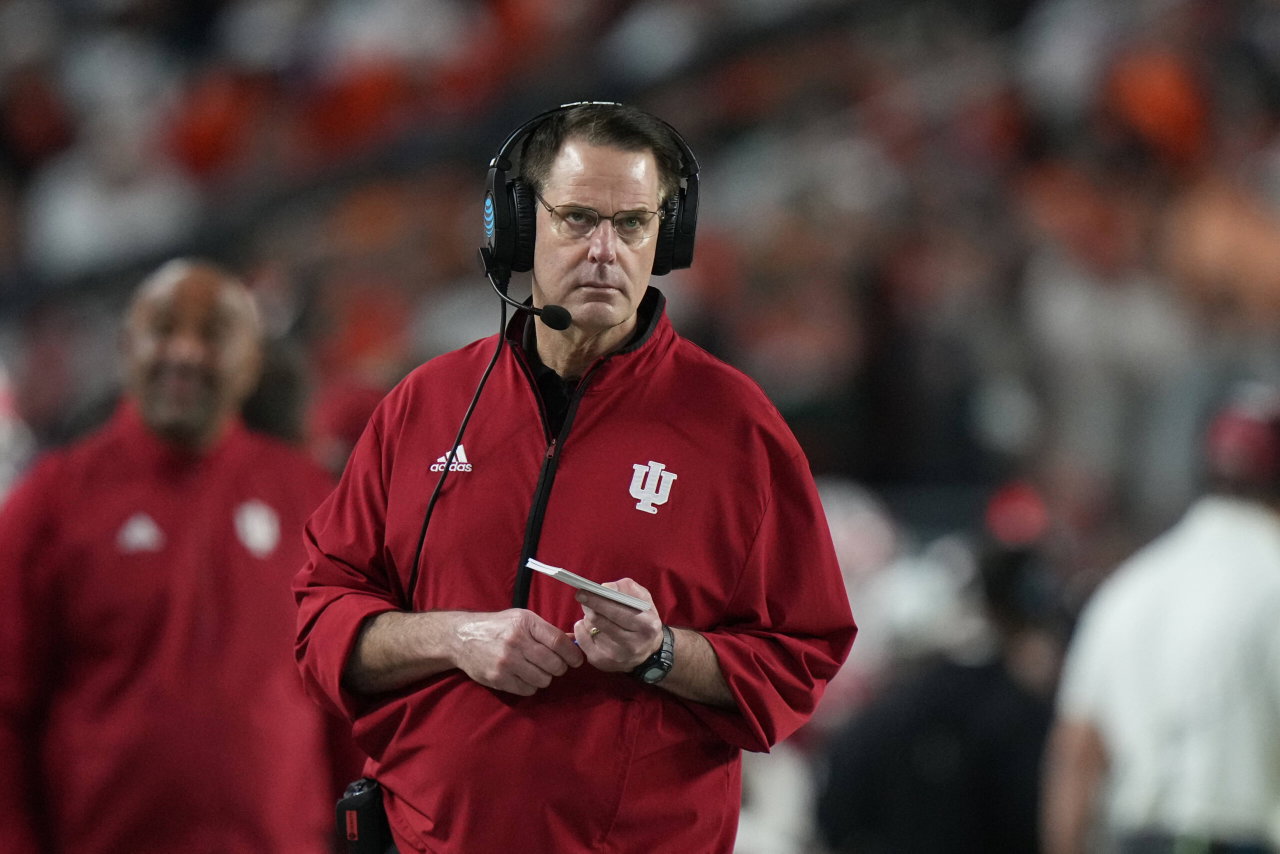
Indiana head coach Curt Cignetti does not hold back when he feels his team is being overlooked. With the first College Football Playoff rankings of the 2026 season officially out, the Hoosiers boss took aim directly at ESPN, claiming the sports broadcasting powerhouse uses its media influence to push favorable narratives for the SEC.
Watch What’s Trending Now!
The first CFP rankings, released Tuesday, November 3, have certainly sparked plenty of debate. The SEC landed 10 teams in the committee’s top 25, compared to six from the Big Ten. Even more frustrating for critics, several two-loss SEC programs found themselves ahead of undefeated teams.
Cignetti wasn’t particularly impressed with what he saw. When asked about the alleged favoritism, Cignetti didn’t hold back, taking a direct shot at ESPN: “These people, and there’s a whole bunch of ’em, they march out of the tent, and they’re given instructions on what to say, and they follow the company line… And I don’t need to go any further.”
The Indiana coach questioned the amount of attention the SEC receives from ESPN and its college football writers.
“The SEC just a lot of love from ESPN, you know, and all their writers that they don’t technically pay but march to their drum. Right. So that’s why you see all these SEC teams up there, you know, and some good two-loss teams from the Big Ten, not quite as high,” Curt Cignetti said on Tuesday. “Like I said, it’s all going to be played out in the field!”
This callout hits on a real trend in modern college football. ESPN owns the multi-billion-dollar broadcasting rights for SEC games and also runs the live playoff reveal show. When the same network airing the games spends all week hyping up the league, it creates a massive megaphone effect that pushes SEC talking points into everyday fan and voter conversations. Also, it was a pretty direct criticism, especially considering how heavily the SEC was represented in the committee’s first release.
The numbers make it easy to understand why the comments have attracted attention. Georgia opened at No. 2, followed by Alabama at No. 5, Kentucky at No. 6, Texas at No. 7, and Ole Miss at No. 10. That gave the SEC five teams inside the top 10 alone. Meanwhile, the Big Ten had just two teams in the top 10 (Indiana, UCLA); Ohio State at No. 12 made three in the top 12.
The biggest talking point was the committee’s decision to place several two-loss SEC teams ahead of undefeated UCLA. Alabama (6-2) landed at No. 5, while Texas (6-2) and Ole Miss (6-2) came in at No. 7 and No. 10, respectively. UCLA, despite its perfect 8-0 record, had to settle for No. 8.
Cignetti is not the first Big Ten coach to feel this way. For years, Midwest coaches have quietly complained that Southern teams get the benefit of the doubt the second the polls come out. A two-loss SEC powerhouse almost always gets treated like a proven contender, while a top Big Ten team has to work twice as hard just to earn the same respect.
To be fair to the selection committee, its members insist that numbers, not TV talk, decide these spots. They point to tough schedules, head-to-head wins, and top-tier matchups to justify giving SEC teams so much respect. From their view, a two-loss SEC team often earns a higher rank simply because surviving a brutal conference grind holds real weight.
Cignetti is not saying ESPN TV hosts physically sit inside the committee room and cast votes. His point is about how non-stop TV hype sets the mood for the whole country. Even though the CFP selection committee acts as an independent group, weeks of loud TV talk about SEC toughness can easily play on voters’ minds when they sit down to rank these teams.
For Cignetti, however, there is only one way to settle the argument: play football.
The Hoosiers are currently 8-1 and sitting at No. 4, putting themselves in a strong position heading into the rest of the season. But with several challenging games still ahead, they will need to keep winning to protect that position.
And that’s exactly why his final message matters. The rankings can generate all the headlines and debates they want, but Cignetti believes the teams should ultimately settle their differences on the field, the true American way.