
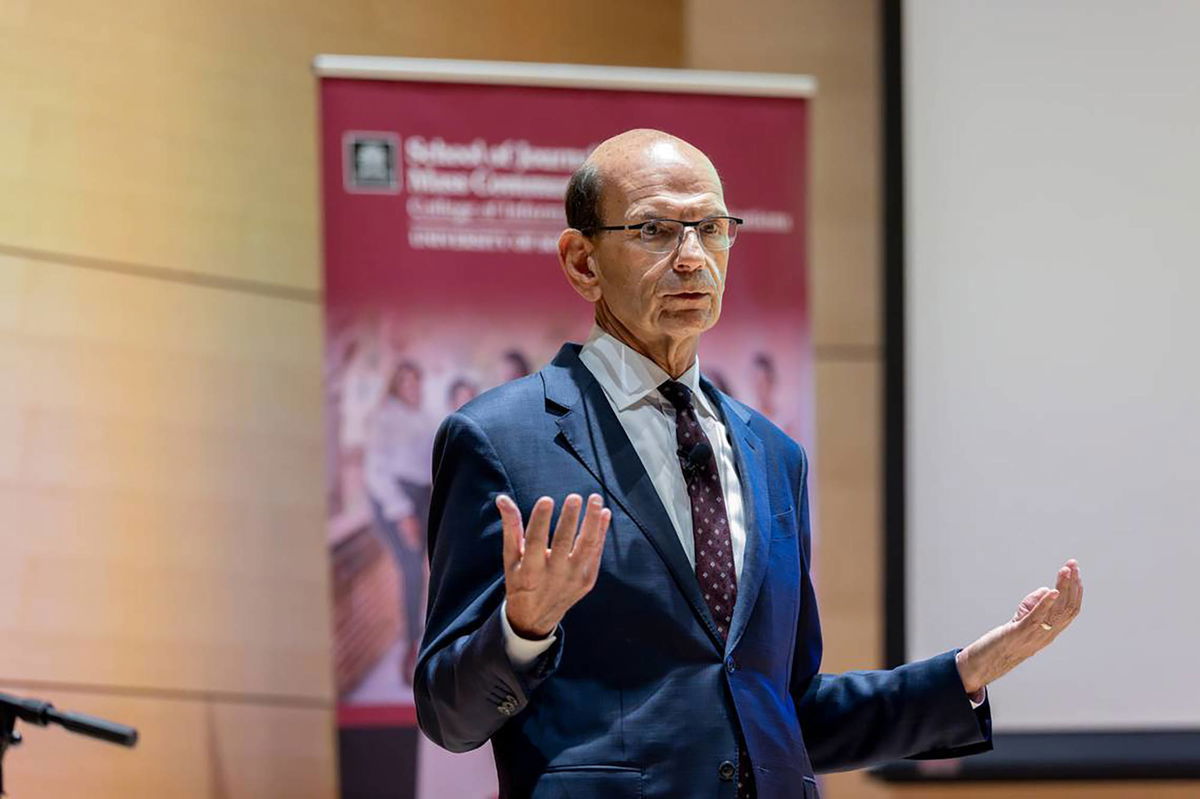
It’s extraordinary how college football has endured every major change without affecting viewership. First, the NIL came with widespread backlash. Then came the playoff expansion, and yet college football’s viewership (CFP) jumped 16% last year. There’s no unified governance, no established rules, and no consensus on anything. According to Paul Finebaum, this is happening despite the leadership of college athletics.
Watch What’s Trending Now!
“Over the last 20 to 25 years, the worst-run industry that I’ve seen, including radio, is college athletics,” ESPN’s Paul Finebaum said at the 2026 Barrett Media Audio Summit on July 10. “You literally have some of the most arrogant, foolish, misguided people, and it’s still a great sport. I am no more concerned that college football is going to go away than I am worried that mine and your 401(k) will go down the drain because of the cro-ks that are 18 blocks from here on Wall Street.”
The NCAA governs college athletics, yet in recent years the association has become almost powerless. Athletes are now increasingly dragging the NCAA in court for eligibility lawsuits, transfer problems, or NIL disputes. Not just that, we are now seeing programs actively supporting their athletes in their legal battles against the NCAA. Trinidad Chambliss, for instance, won the injunction after Ole Miss rallied behind him in support.
In truth, the Big 10 and the SEC now hold the real power, and even they can’t reach consensus on things like conference realignment and the calendar. The Big 10 came up with a plan for a 24-team playoff, and almost every conference supported it. The only problem? The SEC didn’t want the plan to move ahead, and as a result, it’s stuck in limbo. But that’s not all.
The transfer portal has created a massive turnover for teams every year. Since players can now play immediately after transferring and can do that as many times as they want, it has created a chaotic environment for coaches. The result? Top college football programs dominate the landscape through big-money NIL deals, while smaller programs still struggle to generate revenue.
Without any single entity tasked with governance, there are even calls for removing the conference title games altogether. Indiana head coach Curt Cignetti explored the idea after Alabama head coach Kalen DeBoer called for it during the team’s conference title game loss last season. In all, reform in college football is slow due to self-interest, leading to more controversies. Despite all that, though, college football has endured.
“I have had people come up to me and say, ‘I don’t like the players getting money,’ and they’re still dying for a ticket to go into Neyland Stadium or Bryant-Denny Stadium,” Finebaum said. “It doesn’t change. Because the spirit of the college football fan, I would argue, surpasses almost anything I’ve ever seen. They may not want to spend the money on the tickets, but they’ll show up to listen to sports talk every afternoon, and they’ll watch the games on Saturday.”
From the Big East’s collapse to the transition to the BCS era to the move to the playoffs, college football has remained a top sports product. Maybe it needs governance to streamline many of its controversial aspects. But overall, the decentralization only makes the sport more special.