Imago
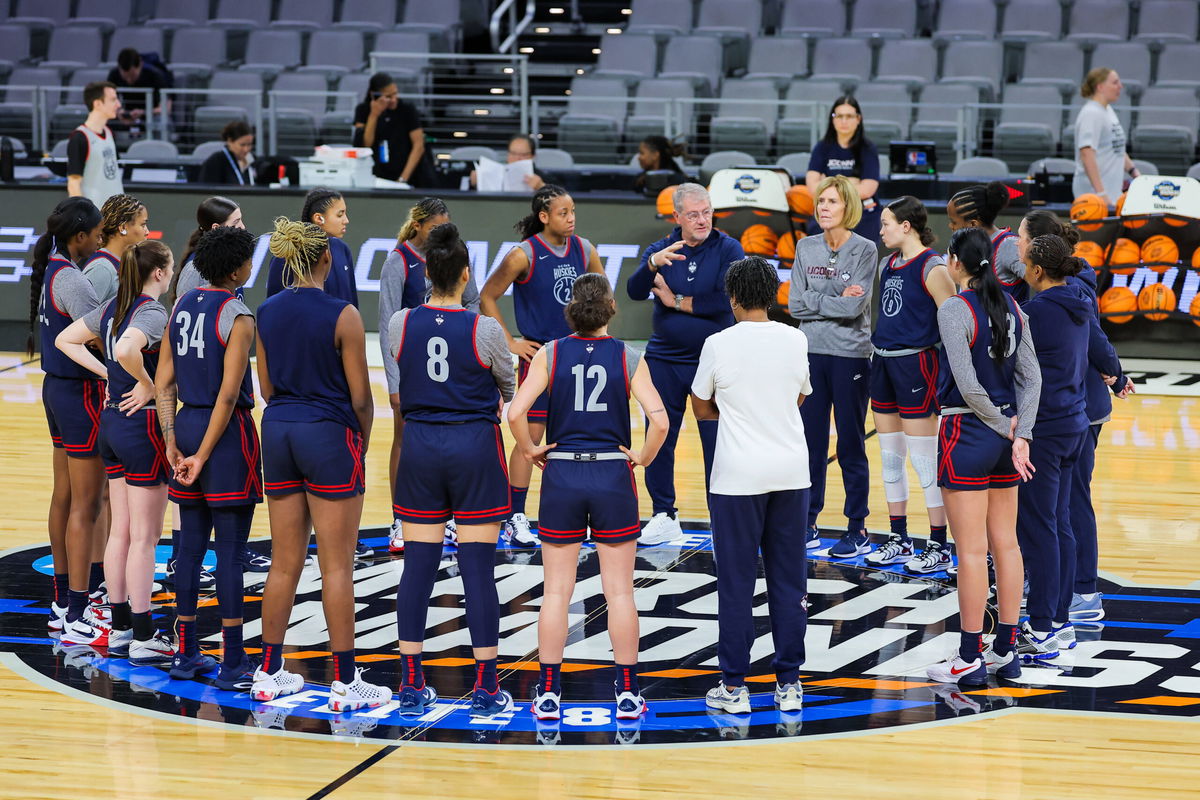
March 26, 2026, Fort Worth, Texas, USA: FORT WORTH, TX : UConn Huskies head coach Geno Auriemma speaks with his players prior to the start of the practice Thursday afternoon for the Sweet 16 and Elite 8 being held at Dickies Arena in Fort Wroth this weekend. Fort Worth USA – ZUMAm257 20260326_zsp_m257_039 Copyright: xBrianxMcLeanx
Imago
March 26, 2026, Fort Worth, Texas, USA: FORT WORTH, TX : UConn Huskies head coach Geno Auriemma speaks with his players prior to the start of the practice Thursday afternoon for the Sweet 16 and Elite 8 being held at Dickies Arena in Fort Wroth this weekend. Fort Worth USA – ZUMAm257 20260326_zsp_m257_039 Copyright: xBrianxMcLeanx
Money, not just talent, now dictates the top tier of women’s college basketball, and coaches are finally breaking their silence. On paper, the sport looks deeper than ever. But at the very top, when it comes to competing for championships, the same programs keep showing up. So coaches across the country are starting to say the quiet part out loud.


The UConn Huskies, the UCLA Bruins, the Texas Longhorns, and the South Carolina Gamecocks are all set to gear up for the Final Four, but now many are starting to think it’s not just about talent. It’s about resources.
Watch What’s Trending Now!
This year marks only the second time in NCAA history that the same four teams have made back-to-back Final Fours. And while women’s basketball has celebrated growth, bigger crowds, more exposure, and stronger competition, the gap at the top still feels very real.
“In this day and age, we’ve got to have more resources to be able to fund a team. I have no idea what LSU’s cap is or what their total amount is for their team, but ours is probably an eighth of it,” Krista Gerlich said after the Texas Tech Lady Raiders exited the NCAA tournament in the 2nd round. “I don’t have a million-dollar player on my team.”
Texas Tech’s Krista Gerlich: “There’s more parity coming, but there’s still the upper echelon and there’s the rest of us.”
The playing field is leveling, but not at the very top.
To join UConn, UCLA, Texas and South Carolina, teams have to spend.https://t.co/6mCIOocWmR
— Mitchell Northam (@primetimeMitch) March 31, 2026
“That doesn’t mean everything except that there’s a huge difference in the level of talent. We have to have that investment to be able to compete at that level.”
Programs like UConn, South Carolina, Texas, and UCLA are all operating with budgets north of $9 million. So these aren’t just well-coached teams with top talents anymore; they’re fully resourced programs.
Even Vic Schaefer, head coach of the Texas Longhorns, opened up about the rise in parity across the game.
“The parity in our game right now is at an all-time high. I think the support, the fan bases across the country, the crowds that schools are drawing, but I think the parity is what really jumps out at me,” he said as per USA Today.
“There are so many good players, so many good coaches. Universities are investing in their women’s basketball programs. This is a prime example of when you invest in something, and you pour it into something, and you do it the right way, you are going to get a good return.”
Throughout the tournament, several coaches have used their platforms to push for more support, funding, and commitment from their programs. Because parity may be improving across the board, but it hasn’t quite reached the elite tier yet.
Take the Elite Eight this year as an example. The teams that won there and then reached the Final Four didn’t just win their games. They dominated, with an average score margin of 23 points. That kind of gap doesn’t happen by accident. Obviously, talent still matters, but the infrastructure behind that talent is just as important today.
“You’re going to need continuous support. There’s got to be an investment in your sport, because it’s changing,” Kenny Brooks of the Kentucky Wildcats said.
With the introduction of revenue sharing following the landmark House v. NCAA decision, schools now have more flexibility than ever to support their athletes directly. But with that flexibility comes a divide – not every program can, or will, spend at the same level.
So until more programs are willing to match that level of investment, the road to a national championship will likely keep running through the same few schools.
And if there was any doubt about how much the game has changed, Dawn Staley made it even clearer.
Women’s Basketball Enters a New Era as Dawn Staley Lays Bare the Cost of Competing
For the head of the South Carolina Gamecocks, the shift isn’t just about how teams are built but how the conversations around recruitment, especially with players in the transfer portal now begin.
“How much is it going to cost us? That’s the conversation. You’ve got to lead with that,” she said as per ESPN. “Because you don’t really want to waste your time. You either are going to have enough to pay players, or you don’t. And you move on.”
That alone should give you a perspective on where women’s college basketball stands today.
Imago
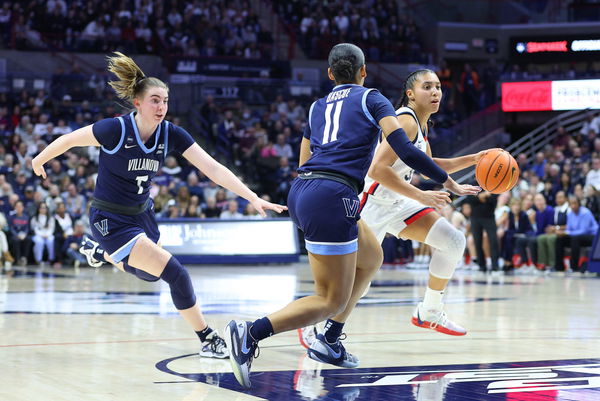
STORRS, CT – JANUARY 22: UConn Huskies guard Azzi Fudd 35 defended by Villanova Wildcats guard Jasmine Bascoe 11 during the women s college basketball game between Villanova Wildcats and UConn Huskies on January 22, 2025, at Harry A. Gampel Pavilion in Storrs, CT. Photo by M. Anthony Nesmith/Icon Sportswire COLLEGE BASKETBALL: JAN 22 Women s – Villanova at UConn EDITORIAL USE ONLY Icon25012287
Not so long ago, recruiting conversations revolved around how much a program could develop an athlete, their culture, and the level of education. Coaches sold a vision of what a player could become and how a program could shape their future. But now, before anything else, comes a much more direct question: Can you even afford them?
One of the major reasons behind big programs’ better rosters is deeper pockets. While some coaches are still pitching opportunities, others are closing deals with financial certainty already in place.
The reason behind these changes isn’t just one thing; it’s a combination of several things hitting the sport all at once.
The introduction of NIL was just the spark, but with direct revenue sharing now in play, programs have more control over what they can offer. And at the same time, athletes with top talent continue to gravitate toward schools with greater exposure and financial backing.
As programs invest more and more in staffing, travel, and development, the advantage isn’t just in recruiting anymore, as the resources behind it play a huge role.
So getting top talent still wins the games, but in the end, it’s money that decides where that talent goes.
Written by

Edited by

Snigdhaa Jaiswal