Imago
Via Imagn
Imago
Via Imagn
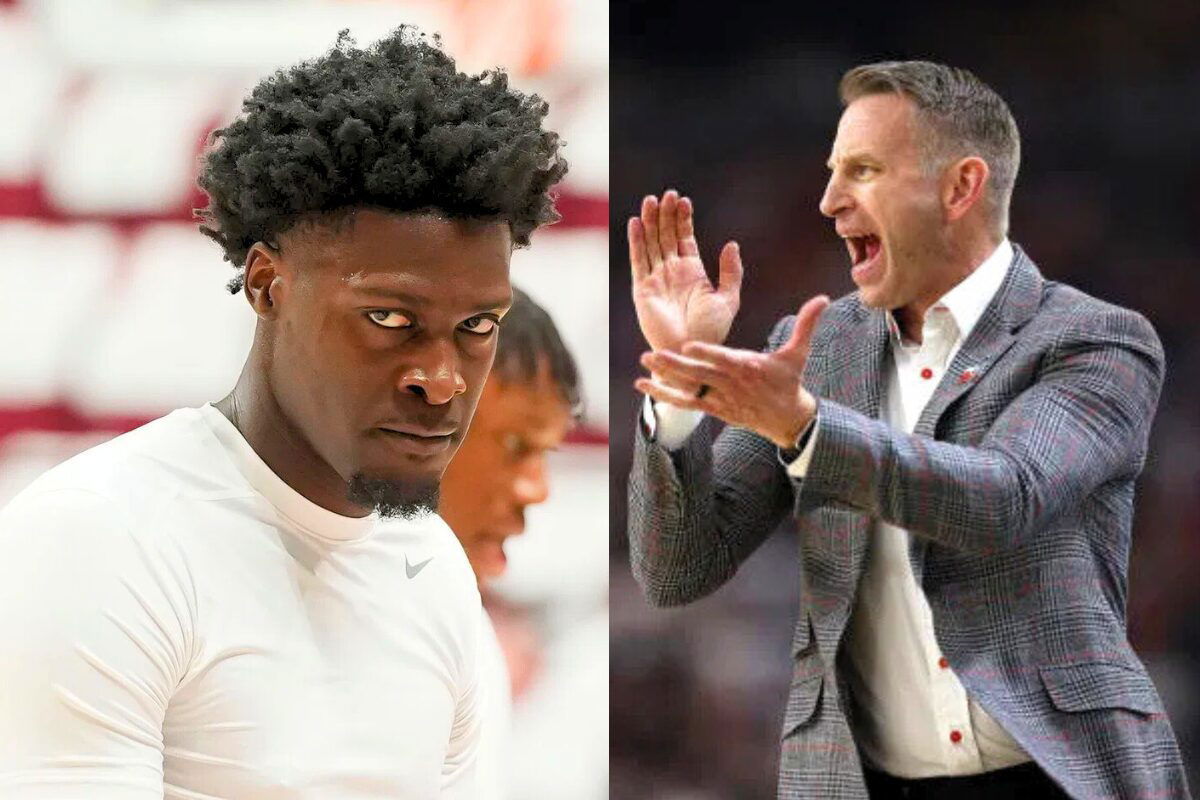
In the time of distress, Alabama head coach Nate Oats had just one player in his mind: Charles Bediako. The Crimson Tide suffered a crushing 77-90 loss to Michigan in the March Madness Sweet 16 on Friday. While self-inflicted troubles plagued their performance, Oats felt that the one player who could have made a difference wasn’t on the roster, prompting him to share a bold take.


The moment unfolded at the post-game press conference after the defeat. While speaking about his team’s dismal numbers on the boards, Oats straightaway pinpointed the absence of Bediako as the contributing factor behind it.
Watch What’s Trending Now!
“We saw the opportunity to bring some size on, after Nnaji was declared eligible, and most people, including ourselves, thought Bediako would be eligible,” Oats said. “We had one judge who thought so. He would’ve definitely helped the situation with the rebounding. We wouldn’t have gotten out-rebounded by 13 tonight had we been able to continue to play him.”
Oats’ assessment does stand out in its own right. Bediako’s physicality in the paint makes him a threat on the boards, and his numbers from his first two collegiate seasons back it up. This expertise was also evident in the five games he played this season, where he recorded 23 rebounds in limited minutes off the bench. In his absence, the Crimson Tide went 32-46 in rebounds, suggesting their lack of prowess on the boards.
But as the Alabama head coach looks to hide behind Bediako’s absence, the rulebook does say that the player was ineligible to play college basketball. Bediako did manage to get a TRO back in January from a Tuscaloosa district judge. It facilitated his return for five games, with an additional 10-day extension of his TRO.
Irrespective of that, in the subsequent hearings last month in front of Judge Daniel J. Pruet, he was termed ineligible to return to college basketball. Bediako appealed to the Alabama Supreme Court, seeking interim injunctive relief to allow him to play for his collegiate team while the legal proceedings continue. It got rejected, too, and Bediako subsequently dropped his case against the NCAA earlier in May.
The NCAA rules do seem to blur at times. But the governing body remained firm in its stance on Bediako’s case throughout the process. “The NCAA has not and will not grant eligibility to any prospective or returning student-athletes who have signed an NBA contract. Eligibility rules ensure high school students get a shot at earning scholarships, and we will continue to consistently apply and defend these rules,” a statement from the NCAA read.
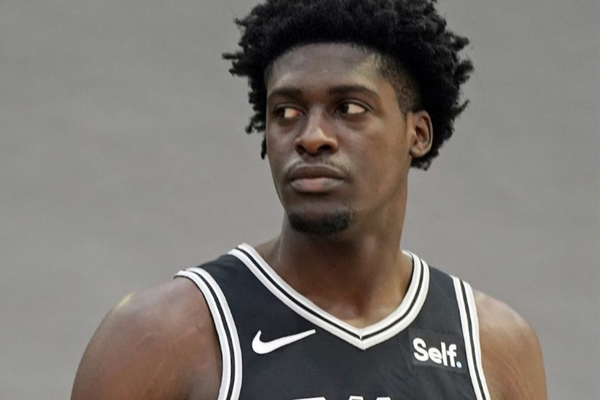
Charles Bediako’s case also starkly contrasts with James Nnaji’s. Unlike Bediako, who signed a two-way contract with the San Antonio Spurs and played for the NBA G League, Nnaji never signed a contract. The Baylor player went 31st in the NBA draft and also played for FC Barcelona in Europe. But before it, Nnaji was never part of a college program, unlike Bediako. As a result, the NCAA granted him full eligibility to play for Baylor.
Imago
Via IMAGO
Without Bediako, Labaron Philon Jr. did most of the heavy work. The Alabama guard recorded a team-high 35 points and 7 rebounds. But at the end of the day, there were far more areas of their game that were also exposed.
Nate Oats’ Alabama Struggles With Defense Too in Charles Bediako’s Absence
Apart from physicality, Charles Bediako’s elite defense is another of his flagship traits that raised his ceiling as a player. His reputation as an elite defender was well known to Oats, having seen him during his first two collegiate years. “When he was here, he was an elite rim protector, very good post defender, and rebounder,” Oats said back in January. “I think his games continue to develop, and we’ll try to use some of that stuff he’s developed.”
The offense was never an issue for the Crimson Tide in the season. With Labaron Philon Jr. and Aden Holloway, the Oats team had it sorted. But the defense has been shambolic across the board. Alabama gave up an average of 82 points per game, ranking 351st in the nation. With such a fragile defense, the Crimson Tide was always going to find it difficult against the Wolverines.
And more importantly, with their luck and legal restrictions, they were without the only player that could have made a difference singlehandedly: Bediako. As reality set in, their worst fears came true. They struggled immensely while defending near the paint and at the half-court line. The Wolverines scored 50% from the paint, going 33-for-66. In addition, the Crimson Tide also allowed Dusty May’s team 48% from the 3-point line.
In return, the Crimson Tide managed just 36% from the field and just 30% from the deep. Alabama’s defensive collapse was total: they registered just a single block and five steals all game, a passivity that allowed Michigan to shoot 50% from the paint and 48% from three.
While Charles Bediako’s presence might not have guaranteed a win, his absence left a glaring hole that Michigan ruthlessly exploited, leaving Nate Oats to ponder a ‘what if’ that will define Alabama’s offseason.
But, in fact, it would have given the Crimson Tide a substantial defensive boost. However, his presence would have almost certainly bridged the critical rebounding and defensive gaps that plagued Alabama in its most important game of the season.
Written by

Edited by

Pranav Venkatesh