
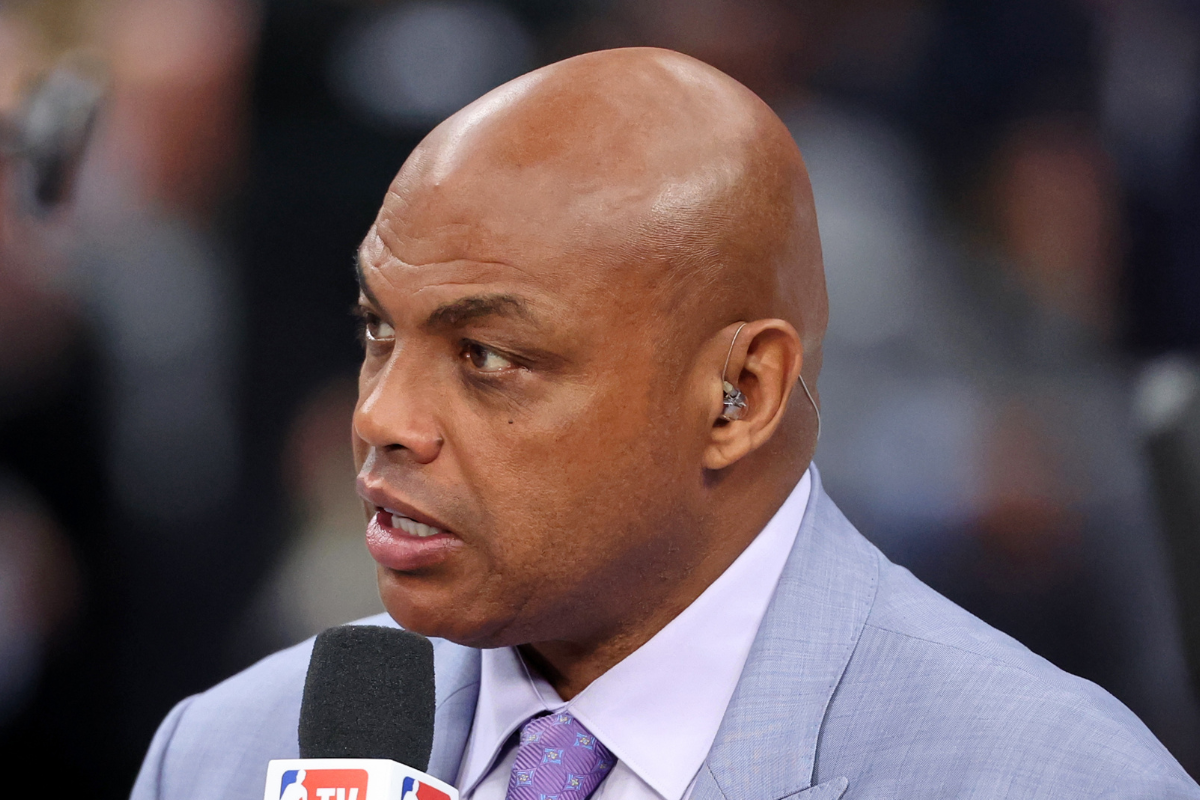
Charles Barkley has gone viral again, but not for the reasons the latest headlines might suggest. The former Auburn standout actually dropped this blunt take back in June 2024, calling out the direction of college sports in a way that’s only now hitting home.
Watch What’s Trending Now!
With fans watching the landscape shift in real time, Barkley’s words are suddenly being replayed and reexamined. And the timing isn’t random. Just look at cases like James Nnaji, and the growing frustration around how NIL has turned college sports into something barely recognizable from what it once was.
While one portion has been circulated widely, here is the full context of the NBA host’s comments on OutKick’s Don’t @ Me With Dan Dakich.
Now, we don’t need to tell you how right Barkley was and where the revenue conversation was headed back then. Athletic departments are staring down some hard choices about how to make the numbers work long term, and for some schools, that could mean cutting programs altogether.
And as for how things reached this point, Charles Barkley was blunt: these new models are being shaped around a tiny slice of athletes, roughly one percent, while the rest of college sports is left to deal with the fallout.

Yes, more of the legend Sir Charles Barkley: "We have screwed up college sports for 1%... 1% of players who probably make all the money, but we're going to end up screwing up the 99% who actually need college (sports) to get a free education"
When the NCAA introduced its interim NIL policy in July 2021, it was widely praised as a long-overdue step forward. College athletes could finally earn money from their name, image, and likeness without losing eligibility. Fast forward, and the optimism has faded. Instead of strengthening college sports, NIL has exposed serious structural flaws that are starting to destabilize the system.
The issue isn’t NIL itself, but how loosely it’s been rolled out. With no real guardrails, the system has drifted toward pay-for-play, driven by wealthy boosters, NIL collectives, and corporate money. What was supposed to preserve amateurism now feels increasingly professional, with the richest programs gaining even more leverage while others struggle to stay relevant.
Power conference programs with deep-pocketed donors and massive alumni networks can put together multimillion-dollar deals that smaller schools simply can’t touch. Schools in major markets have built-in advantages, while programs without strong collectives are left behind, creating growing regional and financial disparities.
As noted in an American Public University report, this shift disrupts competitive balance and chips away at the idea that smart coaching and player development can elevate any program.
That imbalance raises an obvious question: how are smaller schools supposed to compete? When programs like Alabama, Texas, or Ohio State can float seven-figure NIL offers to recruits, mid-majors in conferences like the Mountain West or Sun Belt are fighting uphill battles. Even within power leagues, schools in smaller markets or with less aggressive donor bases are falling further back.
Layer the transfer portal on top of NIL, and college sports now resemble a free-agency market. Players can enter the portal, shop offers from multiple collectives, and pick the best financial deal. Back in 2022, 90% of athletic directors warned that an unregulated NIL system combined with relaxed transfer rules would lead to unfair recruiting practices and instability. That concern has largely played out, as financial incentives increasingly drive decisions that once centered on development and fit.
Now, the growing wave of pro, G League, and even NBA-adjacent players being courted by college programs is exactly where Charles Barkley’s warnings start to feel more real.
That reality hit hard on Christmas Eve, when Baylor Bears stunned the college basketball world by adding James Nnaji, the No. 31 pick in the 2023 NBA Draft. He had already gone down the professional road, playing overseas, logging minutes in the NBA Summer League, and moving through every stage of the pro pipeline.
Yet the NCAA cleared him anyway. Because Nnaji never signed an NBA contract or appeared in an official NBA or G League regular-season game, he was granted four full years of college eligibility. The result was something that had everyone scratching their heads: a 7-foot, 250-pound center with a 7-foot-7 wingspan, built like a modern NBA big, dropping into a college rotation in the middle of the season.
Barkley talked about a system tilted toward the one percent, and Nnaji fits that picture cleanly. He’s a professional-caliber player looping back into college basketball, not because he needs the education, but because the system now allows and rewards it with a fat check.
And he’s far from alone. Earlier this season, Thierry Darlan became the first former G League player to actually suit up in a college game at Santa Clara. Soon after, fellow G League Ignite alum London Johnson committed to Louisville. More recently, reports surfaced that programs were even sniffing around Trentyn Flowers, a player who has legitimately appeared in NBA games.
Taken together, it paints a pretty clear picture of where college basketball is headed. The lines between amateur and professional are fading fast, and the focus is shifting away from education and development toward talent acquisition at all costs.
NCAA’s desperate attempt to stop the chaos
After On3’s Trentyn Flowers report emerged, the NCAA began drowning in backlash. Thanks to that, President Charlie Baker had to release a statement that offered some much-needed clarity amid questions about who is eligible to play college basketball.
In a statement he posted to X, Baker clarified that the NCAA “has not and will not grant eligibility to any prospective or returning student-athletes who have signed an NBA contract (including a two-way contract).”
For many, Baker’s clarification didn’t actually clarify much. It left gaps around transfer rules and whether eligibility limits should extend beyond just the NBA. Some even suggested Baker should take advice from John Calipari, whose core question wasn’t fully answered by Baker.
“Does anybody care what this is doing for 17- and 18-year-old American kids?” Calipari asked. “Do you know what this opportunity has done for them and their families? There aren’t going to be any high school kids.”