
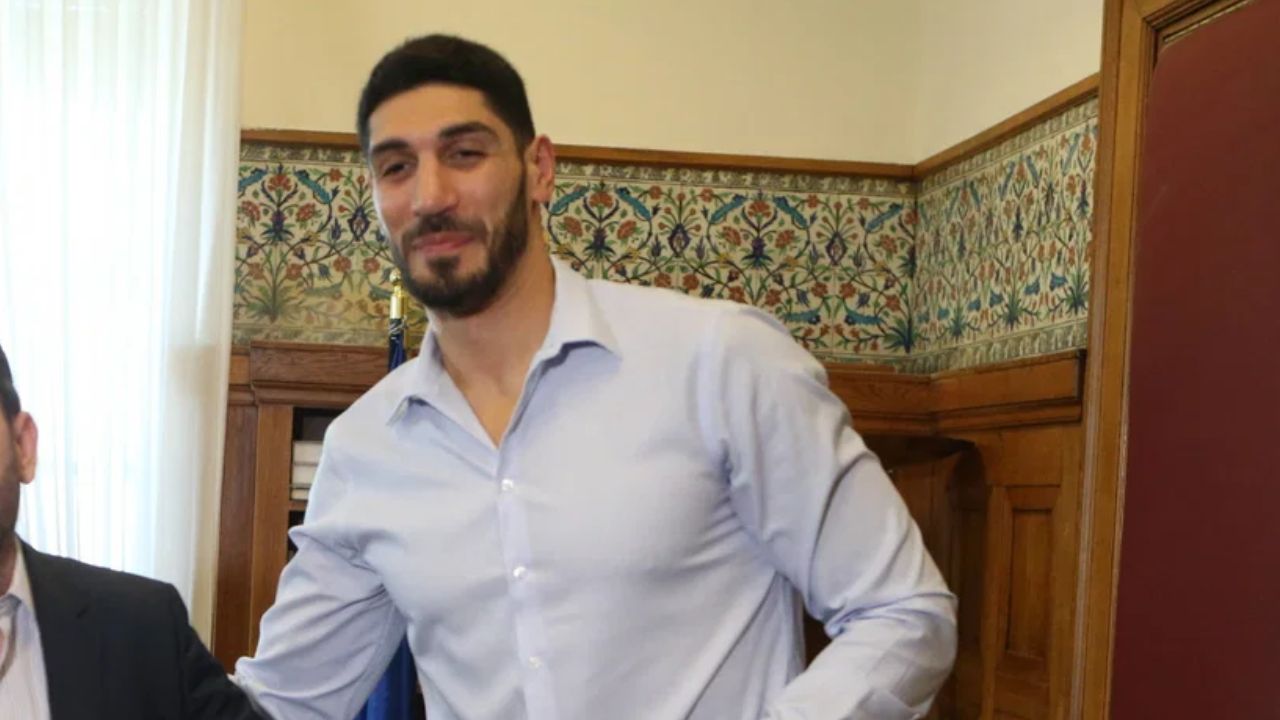
Enes Kanter Freedom’s controversial declaration of his intent to declare for the WNBA draft took many by surprise, but even before they could digest it, the former 11-season veteran has company. He is joined by a former NBA first-round pick, who became the second former men’s professional hoopster to make such an announcement. The player, a “mystery pick” in 2012, has threatened legal action if undrafted.
Watch What’s Trending Now!
“I’m transgender. I’m a woman. I identify as sometimes identifying as a woman for purposes of basketball, professional basketball, so I’ll be declaring for the WNBA draft in 2027 as well,” Royce White stated. “I think I’d be unstoppable. But I’m a team-first guy. I’m a pass-first kind of player. I do the little things.”
The 35-year-old, who last played in the NBA for the Sacramento Kings in 2014, addressed his physical profile and collegiate background as key assets. He also noted his versatility on the court.
“I led my team in all five major stat categories at Iowa State University, so I do a little bit of everything. I’ll do whatever the coach needs me to do,” he added.
The dual announcements from Freedom and White come after widespread discussion about the WNBA’s parameters and trans athletes.
Freedom previously claimed on social media that he and his team reviewed eligibility criteria, arguing that self-identification should satisfy the requirements to enter the competition. However, the governing language within the WNBA’s collective bargaining agreement sets specific boundaries.
What the WNBA’s rulebook actually says
Article XIII of the league’s 2026 CBA explicitly outlines that “only players who are women are eligible to play in the WNBA.”
The document does not state that self-declaration alone establishes a player’s official eligibility status.
According to Fox News, “the document does not define “woman” or “women.” The terms “transgender” and “gender identity” do not appear in the agreement.”
While the CBA contains definitions for many other terms, including rookie and veteran, it, according to Fox News, “does not define the word that determines who is eligible to play in the league.”
Fact: Layshia Clarendon is the only publicly transgender or non-binary player to have played in the WNBA, and Clarendon was assigned female at birth. No player assigned male at birth has played in the league.
Responding to the broader surrounding narrative, the Women’s National Basketball Players Association (WNBPA) issued an official statement emphasizing union values while declining to outline specific player criteria.
“The WNBPA represents 200+ individual people with different lived experiences, cultures, lifestyles, and opinions,” the union stated. “We embrace justice, equity, diversity, and inclusion. Those are the values that unite this Union and allow it to protect women’s sports while creating transformational change.”
“Hate, abuse, and demonization of any person or group of people, including transgender people, only fuel fear, division, and harm. We will continue to have hard conversations. But we will not be used as political pawns.”
Based on this language in the CBA and their statement, the WNBA has grounds to reject both declarations, though the league has yet to say whether it will. However, White insisted his decision to declare is firm unless the league officially specifies its stance.
“Oh, no, I’m declaring. And I don’t want to be discriminated against. I want fair treatment,” White said.
When presented with a question about what he would do if a team refuses to draft him, White claimed he would take the legal route.
“Then I have to file a discrimination lawsuit. I mean, that’s ridiculous. We’re gonna have to have a huge legal battle about discrimination if I can’t play.”
“I’d like to know what the parameters are. What criteria do I need to meet,” he added.
White went on to list out the criteria in his interview, and added that he hoped the league would be able to defend it in a court of law.
At this time, a public declaration alone does not automatically place either White or Kanter into the official WNBA Draft prospect pool or guarantee a selection by a franchise.
The WNBA front office has not issued a public statement clarifying how it intends to review prospective draft applicants under its current CBA guidelines.
In a hypothetical scenario of White being eligible and getting the approval to enter the draft, two factors can dissuade teams.
Age and air travel could still stand in White’s way
White will also be 36 by the time of next year’s WNBA draft, considerably older than the typical draft-eligible player. However, the league’s rules set only a minimum age threshold and do not specify a maximum.
His time in the NBA serves as a historical precedent for the logistical challenges associated with his required travel protocols. Following his refusal to fly due to a severe generalized anxiety disorder, White’s career was defined by suspension and a failed trade.
For now, though, White’s declaration remains largely symbolic. Neither White nor Kanter Freedom has formally submitted paperwork to the league, and the WNBA has yet to say how, or whether, it plans to rule on either case.