
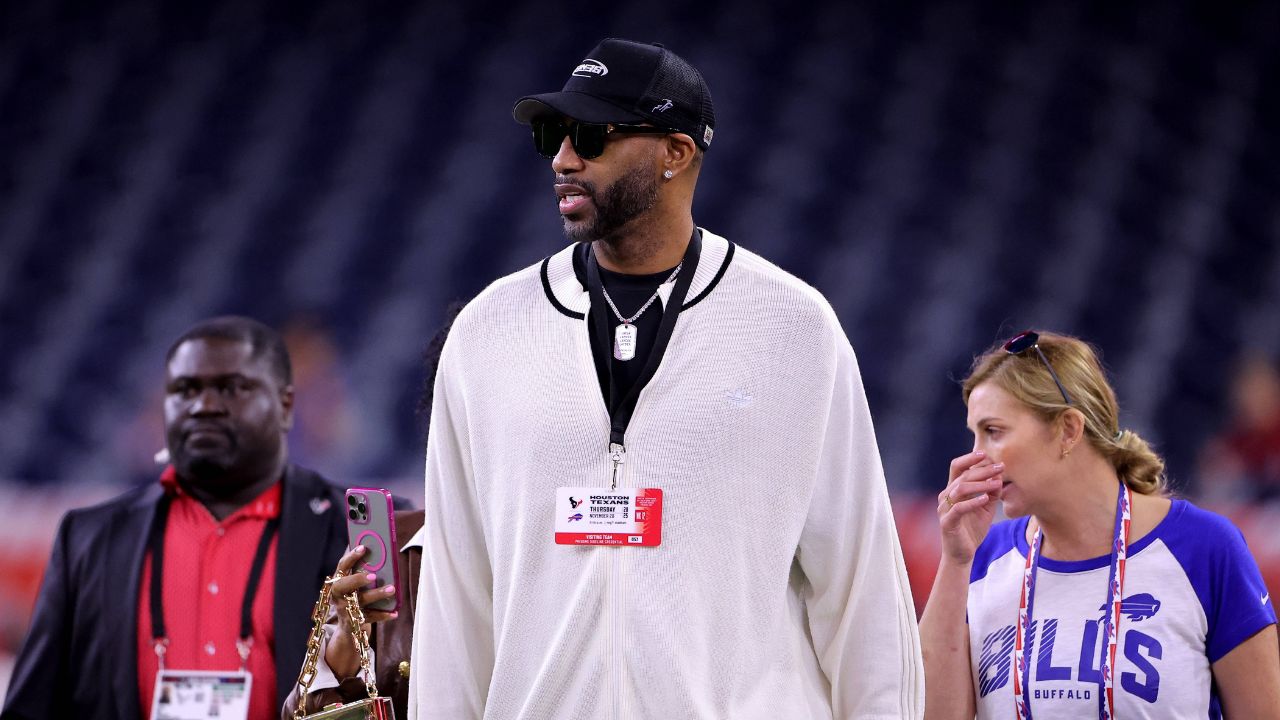
Basketball debates often start in barbershops, where individual greatness and team success can turn into arguments over legacies. But for a former NBA champion, Tracy McGrady’s latest take hit differently. He even went after his childhood idol after McGrady argued that a regular-season MVP carries more weight than a championship.
Watch What’s Trending Now!
What started as a debate over basketball history quickly became something much more personal. And that former champion is Iman Shumpert.
Speaking on the latest episode of Gil’s Arena, Shumpert said, “I really love you, G. We all got kids now. Like, man, you can’t say no sh*t like that. We got kids, for real though. You don’t get to teach my kids that winning don’t matter.”
The former Cavs player admitted that he had spent years defending McGrady in arguments. It included debates over whether T-Mac or Kobe Bryant was the greater player. That is why his reaction was so emotional when McGrady made the case for the MVP over the championship.
The reaction came after McGrady appeared on the ‘Cousins podcast’ with Vince Carter and defended his position without hesitation.
“The MVP of the regular season has more weight than a championship. Hell yeah, why wouldn’t it?” T-Mac said.
His reasoning centered on the role players who win championships but rarely become memorable figures in NBA history. McGrady pointed to championship teams from the Bulls, Lakers, Pistons, and Celtics and said the following:
“Who are they? Any of those teams, name me the eleventh or the twelfth guy.”
His point was that those players have rings, but an MVP belongs to an individual whose dominance is impossible to overlook.
For Shumpert, though, that logic crosses a line.
The former Knicks and Cavaliers player immediately connected McGrady’s argument to the very competitive culture that shaped him.
He also recalled defending T-Mac against Kobe supporters and then admitted that hearing McGrady dismiss the importance of winning made him reconsider those old arguments.
“Cause this why you ain’t get out the first round.”
“People get in arguments in the barbershop. This is why I’m hurt, ’cause I’m like, G, I didn’t have to do that to Kobe, ’cause Kobe would have never said no sh*t like that,” Shumpert added.
That jab carried another layer.
McGrady became one of the NBA’s most feared individual stars during his prime. But his postseason résumé never reached the same heights as his regular-season reputation. Shumpert saw the MVP-over-ring philosophy as a reflection of that divide.
His own championship experience gave the argument a very different foundation.
Shumpert was part of the 2016 Cavaliers team that overcame a 3-1 deficit against the 73-win Warriors to win the franchise’s first championship. He was not the centerpiece of that team, but that was precisely the point.
A championship required players to embrace roles, defend, sacrifice touches, and contribute when their individual numbers weren’t the story.
That is what Shumpert believes young players should learn from the game.
“You’re supposed to win. That’s the only reason you’re supposed to touch the hardwood. You trying to win. I’m trying to beat him over there. You don’t get to say, ‘We lost this year, but I won MVP, so it was a success.’ Hell no, you don’t.”
The disagreement ultimately goes beyond McGrady and Shumpert.
It reflects two competing ways of measuring greatness. Individual dominance versus collective achievement.
McGrady’s argument places the MVP above the NBA championship because it identifies the league’s singular best regular-season player. Shumpert sees the ring as proof that every player involved accepted the same objective.
For someone who once idolized McGrady, challenging him was clearly difficult. But Shumpert was unwilling to let admiration override what he believes basketball should teach.
The barbershop debate may never have a definitive winner. Yet Shumpert’s frustration reveals why McGrady’s world carried such weight: to him, the message matters just as much as the resume.