WNBA Takes Decision on Enes Kanter Freedom and Royce White’s 2027 Draft Eligibility, Per Sources

Add us on Google
WNBA Takes Decision on Enes Kanter Freedom and Royce White’s 2027 Draft Eligibility, Per Sources
Add us on Google
Imago
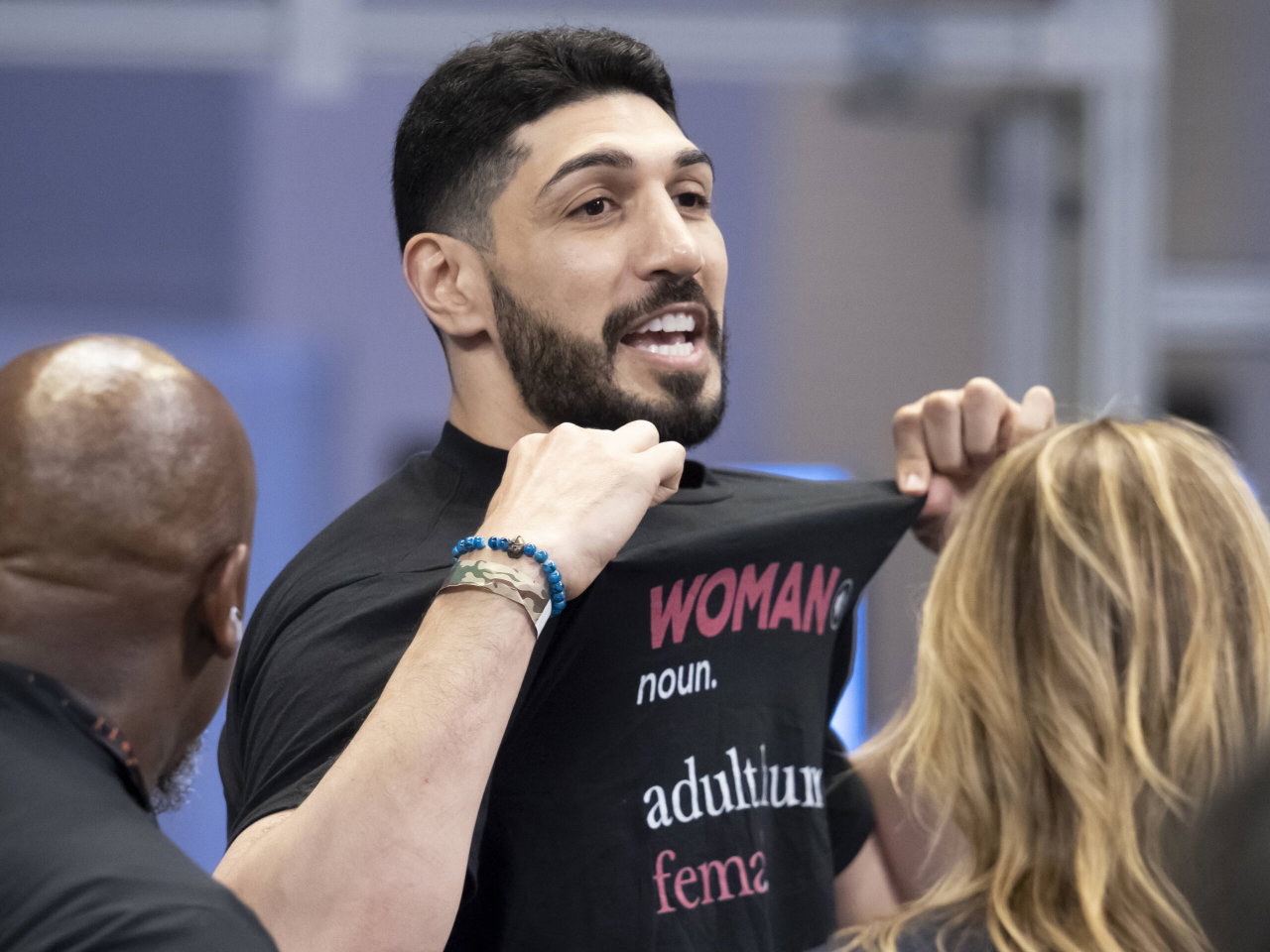
CHICAGO, IL – AUGUST 23: American basketball player Enes Kanter Freedom gets thrown out during the regular season WNBA, Basketball Damen, USA game between the Indiana Fever and the Chicago Sky on August 23, 2026 at the Wintrust Arena in Chicago, Illinois. Photo by Joseph Weiser/Icon Sportswire WNBA: AUG 23 Indiana Fever at Chicago Sky EDITORIAL USE ONLY Icon260823055
Imago
CHICAGO, IL – AUGUST 23: American basketball player Enes Kanter Freedom gets thrown out during the regular season WNBA, Basketball Damen, USA game between the Indiana Fever and the Chicago Sky on August 23, 2026 at the Wintrust Arena in Chicago, Illinois. Photo by Joseph Weiser/Icon Sportswire WNBA: AUG 23 Indiana Fever at Chicago Sky EDITORIAL USE ONLY Icon260823055
For nearly three weeks, two former NBA players have been pushing the WNBA toward a question the league had little interest in answering publicly. What began with a pair of unusual declarations soon turned into a much bigger test of how the league handles challenges to its own rules.
Watch What’s Trending Now!
Then, just days after one of those men was escorted out of a WNBA arena, the league finally made its position clear.
League sources told Front Office Sports that Enes Kanter Freedom and Royce White are not eligible to enter the WNBA, calling their declarations “simply publicity stunts.” The league also said it is not going to reopen its eligibility language because of their efforts.
The league’s position centers on Article XIII of the WNBA’s collective bargaining agreement. Section 1(a) states, “Only players who are women are eligible to play in the WNBA.” The 2026 CBA does not separately define “woman,” “sex,” “gender identity” or “self-identification,” leaving the eligibility language notably short even as the league faces a very public challenge to it.
The league’s response, however, was not to open a new eligibility process. A league source told Front Office Sports that the WNBA “will not allow outside pressure or manufactured controversy to dictate league processes,” while another source said, “The WNBA’s eligibility rules are collectively bargained.”
But Freedom’s move went beyond a post on social media. On Aug. 6, he drafted a formal letter to the WNBA League Office and Player Personnel Department, copying Commissioner Cathy Engelbert. Four days later, he posted an image of the document on Instagram with the caption “Officially official, @wnba” and the hashtag #LetFreedomPlay.
In the letter, Freedom wrote, “Please accept this formal document as my official written notification to the Women’s National Basketball Association of my voluntary decision to enter the player pool for the 2027 WNBA Draft.”
He also cited Article XIII, Section 1(b), arguing that he met the age and post-high school requirements for a domestic draft entrant. That creates an important distinction between Freedom and White: Freedom did not simply announce his intention to play. He put that intention into writing and sent it to the league.
A league source added, “The league is not going to give oxygen to efforts designed to mock the league or use this topic to demean and marginalize others.”
League sources also told Front Office Sports that the WNBA “does not have any legitimate and immediate eligibility matters that require action.”
The dispute might have remained a battle over paperwork and CBA language. Instead, the controversy followed Freedom into a WNBA arena.
On Aug. 23, Freedom attended the Chicago Sky’s game against the Indiana Fever at Wintrust Arena. Indiana won 113–90, but the game ended up producing another chapter in the growing controversy when Freedom was ejected following an exchange with Sky guard Natasha Cloud.
Freedom later gave Fox News Digital his account of what happened.
“Sophie Cunningham shot a three, and I put my hands up to celebrate. Literally a couple possessions later, Natasha came back and starts screaming, and yelling, and said, ‘She’s not gonna sleep with you!’” Freedom said.
He also described what happened after he stood up during the exchange.
“I just got up, and then I was like, ‘I’m just here to protect women.’ And that’s all. And then [Cloud] started to yell, and then she started to use some very heavy language; she started to actually cuss,” Freedom said.
A spectator seated next to Freedom offered a different piece of useful context without disputing his account of how the exchange ended. Fever fan Trista Smith said, “Natasha Cloud made a basket, came and got in his face, so he stood up, put his hands up and she was talking to him. That’s it… I saw him get pulled out, and I just think it’s not fair.”
Cloud did not speak to media after the game. A Sky spokesperson, however, said, “Tash is always going to stand on that, and we stand for Tash.”
What Royce White Expects the League to Do Next
The timing is notable because Royce White had already predicted that the league could respond by drawing a hard line between spectators and players.
Speaking on “Don’t @ Me w/ Dan Dakich” before the Chicago incident, White said, “I just know how the business works and how the PR works, and they’re going to say that he instigated a conflict with a player, and there is an immutable line between the spectators and the players.”
White then went one step further.
“They’re going to make a statement that he’s, you know, indefinitely suspended or banned from WNBA events, if not NBA and WNBA,” White said.
That prediction points to a distinction that could become important going forward: Freedom’s draft challenge and his status as a spectator are two separate issues.
The first is governed by the WNBA’s labor agreement. The second falls under the rules governing fans inside league arenas. In other words, even if the eligibility dispute continues, the league does not have to settle that question before deciding who is allowed through the doors at its games.
The CBA also gives the eligibility fight a defined legal framework. Article XXIII requires disputes involving the “interpretation of, application of, or compliance with” Article XIII to go through binding grievance arbitration. But the agreement also limits what an arbitrator can do, stating that the arbitrator has no authority to “add to, detract from, or alter in any way” the CBA.
That matters because the league and the WNBPA, rather than an arbitrator, would have to agree to any substantive change in the eligibility language through collective bargaining.
There is another reason the dispute stands out: the WNBA has no direct precedent for a formal challenge to Article XIII’s gender-eligibility language. That leaves Freedom and White testing a part of the league’s rulebook that has not previously been litigated in the WNBA.
There are broader professional sports precedents, though. In Clarett v. NFL, the Second Circuit ruled in 2004 that collectively bargained draft eligibility rules were protected by the non-statutory labor exemption. The case does not decide the WNBA dispute, but it shows why the collective-bargaining language matters if the fight ever moves beyond public statements and league correspondence.
The league has another set of rules it can use in the meantime.
The WNBA’s Fan Code of Conduct requires guests to avoid disruptive behavior, abusive language and other conduct that interferes with the game. Guests who violate those standards can be ejected, and the rules also allow for further consequences such as venue bans.
That gives the league a way to address Freedom’s presence at games without first resolving the larger argument over who qualifies to play.
What Happens Next for Freedom and White?
For now, the league appears to have drawn its first line: neither Freedom nor White will be treated as eligible WNBA players based on their current declarations. But the more interesting question is whether either man can force the league to engage with the issue beyond a public statement.
Freedom’s formal letter also makes clear that his effort went beyond a social-media declaration. He put his request in writing, cited the CBA and asked the league to acknowledge his registration. White, by contrast, did not submit the same kind of formal paperwork and instead kept his challenge public.
The CBA provides a grievance and arbitration structure for disputes over Article XIII, but the agreement also limits an arbitrator’s ability to rewrite the rules. That means the language itself could become the center of any future dispute rather than simply the starting point.
And then there is the separate issue of Freedom’s access to WNBA arenas. After the Chicago ejection, the league and venue operators have another question to answer: whether removing him from one game is the end of the matter or whether his presence will lead to restrictions at future WNBA events.
The WNBA’s position may have settled the immediate question of whether Freedom and White will enter the league, but it has not necessarily ended the dispute. Freedom has already put his challenge into formal paperwork, while the CBA provides a process for disputes over its eligibility rules.
At the same time, the Chicago incident has created a completely separate question about Freedom’s future access to WNBA arenas. What began as a challenge to the league’s rulebook has now reached the places where that rulebook is enforced. What the WNBA does next could decide whether the controversy fades away or becomes something much bigger.
Written by

Edited by

Ved Vaze