
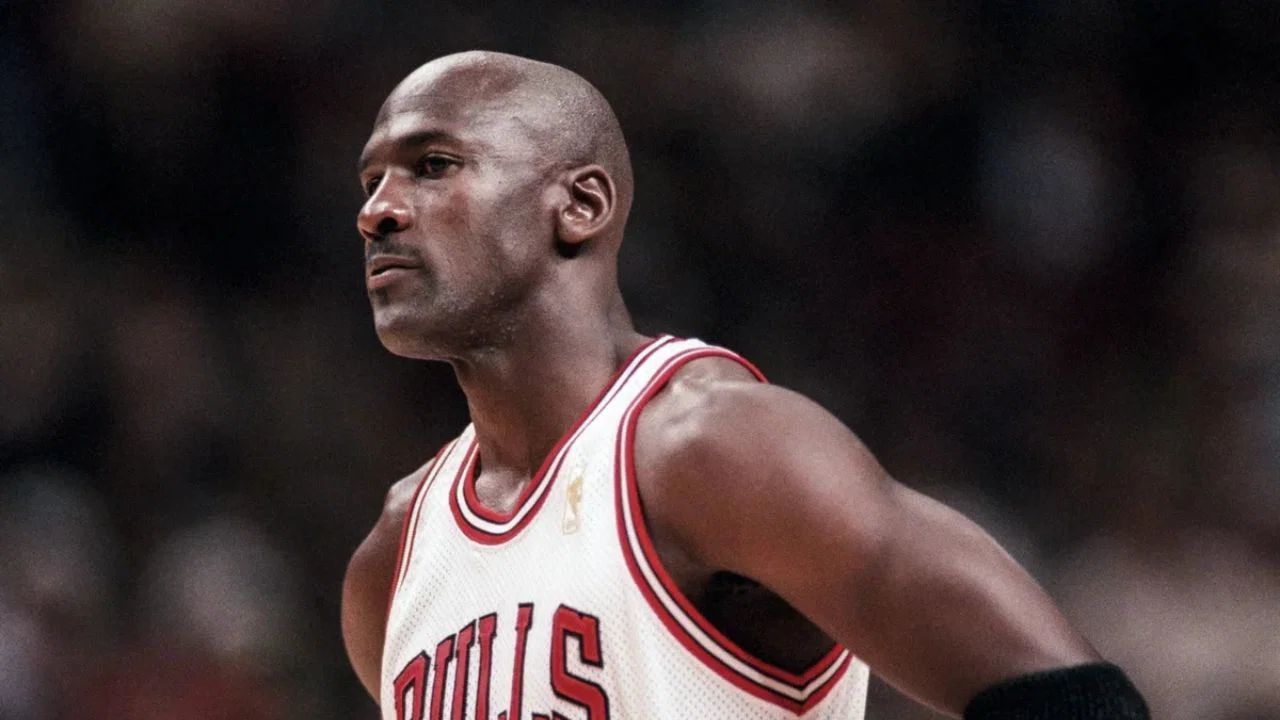
Everyone knows what happens when a franchise loses its cornerstone to injury: the impact shows up in the box score and the standings. Now imagine that player isn’t just a team’s best player, but Michael Jordan. The defining athlete of an entire era. That was the challenge facing the Chicago Bulls when Michael Jordan retired in 1993. It left the roster to find its footing without their superstar.
Watch What’s Trending Now!
However, Phil Jackson had a different way of helping his players navigate the crisis.
The legendary coach had an immediate question to answer: how to move forward after losing the player who defined them. He had brought in an unusual specialist to help the team handle the pressure of success, but the Bulls’ needs changed before the new arrival even reached training camp.
The man Jackson found was George Mumford, a mindfulness instructor whose work had taken him into prisons and inner-city clinics. Not NBA locker rooms.
“I was working in the prison, and I was working in an inner-city clinic. And at the time, John Kabat-Zinn, who was my boss and created the Mindfulness-Based Stress Reduction,” Mumford said, speaking on All The Smoke, on an episode titled ‘The Man Who Changed How Michael Jordan Led the Bulls.’
“At the same time, Phil (Jackson) was doing a program called Beyond Basketball because one of his teammates from the Knicks, Eddie Mass, had died. He had a heart attack. So he was doing a fundraiser. So he had, like, a fantasy camp on the weekends. And so they were together, and they were talking. And Phil was saying, talking to John, and he said to John that he wanted somebody to come in and help the guys deal with the stress of success because they had just won three NBA championships in a row.”
Jackson’s original plan was to help players deal with the mental toll of sustained success. But by the time Mumford arrived for Chicago’s 1993 training camp, Michael Jordan had retired following the murder of his father.
The team’s immediate challenge was no longer how to manage championship pressure.
“This was exactly 32 years ago. And so they came across me, and he realized I roomed with Dr. J, so I’ve been around the league, and I grew up like most of the other guys, you know, in the inner city and whatnot; and so I was invited to come to training camp in 1993, and that’s how we got connected. And so I went in there, but of course they had a full-blown crisis because Michael retired, and then that began a 30-day, more than 30-year relationship. So I’ve been working with Phil. The last time was when he was with the Knicks.”
Mumford’s background gave him an unusual route into the locker room. He had played basketball at UMass and roomed with Julius “Dr. J” Erving, giving him credibility with athletes beyond his clinical work.
Most importantly, he understood the mental toil of an NBA player.
The Bulls without Michael Jordan finished the 1993–94 season with 55 wins. It was only two wins less than the previous championship campaign. They reached the Eastern Conference semifinals before losing to the New York Knicks in seven games.
Mumford’s work was part of a broader effort to help a roster adjust to Michael Jordan’s absence. But not a replacement for the team’s basketball leadership. But once he returned after his first retirement, Mumford had more work.
The relationship continued as Chicago won three more championships from 1996 to 1998.
The story’s significance lies in the moment Mumford entered the Bulls’ world. Jackson sought help with the stress of winning. But Michael Jordan’s retirement forced the team to confront a sudden loss of identity.
A relationship with Jackson that lasted far beyond that first crisis.