
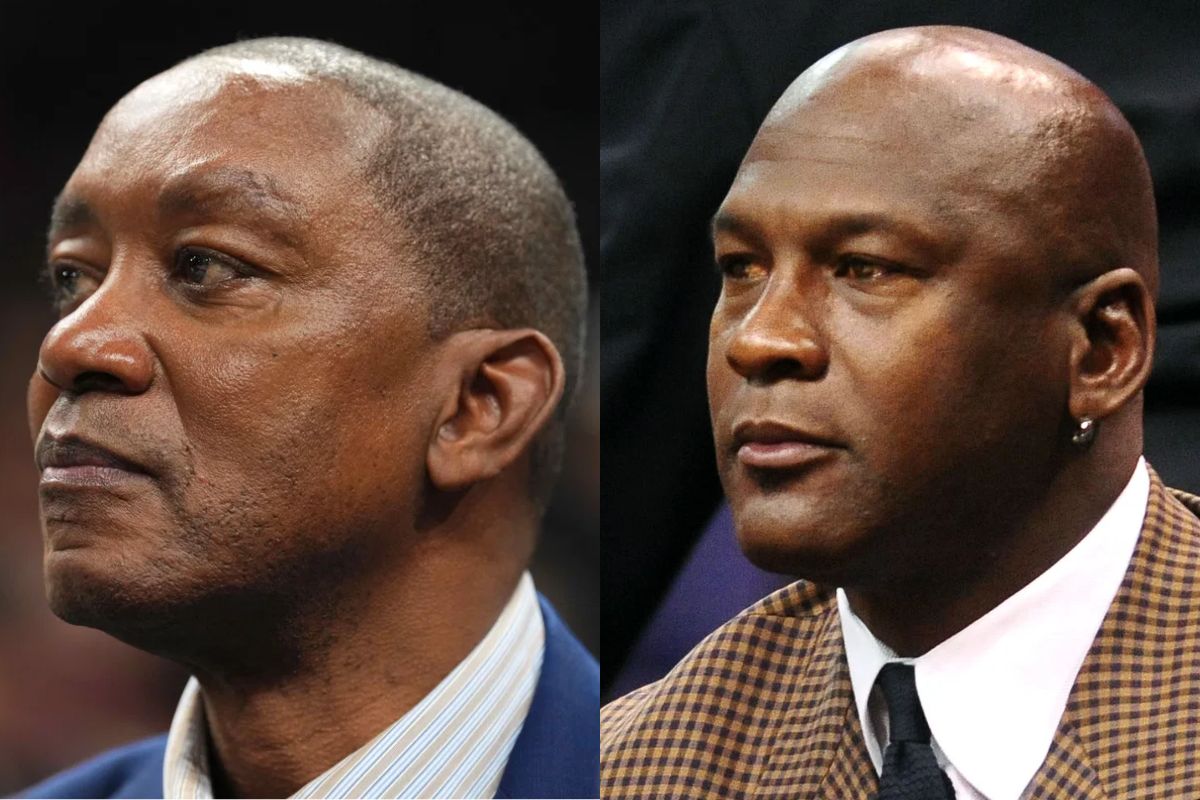
On the 29th anniversary of Michael Jordan’s Flu Game, Isiah Thomas made a bold claim: Jordan didn’t have the flu. On June 11, 1997, Michael Jordan torched the Utah Jazz in Game 5 of the NBA Finals while supposedly having the flu. Too bad NBC didn’t ask him about it on the pre-recorded MJ’s Insights to Excellence for the Flu Game’s 29th anniversary (mostly because NBC is not on Finals coverage). But that didn’t deter his old ‘friend’ from marking this occasion a little belatedly.
Watch What’s Trending Now!
Isiah Thomas returned to FanDuel TV’s Run It Back and, unprompted, attacked the Flu Game narrative. Thomas was asked how he felt about television networks hiring NBA players as broadcasters, with the specific example of NBC bringing MJ out of media seclusion as a special contributor. Rather than addressing professional merits, the Detroit Pistons legend pivoted to attacking Jordan.
“Only if they’re going to be 100% honest, and not promote this BS,” he said. Until a while ago, most of the NBA world would’ve agreed, as they weren’t happy with the evergreen pre-recorded format of Jordan’s interview, which had no real insight into the current NBA landscape. But then Zeke veers into familiar territory.
“Tell the truth about the game. Truthfully, honestly, and factually to the fans so they can continue to learn, grow our game. The way our game is being talked about in some ways, it’s very mythical. It ain’t real. We’re still call his [Michael Jordan] game the flu game, and they know he didn’t have the flu. Yet they promote it. I’m down for honesty and telling the truth about what we’re seeing. If NBC is going to bring back people to talk about the game. Bring the folks who are going to be honest and tell the truth. Not this BS.”

If NBA legends like Michael Jordan are going to go on TV, they should tell the truth about the league 💯 Isiah Thomas could do without the promotion of myths like the Flu Game ❌ Lou Williams thinks MJ would rather spend his time thinking about NASCAR ⏰

Zeke wants unfiltered broadcasters, not pre-recorded segments like MJ’s NBC appearance. Maybe as unfiltered and unscripted as the Inside the NBA crew, who honestly claim they don’t watch the games. Thomas’s Flu Game jab felt personal, not professional, and fans saw it as another attack on Jordan’s legacy, not a comment on the NBA media.
Even Michael Jordan didn’t think it was the flu.
The timing of Isiah Thomas’ comments couldn’t be more perfect. While the basketball world observed the anniversary of the iconic June 11, 1997, game, he wasn’t responding to any specific comments recently. He just brought in the subject that to this day makes anyone in Utah allergic to the Jumpman logo.
As the ‘myth’ goes, Jordan famously battled through severe physical exhaustion to drop 38 points against the Utah Jazz in Game 5 of the Finals. The Chicago Bulls won 90-88, securing a 3-2 series lead over the Jazz and their fourth of six championships, kicking off their second three-peat.
Interestingly, even Jordan himself previously validated Zeke’s argument regarding the actual diagnosis. In the 2020 docuseries The Last Dance, Jordan and his trainer, Tim Grover, claimed that he did not actually have the flu. Almost two decades after the fact, they claim that some shady people had a pizza delivered at MJ’s Salt Lake City hotel room, and he played that game through a sudden case of severe food poisoning.
MJ implies it was a deliberate attempt at sabotage by Utah fans. The mythical factor is the Black Cat’s determination to win an NBA title right after a full comeback from his baseball-related retirement.
The Last Dance docuseries exposed tensions between Zeke and MJ that had simmered for decades. Though they seem to align over that not being the flu, fans on social media zeroed in on Zeke’s bitter delivery of his message. They felt this was another example of Isiah Thomas taking the chance to launch a personal attack on Jordan’s legacy. Fans saw Thomas’s critique as a personal vendetta, not media criticism.