
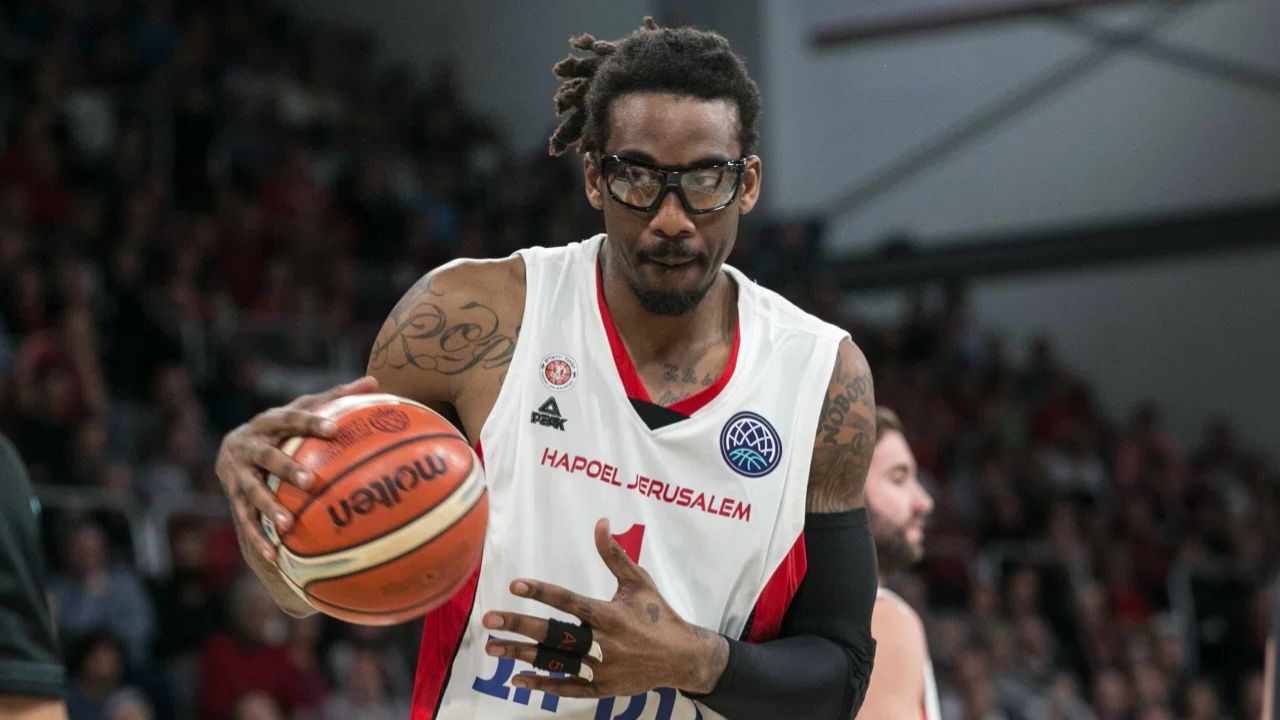
During an elementary school Career Day in Florida, a teacher asked a young Amar’e Stoudemire what he wanted to be when he grew up. Long before basketball made him famous, he had already pictured a future far removed from the NBA spotlight.
Watch What’s Trending Now!
Basketball became his profession, bringing 14 NBA seasons, six All-Star selections and more than $167 million in reported NBA salary. His induction into the Naismith Memorial Basketball Hall of Fame in August 2026 marked another milestone. But even after reaching the sport’s highest level, Stoudemire had another childhood ambition to pursue.
“It’s something I always wanted to do since I was a kid. They asked you on career day, ‘What do you want to be when you grow up?’ And my initial response was a police officer,” Stoudemire said. At 43, he has now graduated from Miami Dade College’s School of Justice Basic Law Enforcement Academy and is preparing to begin a new career with the Miami-Dade Schools Police Department. For someone who had already reached the top of professional basketball, that meant being willing to start again as a student.
Stoudemire completed Miami Dade College’s School of Justice Basic Law Enforcement Academy after 848 hours of instruction. Graduation marked the end of that stage, not the end of his preparation. He is expected to complete departmental orientation and supervised field training with the Miami-Dade Schools Police Department before taking on active patrol duties.
Stoudemire’s graduation also came with special recognition. Miami Dade College awarded him the Harry “Coach” Everett Award for his contributions to the academy program during his training, adding another distinction to a milestone that marked the start of his second career.
“Today, he’s celebrating a very different milestone: graduating from the MDC School of Justice’s Basic Law Enforcement Academy after months of rigorous training. And he’s graduating with special recognition, receiving the Harry ‘Coach’ Everett Award for his contributions to the success of the academy program throughout his training.
For Amar’e, this is more than a second career. Becoming a police officer was a childhood dream, inspired in part by family members who served in law enforcement. Now, he will begin a new chapter as a police officer with the Miami Dade Schools Police Department, @mdspd, giving back to our community and serving as a positive influence for the next generation.”
The academy experience lasted approximately 10½ months, according to Stoudemire’s account to Sports Illustrated. Across 848 hours of instruction, he had to balance physical conditioning with classroom work and practical training. Distance running, push-ups, squats and lunges were part of the physical demands, while the coursework covered areas such as first aid, defensive tactics, vehicle operations and law.
His athletic background may have helped with the physical demands, but the coursework called for a different skill set. He had to learn the legal procedures, practical judgment and communication expected of an officer, then demonstrate his knowledge by passing Florida’s state certification examination, a 200-question test with a minimum passing score of 80%.
Stoudemire also made clear that he did not expect his NBA reputation to put him above the other recruits. “I didn’t ask for any celebrity handouts,” he told Sports Illustrated. Whatever his accomplishments on the basketball court, he still had to complete the academy’s training and meet its requirements.
The ambition also had a family connection. “It runs in the family. My uncle was a captain. His brother was a deputy. My cousin is a captain. My sister’s in the academy. So, it’s a family tradition, basically,” Stoudemire told Sports Illustrated. His relatives’ experience in law enforcement helps explain why the career appealed to him long before he began pursuing it himself.
Stoudemire sees some overlap between the two professions, particularly in the need for discipline and clear communication. “It’s a similar situation where you have to have discipline. You gotta have a sense of professionalism. You have to be able to communicate properly. I think as an athlete, all those things also are important. As an officer, you communicate with the community,” he told Sports Illustrated.
At 6-foot-10, Stoudemire is unlikely to blend into the background on a school campus. But physical presence is only one part of the transition. As he explained, discipline, professionalism and communication are qualities he believes carry over from his years as an athlete.
Stoudemire’s interest in young people also has a history outside basketball. In 2012, while playing for the New York Knicks, he partnered with Scholastic on the middle-grade book series STAT: Standing Tall and Talented. The stories followed an 11-year-old protagonist dealing with challenges involving teamwork, discipline and conflict resolution.
The series offers a glimpse of Stoudemire’s work with young readers beyond basketball. Although it does not establish how he will approach his new role, it shows that his interest in stories for younger audiences predates this career move.
Stoudemire has expressed a simple belief about discipline: “Nothing of importance is ever achieved without discipline.” The quote appeared in connection with his children’s book work. His time at the academy put that principle into practice, requiring him to meet the demands of a new profession.
Stoudemire’s life after the NBA has included several different paths. He continued playing professionally in Israel, later worked in player development with the Brooklyn Nets, earned a Master of Business Administration degree from the University of Miami and pursued business and writing projects. His children’s book series was another part of that period. The police academy is a different undertaking, but it is not the first time he has chosen to learn or work outside the role that made him famous.
Stoudemire has offered a simple explanation for the choices he makes beyond basketball: “I just go to what I have passion for,” he told Sports Illustrated. His next chapter will put that philosophy to the test in a profession with responsibilities very different from those he carried on the court.
Departmental orientation and supervised field training still lie ahead before he can take on active patrol duties. The academy may be behind him, but the work of becoming an officer is only beginning.