
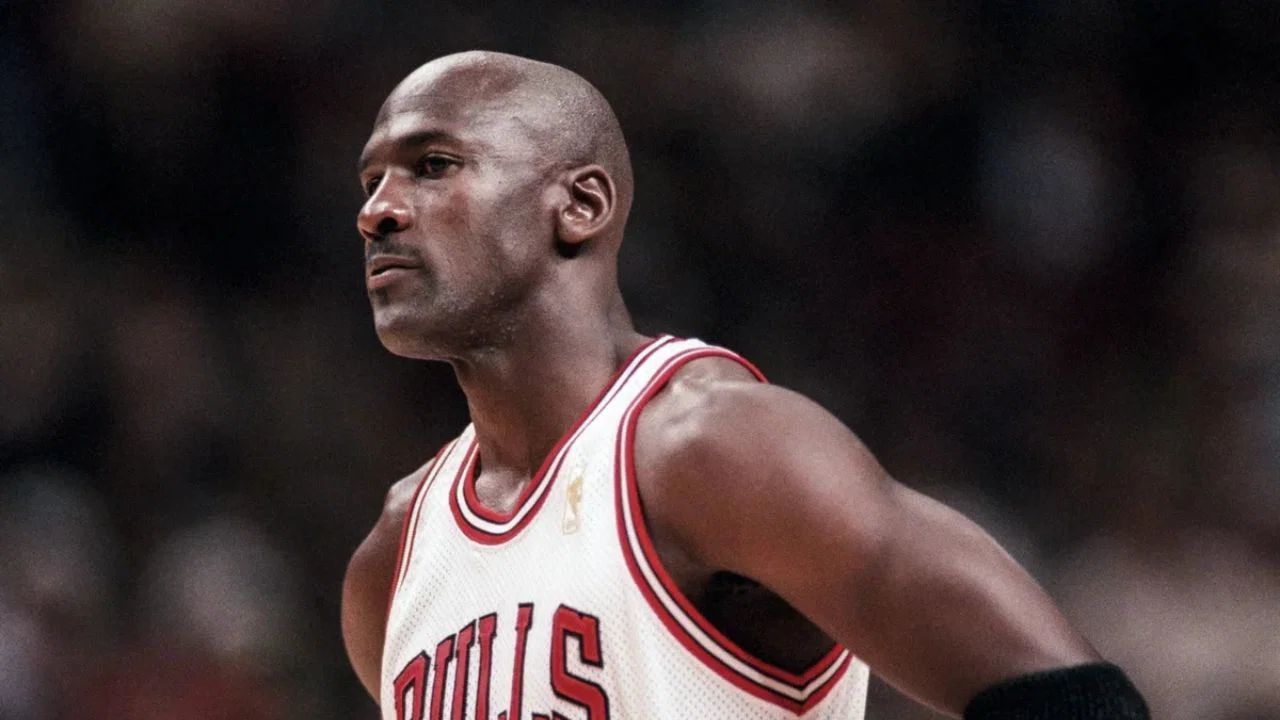
Jared Jeffries, a former teammate and longtime friend of Michael Jordan, is pushing back on one of the most persistent rumors about the Chicago Bulls legend, that his gambling played a role in his 1993 retirement and in his father’s murder.
Watch What’s Trending Now!
Jeffries made the comments on Gil’s Arena, the podcast hosted by Gilbert Arenas, his former Washington Wizards teammate. The panel was debating whether Jordan should be seen as the game’s biggest legend and LeBron James as its greatest player when Arenas made his case for Jordan’s legacy.
“When it comes to just the legacy itself and the name you built, I don’t think it gets better than Jordan,” Arenas said. “From I want to be like Mike to, you know, scoring titles, championships, winning, the killer instinct. It’s just this godlike figure, and the worst thing that was ever said was he has a gambling problem, right? That was the worst thing. And it had nothing to do with basketball.”
Arenas then suggested that Jordan’s 1993 move to baseball was really about taking the heat off the league.
“Basketball community knows, right? Get his a– out of the light for a little bit, so whatever’s going on don’t fall on us,” Arenas said. “Something was coming out. Hey, do that s–t in baseball. Let it come out in baseball. We’ll clear it up.”
However, Jared Jeffries was having none of that and immediately pushed back and shut it down.
“No, no, no…like I said, I’m not standing for that. I’ve hung out with him for the last 25 years. That’s exactly what happened. He just lost the love for it,” Jeffries said regarding Jordan’s initial departure from basketball. “I mean, we’ve had long conversations about it. Like long conversations over two and a half bottles of tequila.”
Jeffries, whom the Washington Wizards drafted 11th overall in 2002, played 20 games alongside Jordan as a rookie during Jordan’s final NBA season. The two stayed close. In 2005, the Washington Times reported that Jeffries spoke with Jordan more than any other Wizards player did.
He emphasized that among all the headlines and public scrutiny Jordan endured during his career, the baseless theories linking his personal life to his family tragedy caused deep emotional wounds.
“It was hard for him, man. And like, and I’ll say this, he’s one of my best friends in the world,” Jeffries shared. “And what he said, one of the things that hurt him most was that people thought that a gambling debt cost him his dad. And that’s a terrible thing. Like, think about it, through all… like, what wouldn’t he have paid? He said this multiple times on air. What wouldn’t he have paid to not… come on, man! Like what could he have lost? Like, you know, there’s no number.”
The intense scrutiny surrounding Jordan reached its peak in 1993. Those who’ve seen Netflix’s The Last Dance would recall that, following a late-night casino trip to Atlantic City during the Eastern Conference Finals against the New York Knicks and the release of Richard Esquinas’ book Michael & Me (which claimed Jordan owed more than $1 million from golf bets), the gambling addiction narrative was born. Jordan maintained at the time that he did not have a gambling addiction, but rather a fierce “competitive problem.”
Tragedy struck in July 1993 when James Jordan Sr. was murdered at age 56 in North Carolina after pulling over on the side of a highway to rest. Some columnists and media outlets speculated that the killing was connected to his son’s gambling.
Prosecutors said the motive was robbery, and two 18-year-olds, Daniel Green and Larry Demery, were convicted of the murder in 1996 and sentenced to life in prison. Demery testified against Green as part of a plea deal, naming Green as the shooter.
Green has maintained his innocence for decades, saying Demery was the shooter and that he only helped dispose of the body. Green repeated his claim in an August 2025 interview with WBTW News13.
“To Michael Jordan, to his family, I’m not responsible for James Jordan’s death,” Green said. “I’m not responsible for his death.”
The NBA and then-commissioner David Stern denied the theory that the retirement was a secret suspension.
Jordan announced his first retirement that October, saying he had lost his desire to play. He went on to play baseball in the Chicago White Sox organization, the sport his father had loved
Jordan expressed outrage at the insinuations during that period, claiming it came “from the people who got tired of me being on top.”
More than three decades later, Jeffries says the rumors still hurt.