Imago
Credit: X
Imago
Credit: X
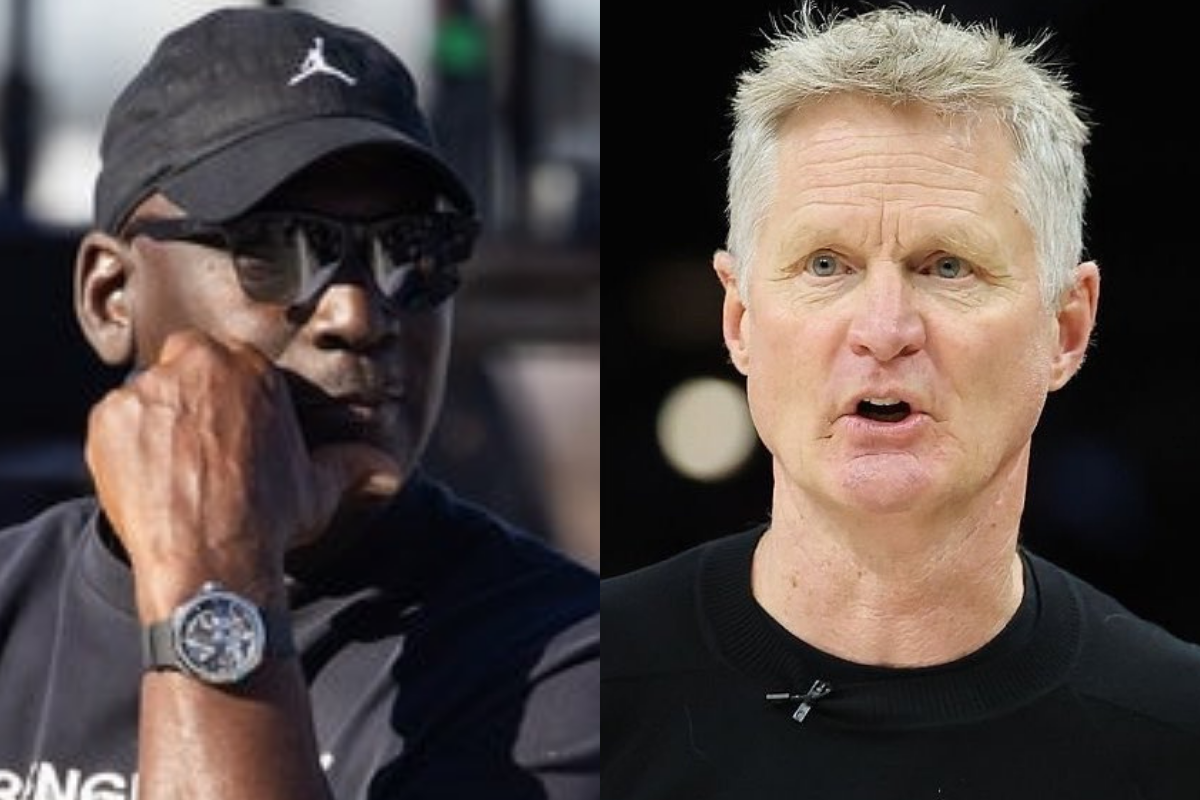
Steve Kerr was almost certain he was finished coaching basketball. The Warriors’ season had ended in a painful play-in loss to the Phoenix Suns. The dynasty felt frayed. Injuries had broken apart the roster. And somewhere inside the quiet hallways of the Beverly Wilshire Hotel in mid-April, Kerr, who later admitted he was “95% sure” he would retire after the season, rounded a corner and nearly walked straight into Michael Jordan.
Watch What’s Trending Now!
What happened next became the emotional center of Wright Thompson’s sprawling ESPN profile on Kerr, because it revealed something the four-time championship coach has spent most of his life trying not to believe about himself.
“Thank you,” Kerr told Jordan. “Everything that has happened in my career is because of playing with you.” Jordan stopped him cold. “You’ve earned it,” he said. “You’ve earned all of it.”
Top Stories




The exchange lasted only a few seconds, but it cut directly against a psychological reflex Kerr has carried throughout nearly every phase of his basketball life. For decades, Kerr has instinctively minimized his own accomplishments, often crediting his success to proximity with figures like Jordan, Tim Duncan, Gregg Popovich, and Stephen Curry rather than fully acknowledging his own role in building basketball dynasties.
Jordan’s response carried enormous weight because the career Kerr still struggles to fully claim as his own includes five NBA championships as a player, four more as Golden State’s head coach, and a place alongside Phil Jackson, Red Auerbach, and Gregg Popovich as one of only six coaches in NBA history to win at least four titles. To Jordan, Kerr was no longer just the role player who hit a championship-winning shot in the 1997 Finals. He was one of the defining architects of modern basketball dynasties.
Thompson’s profile ultimately revealed a coach wrestling with a much larger fear than basketball tactics or roster construction. “My wife and I have been talking about it a lot,” Kerr told Thompson. “I have a year left on my contract.”
Kerr described coaching as something dangerously addictive, a profession that slowly attaches itself to your identity until the idea of leaving no longer feels emotionally simple.
“You wanna trust yourself but also be suspicious of your own motives,” he said. “You don’t want to walk away too early, but you don’t want to walk away too late. And you worry about what your life is gonna feel like.”
Kerr did not sound like someone who had discovered clarity. He sounded like someone quietly studying a future he feared might eventually become his own.
That future was embodied by Gregg Popovich. Kerr described watching Popovich wrestle with the exact same impossible question for years. According to Thompson, Popovich once called Kerr to tell him he was finally retiring, only to sign another extension a week later.
Popovich officially stepped away six weeks before Kerr spoke to Thompson, months after a stroke had physically diminished him and forced the people closest to him to help guide him toward retirement.
Thompson wrote simply: “That hurt Steve.”
Kerr once described Popovich as the finest man he had ever known. Popovich smiled and reminded him that his feet were made of clay like everyone else’s. “Steve didn’t believe it then,” Thompson wrote. “Now he does.”
The realization Kerr took from watching Popovich age out of coaching was not comforting. “I realized he couldn’t do it,” Kerr admitted. “He couldn’t walk away.” When Thompson asked how Kerr planned to avoid the same trap, the coach could only laugh. “I’m sitting here wondering,” he said.
The Dynasty Ending Steve Kerr Fears Most
Kerr’s anxiety extends beyond his own retirement. He is equally concerned about how the Warriors dynasty itself eventually ends.
Thompson wrote that Kerr fears Golden State could someday resemble the final years of the New England Patriots dynasty — a once-great partnership slowly consumed by fractured relationships, resentment, and the exhaustion of staying together too long.
Imago
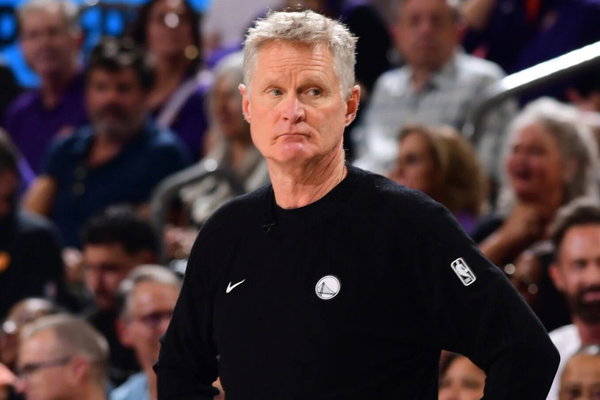
Steve Kerr
Kerr watched Jordan retire, return, retire again, and then return once more. When friends would ask why Jordan could never simply walk away at the top, Kerr always gave the same answer.
“Because he can’t,” Kerr told them.
Kerr has spent most of his adult life around competitors who struggled to let go of greatness. The competition keeps pulling at them. The identity slowly hardens around them. And eventually, the exit door no longer feels as easy to walk through as it once did.
In practical terms, Kerr’s two-year extension means he will oversee whatever final championship push Golden State attempts to build around Stephen Curry. Whether that pursuit eventually involves LeBron James, Giannis Antetokounmpo, Kawhi Leonard, or another superstar entirely, the Warriors have made it clear they still believe their championship window remains open.
Internally, the Warriors still view Kerr as the best possible coach to guide the franchise through the final years of the Stephen Curry era. After the play-in loss, Kerr told Curry and Draymond Green: “I don’t know what’s going to happen next, but I love you guys to death. Thank you.”
At the time, the moment felt like a possible goodbye. Three weeks later, it became something else entirely. Michael Jordan may have finally convinced Steve Kerr to stop minimizing his legacy. Walking away from it, however, may prove far more difficult.
Written by

Edited by

Aatreyi Sarkar