
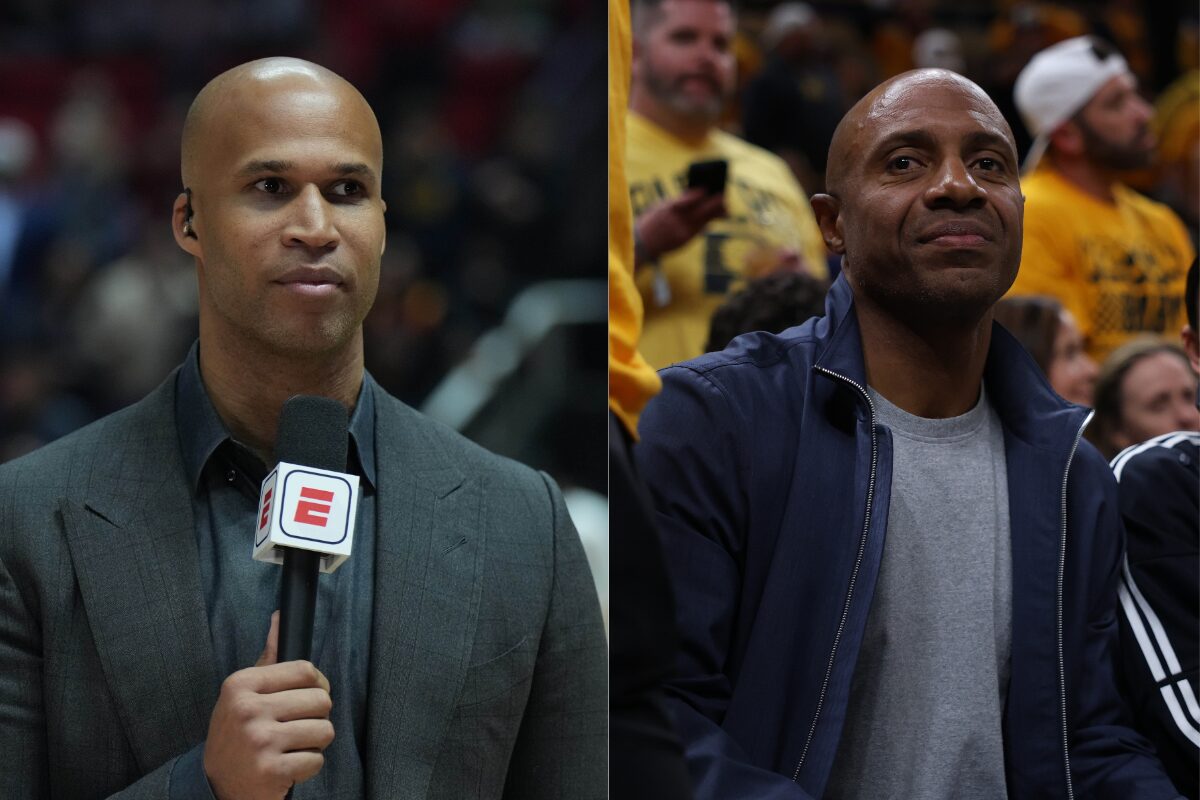
The side-effect of live TV overshadowed ESPN’s coverage of the 2026 NBA Draft after an awkward exchange between NCAA rivals-turned-colleagues, Richard Jefferson and Jay Williams. RJ’s tone-deaf comments on Williams’ career-ending motorcycle accident became a major viral talking point. It was still raging with anger towards Jefferson the day after the first round of the draft. It fell to Williams to address it publicly during his immediate appearance on Front Office Sports, with remarkable honesty.
Watch What’s Trending Now!
The tense segment occurred when host Kevin Negandhi asked about the massive ovation Williams received when he was selected second overall by the Chicago Bulls in 2002. Jefferson cracked that the crowd was simply cheering because they “didn’t see the future coming.” The future being that Williams’ career would end after his rookie season because of the 2003 motorcycle accident.
Addressing the viral fallout, Williams candidly admitted that while there was no deep-seated animosity behind the scenes, navigating the moment on live television was remarkably difficult.
“No, there was no real tension. But it was awkward for me,” Williams stated. “But being fully transparent with you because a lot of times in my brain I’m extremely competitive. There are a lot of things that sometimes when you’re on TV, you know, naturally TV is becoming more like a podcast. Saying things to millions of people, there are byproducts that happen, there are effects of that ripple effect.”


ESPN basketball analyst Jay Williams tells FOS that "there was no real tension" during his viral interaction with Richard Jefferson, but that "it was awkward." "I tried to stay above it frankly. I didn't want to get back into the jousting back and forth."
Williams doubled down that he had no hard feelings against RJ. He’s far more upset that it got attention on a night when the spotlight belonged to the incoming rookie class.
“For me, it was extremely uncomfortable,” Williams explained. “I’ve known RJ; obviously, our history dates all the way back to playing against each other in the 2001 National Championship. Him and I are cool people. I think sometimes ribbing can go a little too far. People were comparing it to the Kevin Hart roast. Things like that sometimes happen on TV. You deal with it in real time. I tried to stay above it, frankly. I didn’t want to get back into the jousting back and forth.”
Williams indeed tried his best to not let that drag. If only Jefferson could’ve taken the hint.
Jay Williams preserves his friendship with Richard Jefferson
The sensitivity surrounding the exchange is rooted in the severe physical and emotional trauma Williams endured on June 19, 2003. After a stellar All-American career at Duke, including beating Jefferson’s Arizona Wildcats to claim the 2001 NCAA championship, he enjoyed the NBA draft milestone and a great rookie season.
But the rising star fractured his leg, shattered his pelvis, and severed a main nerve in his left leg when he crashed his Yamaha sportbike into a streetlight while riding in Chicago. Though he battled severe depression amid grueling surgeries and rehabilitation, Williams successfully reinvented himself as a premier broadcast voice on ESPN while Jefferson was still playing in the NBA.
RJ immediately apologized in the same breath he brought up that accident. Kenny Smith interrupted his apology to say that Williams “was an unbelievable talent,” and “His career trajectory would’ve been a lot different if he didn’t like motorcycles.”
Despite his initial apology and Kenny’s warning shot, RJ kept shooting himself in the foot. First he said that Williams was “okay” in college and “I guess everybody [who] goes to Duke isn’t that smart.”
While viewers were hoping Jefferson would read the room, Williams was initially shocked and could only muster a “wow.” Then he seemed to take it in stride and move on gracefully.
It’s something he told FOS has been his response when critics frequently use the accident to diminish his basketball legacy. His resilience over the last 25 years has made him immune to this commentary.
“I get people from the crowd, that are people that I care about, that are getting drafted, and their families, they’re reaching out to me asking me if I’m okay. I’m like, ‘No it’s not about me. It’s about you. This is your night.’ Look, I’ve lived with my accident for 25 years now. People typically use it to try to diminish what I’ve been able to accomplish. For me frankly I think it speaks volumes about what I have been able to accomplish.”
For those who think Jefferson’s live mistake will cause a rift between the ESPN colleagues, Williams dismissed it entirely. Ultimately, Williams remains completely unbothered about his standing with Jefferson or Smith because of an unscripted moment, concluding, “We’ll talk about it, we’ll learn from it, we’ll move on. And welcome to TV.”