
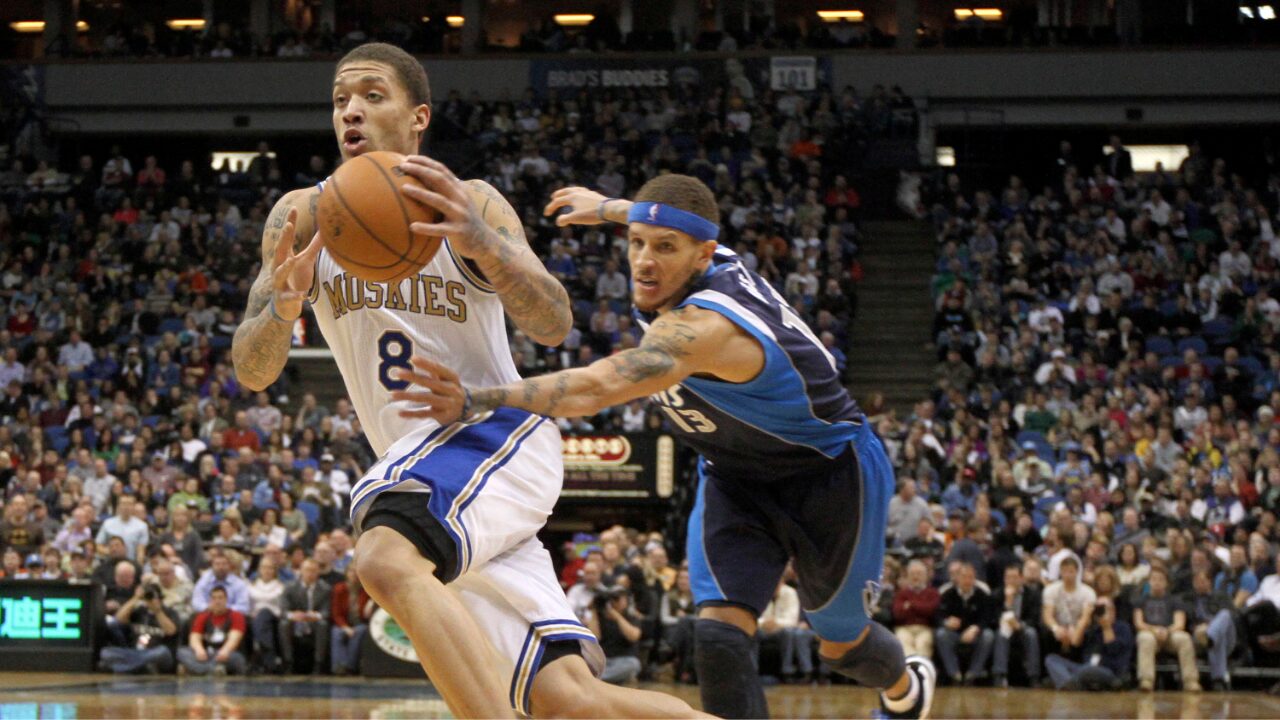
Back in 2012, Delonte West found himself in trouble with the NBA after doing something Gordon Hayward probably never expected during a basketball game. The Dallas Mavericks guard stuck a finger in Hayward’s ear, earning himself a technical foul and a $25,000 fine for what he later called a “wet willie.”
Watch What’s Trending Now!
“I was giving him a wet willie, that’s all. He had some lint in his hair. We were two warriors. We were battling. I forgot, the NBA’s a gentleman’s game so we’ve got to fight and scratch, and do it nicely.”
West’s explanation became almost as memorable as the incident itself. Fourteen years later, however, another bizarre moment involving the former NBA guard unfolded in Miami, where a boxing match against Michael Beasley ended with a result that was not even announced correctly the first time. And then came West’s own words after the fight, which brought a much more serious part of his life into the conversation.
“I need a Narcan. Brain’s a little dizzy.”
The remark came moments after Beasley defeated West in the first round of their Brand Risk 16 boxing match on October 16. The referee had stopped the contest after West went down and failed to beat the ten-count, but the ring announcer somehow declared West the winner before the referee stepped in to correct the mistake. What should have been a straightforward result quickly became a strange scene that left viewers discussing far more than the fight itself.
Michael Beasley Ends the Fight, but the Confusion Is Just Beginning
The matchup brought together two former NBA first-round picks for a heavyweight boxing contest at the Brand Risk Warehouse in Miami. Beasley, the second overall pick in the 2008 NBA Draft, stood around 6-foot-9, while West, the 24th pick in 2004, measured approximately 6-foot-3. The difference in their size was hard to ignore once the opening bell rang.
West moved forward aggressively, throwing wide punches toward Beasley’s head. Beasley backed away from the initial rush before stepping in with punches that sent West to the canvas. West remained down as the referee began counting, but he failed to rise before the count ended, prompting the official to stop the contest.
The precise duration of the fight remains unclear across published accounts. Several media reports described the stoppage as coming 38 seconds into the opening round, while formal fight records listed the official time as 1:58. Those figures should not be treated as interchangeable, and the discrepancy makes it important to distinguish the reported duration from the recorded result.
What the available footage does not establish is that West was knocked unconscious. He appeared dazed after falling, but he sat up and spoke following the stoppage. The official outcome was a first-round technical knockout, not a confirmed loss of consciousness, making the distinction important when describing what happened inside the ring.
Still, the finish was only the beginning of the confusion. As the fighters gathered in the center of the ring, the audience was about to witness a mistake that made the result even harder to follow.
The Ring Announcer Gets the Winner Wrong
After the referee stopped the fight, Beasley and West stood in the ring alongside the official and the announcer. The announcer took the microphone and declared West the winner, despite Beasley having secured the stoppage. The referee immediately intervened, correcting the announcement and raising Beasley’s hand.
The broadcast then corrected the result, leaving viewers with an unusual post-fight sequence. The wrong fighter had been announced as the winner, and the referee had to step in to make the outcome clear. For an event already attracting attention because of its unconventional matchup, the error gave the audience another reason to question how the spectacle was being run.
There was no official explanation from promoter Adin Ross or Brand Risk Promotions establishing whether the mistake was a slip, a card-reading error, or an intentional joke. Without that clarification, it would be unfair to claim that the announcement was deliberately staged. What the footage shows is an incorrect declaration followed by an immediate correction.
Beasley was ultimately the winner, but the announcement was not the moment that drew the most concern. That came when West was handed a microphone and spoke about feeling dizzy.
Delonte West’s Narcan Remark Draws Attention to His Recovery
West’s comment stood out because of an incident from June 2024, when police in Fairfax County, Virginia, administered Narcan after finding him unresponsive following a foot pursuit. The medication, also known as naloxone, is used to reverse opioid overdoses. The incident became part of the public record surrounding West’s personal struggles.
The timing of his latest remark made the connection difficult for viewers familiar with that history to ignore. However, his words alone do not establish that he had suffered an overdose, used drugs, or experienced a medical emergency during the boxing event. The available reporting does not establish any such conclusion, and the comment should not be treated as proof of a relapse.
There was also important context to West’s life away from the ring. Before the fight, he had publicly marked 11 months of sobriety. Reports also confirmed that he married his longtime partner, Melissa Anaya, on October 16, after the couple had been together for approximately 20 years.
Those milestones offered a very different picture from the one many people associated with West’s difficult years. His recovery had been a public subject of discussion, and the marriage marked a personal development that had little to do with his boxing appearance. The fight and his comment brought those separate parts of his life together in a way that quickly attracted attention.
That is also why the distinction between a joke and a medical claim matters. West’s remark may have been self-deprecating, but its meaning cannot be established beyond the words he spoke and the circumstances in which he said them. Without a reliable medical assessment or further statement, any stronger conclusion would go beyond the available evidence.
Beasley’s Own Combat-Sports History Adds Another Layer
For Beasley, the victory came after an earlier appearance in the same promotion’s combat-sports series. On May 24, 2026, he faced former NBA guard and BIG3 teammate Lance Stephenson at Brand Risk 14. That contest was an MMA bout rather than a boxing match, and Beasley lost by first-round rear-naked choke submission.
The West matchup therefore gave Beasley another opportunity to compete in a different combat-sports format. The two former NBA players were marketed around their basketball backgrounds, including their status as high first-round draft picks. But their careers on the court did not automatically translate into equal footing in the ring, particularly given the physical difference between them.
Beasley’s height and reach advantage were clear, while West’s opening approach relied on moving forward and throwing punches. The bout ended before either fighter could build a prolonged exchange, leaving little room for a deeper assessment of their boxing ability. The result was decisive, even if the exact stoppage time remains disputed in published accounts.
The outcome also showed how quickly these events can move from sporting contest to internet spectacle. Beasley’s previous loss, the short finish, and the incorrect winner announcement all became part of the conversation around the fight. Yet the attention soon shifted away from his victory and toward the wider questions raised by West’s appearance and post-fight comment.
A Viral Spectacle With Questions Beyond the Result
Brand Risk, created by streamer Adin Ross, brings influencers, entertainers, and former professional athletes into combat-sports events streamed online. Brand Risk 16 featured a mix of boxing and MMA contests, placing the West-Beasley matchup within a broader entertainment format rather than a traditional professional boxing card.
That setting helps explain why the fight attracted attention beyond basketball fans. The participants were recognizable former NBA players, and the event offered the kind of unpredictable moments that often travel quickly across social media. The mistaken announcement added to the spectacle, while West’s remark introduced a personal dimension that could not be separated from his publicly documented history.
Reactions to the bout reflected those different perspectives. Some viewers focused on the absurdity of the short fight and the announcer’s error. Others questioned the matchup, the size difference between the fighters, and the decision to stage a contest involving someone whose personal struggles had previously been widely reported. Those concerns should be distinguished from claims about what happened medically, which the available evidence does not establish.
The footage also prompted debate about whether Beasley’s punches had landed cleanly and how West ended up on the canvas. But speculation about whether West became dizzy from dodging punches or somehow knocked himself out does not provide a reliable explanation. The confirmed sequence remains simpler: West went down, failed to beat the referee’s count, and lost by a first-round technical knockout.
For a promotion built around internet attention, the fight delivered a result that was quickly overshadowed by everything surrounding it. The winner had to be announced twice, the duration was reported inconsistently, and a post-fight comment prompted renewed attention to West’s past. Each development added to the story, but none changes what can be established about the contest itself.
West entered the event after publicly celebrating a major personal milestone, and Beasley left with the victory. The fight lasted only a short time, but its aftermath became a much larger conversation about spectacle, recovery, and how quickly a moment on a live broadcast can take on a life of its own. The result is clear; the broader questions raised by the event deserve more care than the chaotic finish received.