
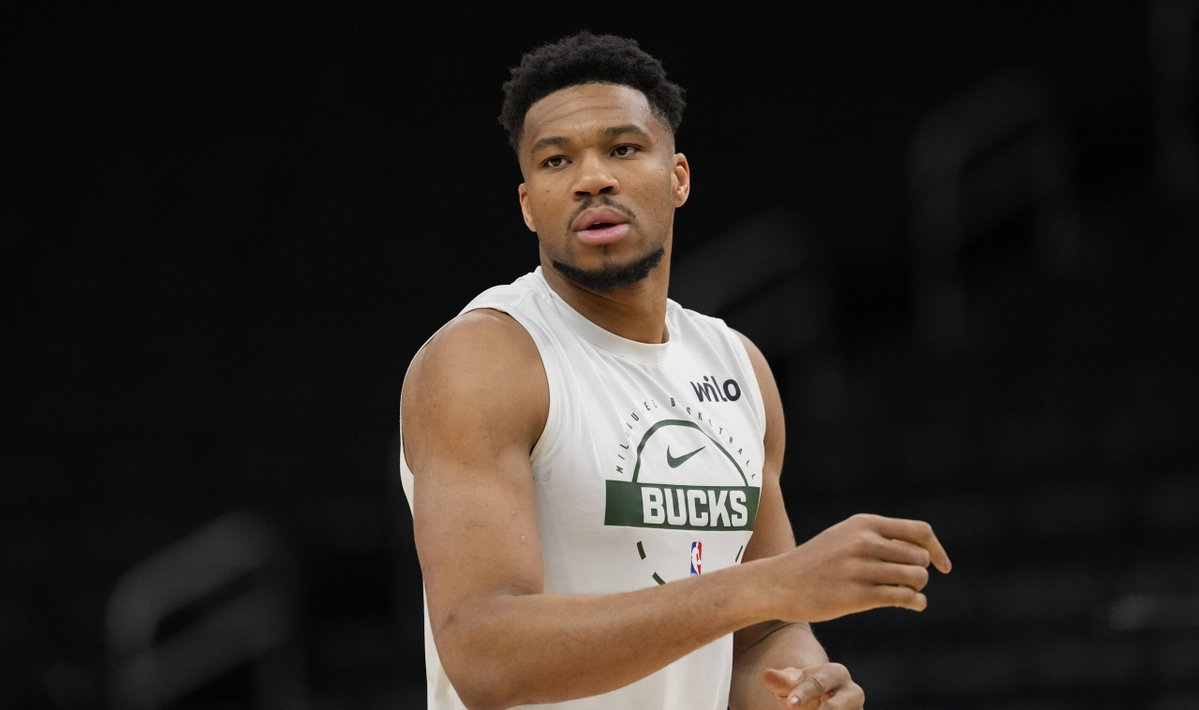
The 2026 NBA postseason is underway, and for the first time in 10 years, Giannis Antetokounmpo won’t be a part of it.
Watch What’s Trending Now!
Such has been the result of a poor Milwaukee Bucks team that wrapped the dismal 32-50 season with a loss to the Philadelphia 76ers. The Greek superstar was sidelined for the final stretch after a left knee hyperextension and bone bruise suffered in mid-March.
It has been a turbulent 2026 both for the Bucks and their franchise cornerstone.
It started with speculation and probability that the franchise would be open to trading him before the deadline. That didn’t happen as they held him hoping for a much bigger offer during the offseason. Co-owner Wes Edens says that Antetokounmpo is left with two options: either sign an extension or be traded. The latter seems more realistic at this point.
Injuries have also been a headache for the Greek star. He played only 36 games this season, the lowest mark in his 13-year career. However, it should have been more than that and it has raised questions and even league investigations on whether the Bucks intentionally kept him from action.
Player empowerment, a myth?
During the final stretch of the season, Antetokounmpo wanted to play when he felt he was ready health-wise but the organization thought otherwise. The 31-year-old let his frustration be known over that decision during an interview.
“Whoever came up with that is disrespectful towards what I’ve done for this team and the way I carry myself,” he said. “Who has that say? It comes from above. I thought I had control. OK, if I’m healthy, I’m going to play. This just shows me that not just me, players in general, don’t have any control. No, I didn’t feel like I had control.”
This is a two-time MVP, a 2021 champion, and the face of the Bucks for over a decade, admitting he has zero say over his own body once the front office and medical staff decide otherwise. When a player of that calibre comes out to express such thoughts, it begs the question of how franchises treat their big stars.
Milwaukee went 4-11 without him in that stretch, not that it would have made any difference as their postseason hopes were already in the balance then. However, it was interesting that the Bucks would rather go on a losing streak than have their best player on the floor. The message couldn’t have been clearer, and that was what Antetokounmpo meant by having “no control.”
For more than a decade, the NBA has sold “player empowerment” in which big-name stars can pick their teams, force trades, and even get coaches fired.
LeBron James’ “The Decision” in 2010 handed the keys to that era. Suddenly, everyone from Kevin Durant to James Harden to Anthony Davis seemed to wield real power. Everyone saw where it was going, but the full picture said otherwise. Empowerment in the league was always conditional, performative, and only those with the loudest voices and those willing to burn bridges could really have their way.
Antetokounmpo’s latest controversy with the Bucks front office just peeled back the curtain on what is and what is not the full idea of player empowerment in the modern NBA era. When he joined the Bucks in 2013, they weren’t relevant, but he led them to their first title in 50 years in 2021. H
e has been the face of loyalty in the modern NBA, staying put in Milwaukee even when it was clear that the franchise didn’t prioritize helping him with adequate pieces to win another championship.
Trade rumors fly around every offseason and deadline, but it ends with the Greek star remaining in Cream City. Yet how they decided to repay that loyalty is deciding his body wasn’t his to risk, even as he insisted he was healthy enough to finish the season.
Think of the biggest examples of player empowerment in recent memory:
- James wanted his own superteam to win championships, and he went to the Miami Heat. He later made his way back to the Cleveland Cavaliers and then to the Los Angeles Lakers.
- Anthony Davis wanted out of the New Orleans Pelicans and he got it.
- Even Antetokounmpo’s former teammate, Damian Lillard requested a trade from the Portland Trail Blazers and joined the Bucks. He spent the first 11 seasons of his career in Portland.
Antetokounmpo never did any of that and if left with a viable option, he would likely have wanted to remain in Milwaukee. However, the lack of control shows that the power structure in the league hasn’t fundamentally changed. The front office still calls the major shots when it comes to fielding its players. The 31-year-old forward paid the quiet price for that.
What the Antetokounmpo situation means for player empowerment
The situation involving Antetokounmpo and the Bucks is concerning, to say the least. This is not the first feud between a major superstar and a franchise, but it carries the weight of more than a decade of loyalty. Bucks announcer Marques Johnson, a franchise legend, described the situation as “as toxic as it appears.”
Instead of appreciation, Antetokounmpo is facing trade rumours, as he has yet to receive an extension offer, as he becomes eligible on October 1, 2026, and the front office has already hinted that if he does not sign, he will be traded. He has always maintained that winning is more important than money, but it does not appear that the Bucks are currently aiming to win.
When Antetokounmpo first urged the franchise to commit to winning, they went ahead and acquired Lillard in a 2023 trade. Lillard only played for two seasons before returning to Portland. When he wanted to play, that’s where the line was drawn. It shows where the player empowerment limit is, but it does not include health status gatekeeping.
Teams use “long-term health” to justify shutting down stars late in losing seasons, thereby protecting their investment. Antetokounmpo called it draining, and this one-sided business deal is why the league has severely curtailed player management and imposed the 65-game rule.
The NBA remains a league dominated by front office decisions, albeit in player-friendly packaging. The 2023 collective bargaining agreement made it more difficult for players to move when and where they wanted, limiting empowerment tactics. This is an ownership function, following years of stars dictating their movement terms. These high-profile trades continue to occur, but only when the front office is confident that they are receiving value in exchange for the business.
Ben Simmons is one recent example of this. He requested a trade from the Sixers in 2021 and refused to play unless he was traded to the Brooklyn Nets before the trade deadline. It resulted in his salary being withheld by up to $20 million, and he had to file a grievance against the organisation to recoup some of it. This is the harsh reality that players face when they choose to exercise player empowerment in this era.
Antetokounmpo has never requested a trade; however, the Bucks will not trade him without receiving valuable pieces and a large number of draft assets.
It means that his future is determined by which franchise has the most to offer, rather than which franchise can provide the winning team he so desperately desires. It demonstrates that players wield limited power in the league.