10 Best 2-Way Players in NBA Right Now – From Giannis Antetokounmpo to Jaylen Brown

ADD US ON GOOGLE
Feb 25, 2026 | 2:58 PM EST
Imago
credit: Imagn
Imago
credit: Imagn
Imago
credit: Imagn
Imago
credit: Imagn

The modern NBA tends to reward offense more than anything else. Any franchise that can’t keep up with the season’s points average finds itself deep into losing streaks. Fans are beginning to forget that defense even exists and will almost certainly put offensive players over everyone else. But the real separators, the guys who actually tilt championships, are the ones who punish opponents on both ends.
Watch What’s Trending Now!
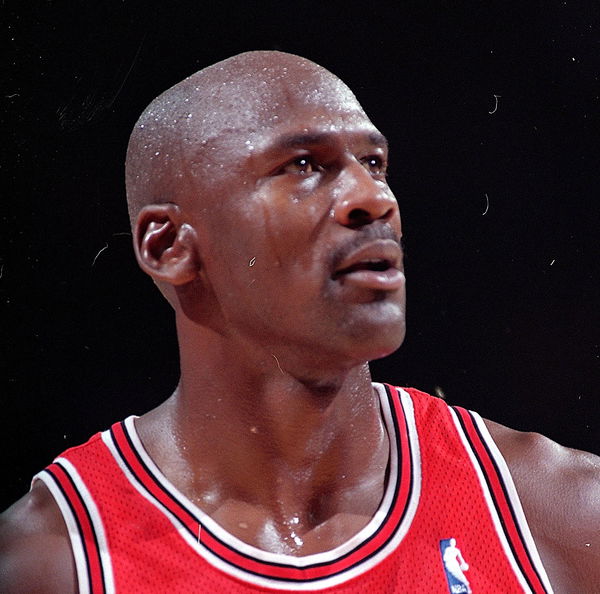
The two-way ripple effect has quietly become the secret weapon in a position-less era, where many teams spend long stretches without a traditional rim-protecting big. In the past, there were few, like Michael Jordan or Gary Payton, who generated explosive production on both sides of the basketball.
USA Today via Reuters
Nov 29, 1997; Landover, MD, USA; Chicago Bulls guard Michael Jordan (23) in action against the Washington Wizards at the USAirways Arena. Mandatory Credit: Porter Binks-USA TODAY
Our ranking is based on several crucial criteria.
First is the impact on both ends; players that can score and also equally offer the same effect in preventing points at the defensive end. Not necessarily high volume scorers or 20+ points players, but also creators.
Second is the influence on the roster; how their presence and absence affect their team. A good two-way player is hardly replaceable on a roster except by another equally impactful two-way player.


The third is two-way influence; how fans judge their game from the regular box score. Using the eye test to scope the impact a player brings.
The Top 10 Two-Way Players in The NBA
10. Scottie Barnes (Toronto Raptors): The Raptors have been guilty of not providing adequate pieces around Barnes since they drafted him in 2021. Despite that, the 24-year-old is one of the most gifted two-way stars in the league and is already a two-time All-Star.
Barnes is an underrated superstar who does just about everything. He has the skills on offense and elite versatility on defense. He guards stars, then initiates breaks. Toronto’s competitiveness starts and ends with him.
9. Jalen Williams (Oklahoma City Thunder): Already an All-NBA team member, Williams is the background factor that has seen OKC surge to the top. He is the perfect complement to reigning league MVP Shai Gilgeous-Alexander and All-Star big man Chet Holmgren. Last season’s title run had a ton of JDub written all over it.
The two-way stud is long, switchable, and has an improving offense, hitting a career-high last year before being slowed down by injury this year. He is building a niche as one of the most valuable young two-way pieces in the league. Few at his age have been All-NBA, All-Defense, and an All-Star.
8. Evan Mobley (Cleveland Cavaliers): In the 2024-25 season, the Cavaliers surged to the top of the East and have looked like one of the best teams in a recent stretch this season, and while the new James Harden-Donovan Mitchell pairing can be cited as the main reason, the two-way impact of Mobley has been underrated.
The fourth year big is anchoring Cleveland and is the type of modern big who switches everything while protecting the rim. His blocks and help defense create easy offense for the Cavs. As a seven-footer who is effective from beyond the arc, the former Defensive Player of the Year is the prototypical supporting piece a championship roster mandates.
7. Jayson Tatum (Boston Celtics): Tatum was hit with a serious injury last year that has kept him out so far this season. Star swingman Jaylen Brown has done a superb job of keeping the Celtics afloat; however, Tatum’s impact has been felt on the team. His performance when healthy earns him a spot in this list.
Tatum is one of the most offensively gifted superstars. He has already set the record for most points averaged in a season by a Boston player, and this is counting from a long line of Hall of Famers like Larry Bird, Kevin Garnett, and Paul Pierce. But the former Duke star also has elite defensive versatility.
6. Anthony Edwards (Minnesota Timberwolves): Edwards has been compared to his predecessors for a reason. He is the new prototype wing, thanks to his striking athleticism that defends multiple positions while also being a flamethrower on offense. He is averaging 1.4 steals this season, and while not an over-the-top number, it’s huge for an offensive threat to have.
He’s a highlight reel scorer, but his defensive energy is just as disruptive to an opponent’s flow. His size and lateral quickness are the two major tools that allow him to stifle his opponent. His impact has been a huge reason the Timberwolves have had deep playoff runs in recent seasons, making the Western Conference finals in the last couple of seasons.
5. Kawhi Leonard (Los Angeles Clippers): Injuries likely cost Leonard a real argument as the greatest two-way wing ever. But even at 34, he is still one of the best dual-threat players on the floor. He is not a rim-crasher defensively like Rudy Gobert or swatting shots like Holmgren. What the Los Angeles Clippers star brings to the game is balance at both ends.
When healthy in his prime, no wing defended like the two-time Finals MVP while scoring at an All-NBA clip. A two-time Defensive Player of the Year, they call him “The Klaw” for a reason.
4. Jaylen Brown (Boston Celtics): Jaylen Brown could pass for being the most underrated player in the NBA right now. He is not the flashiest scorer or the most lockdown-savvy defender, but his two-way impact is among the league’s best. Averaging 29.2 points per game this season, the 29-year-old is having his best scoring season even without his partner, Jayson Tatum.
This season, the Celtics are in the top five in defense despite losing defensive stalwarts like Jrue Holiday and Kristaps Porzingis. It has all been thanks to Brown setting the tone on both ends. Boston trusts him to take the toughest assignment of guarding the opposition’s best wing, then drop 30 on the other end.
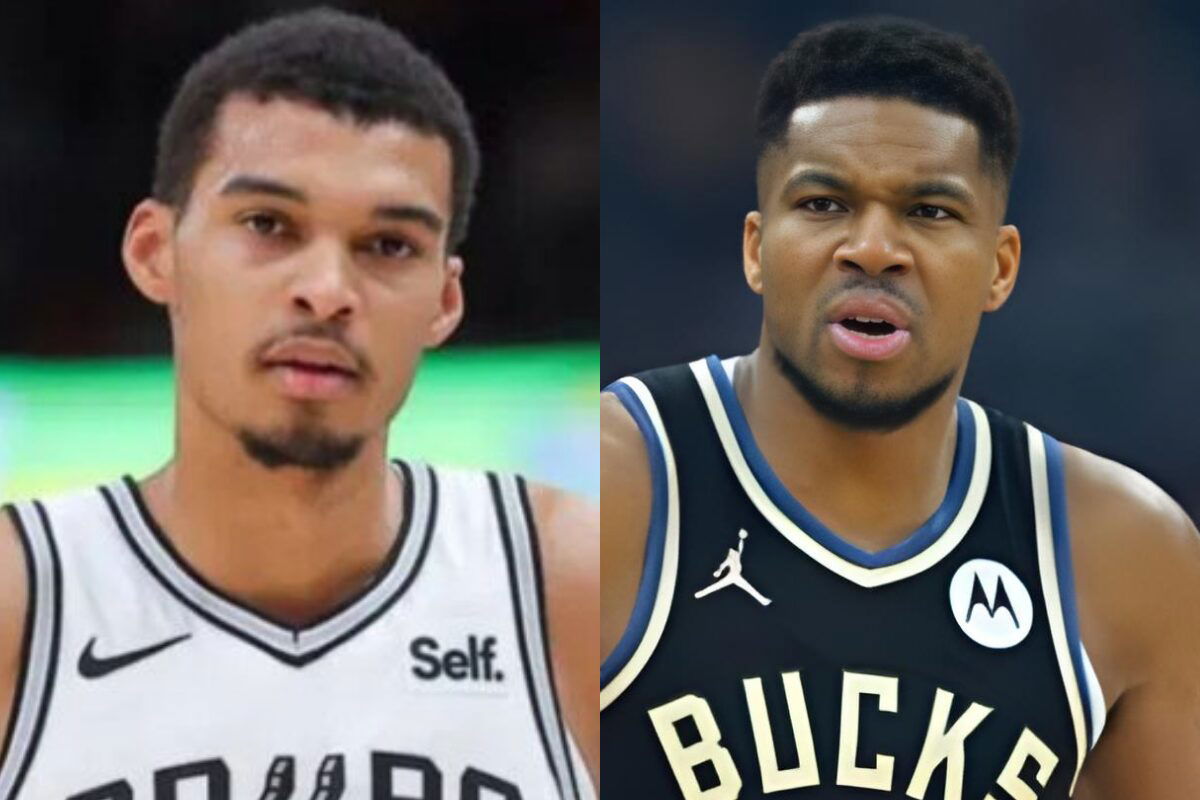
3. Victor Wembanyama (San Antonio Spurs): Wembanyama came into the NBA with hype, but what he has done in three years is beyond description. The 7-foot-4 “alien” is a defensive menace, getting better offensively by the week. Averaging 24.3 points per game and 11.2 rebounds (fifth best in the league), the league may have its new face waiting as the current generation of superstars ages out of their prime.
The Frenchman is an overwhelming Defensive Player of The Year favorite and has always been one of the best defensive players in the league, even as a rookie when he made the All-Defensive First Team. Wembanyama’s scoring touch has made his two-way game elite as his length creates a defensive gravity. He is developing a face-up game and step-back 3-point shot, which is unprecedented for a seven-footer. It explains why the Spurs are the No. 2 seed in the West.
2. Shai Gilgeous-Alexander (Oklahoma City Thunder): Gilgeous-Alexander is on offense what Wembanyama is on defense. The 6-foot-6 superstar guard has been one of the most awe-inspiring packages in recent years. No one, certainly not the Clippers, could have predicted the kind of talent they let go of when they shipped him to the Thunder in 2019. From that time to now, he has been the engine for an Oklahoma City team that has become the defending champion and the best team in the league.
Gilgeous-Alexander’s points average of 31.8 is the second best in the league, and while the last season’s MVP crown was warranted more because of his offensive brilliance, he is a huge part of why the Thunder have the best defense in the NBA this season. Perennially among the league leaders in steals, he is the most complete guard in the league right now. His size and length bother opposing guards. His 1.4 steal percentage on one end and 6.5% turnover rate on the other makes him the ultimate two-way creator.
1. Giannis Antetokounmpo (Milwaukee Bucks): Since his entrance to the NBA, Antetokounmpo has remained the king of two-way basketball. Even with the Bucks sitting on a 24-31 record (and Antetokounmpo on his couch) and in position to have their worst record in 10 years, it doesn’t diminish the impact the former Finals MVP brings to the floor.
This season, he is averaging 28 points, 10 rebounds, 5.6 assists, 0.9 steals, and 0.7 blocks on a 64.5% shooting from the floor, which is third in the league. His efficiency impacts winning on both ends, even when his supporting cast doesn’t offer much help. The former Defensive Player of the Year is also one of the best scorers in the league, combining a high level of physical terror on defense with unstoppable basket attacks on offense.
Why Two-Way Superstars Are the Real Championship Blueprint
These superstars are setting the mark for what two-way basketball is. Deep into the regular season and going into the postseason, players who have mastered both ends of the court are vital when one-way stars get exposed. It stops being a stat-padding run-in toward a ring.
With the advancement of the game to a fast-paced era, more emphasis will be on offensive players who can also contribute defensively. They are the key pieces to unlocking championship rosters. Versatility will be a very important key metric toward drafting players into the league as time goes on. Organizations will salivate over taking a two-way star over a one-sided one.
In today’s NBA, one-way stars can dominate highlights, but two-way superstars decide playoff series. When offenses stall and possessions slow down, versatility wins games. The league is evolving toward players who can create, switch, rotate, and finish possessions themselves — and the teams stacking these players are the ones consistently playing in June.