Imago
IMAGN
Imago
IMAGN
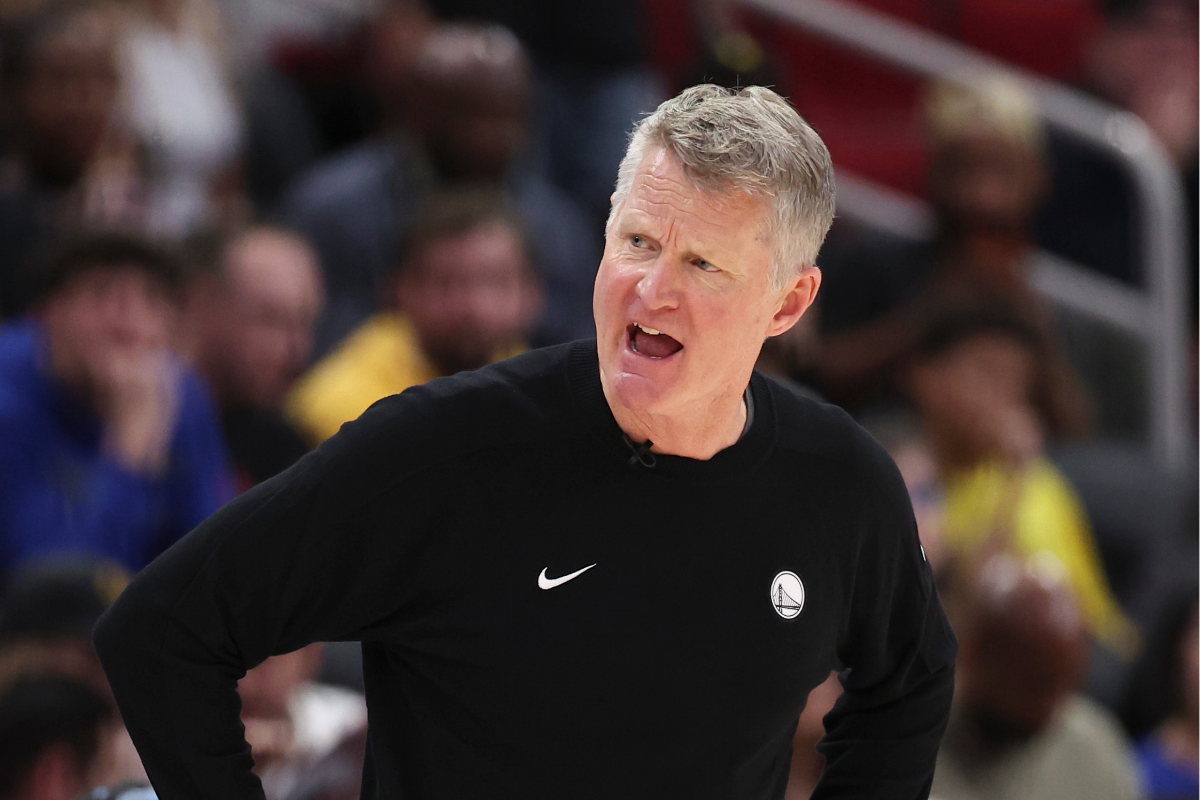
Steve Kerr wasn’t playing about shortening the NBA season. He now wants to talk logistics to make it happen. Despite backlash from ESPN’s Stephen A. Smith—who called Kerr’s stance ‘hypocritical’ for advocating fewer games without players giving back salary money, while questioning modern players’ toughness and implying they get ‘max dollars’ but want less workload, Kerr’s not slowing down his campaign.


Ahead of the game against the New York Knicks, the Golden State Warriors’ head coach once more delivered a blistering critique of the NBA’s schedule. All season, he’s been blaming it for the rising number of soft tissue injuries in the league. Now he wants to do something radical.
Watch What’s Trending Now!
Kerr is calling for an “emergency” shift in how the league handles its 82-game schedule. As the Warriors grapple with a decimated roster that’s now without Stephen Curry (out since late January with lingering right knee patellofemoral pain syndrome and inflammation, re-evaluation expected soon after missing 15+ games), Al Horford (mild left calf strain, out at least a week), Seth Curry (left sciatic nerve irritation/back issues and thigh concerns, out at least a week), and others like De’Anthony Melton (knee), Kristaps Porzingis (illness management), Moses Moody (wrist sprain), and more forcing reliance on two-way players; Kerr urged league stakeholders to stop ignoring the visible connection between the relentless schedule and the league-wide surge in injuries.
He immediately addressed the primary concern about it. “I’m well aware fewer games would mean less revenue. Which means everybody takes a pay cut,” Kerr told reporters in New York. “And I’m willing to stick my neck out and say I’m all for that because I think the quality of the product is the most important thing. So I don’t say these things flippantly. I say these things because I mean them.”
Kerr’s comments come at a time when the 2025-26 season has been heavily determined by rampant injuries. He pointed out that data proves that players are running increased speed and distance “compared to 20-30 years ago,” i.e., when Kerr himself was winning five championships as a player.
Steve Kerr wants NBA stakeholders to have a ‘meaningful discussion’ about changing the length of the NBA season. “I’m well aware fewer games would mean less revenue which means everybody takes a pay cut and I’m willing to stick my neck out and say I’m all for that because I think…
— Ian Begley (@IanBegley) March 15, 2026
NBA players are simply covering more ground than ever. A decade ago, teams averaged around 16.83 miles per game – now, that number has climbed to roughly 18.35 miles per game. That’s a 9% jump, and since 2012, teams have logged an extra 200 miles per season. Faster pace, more three-pointers, more transition basketball, it all adds up.
Kerr argued that the modern “pace-and-space” era has rendered the traditional 82-game slate physically unsustainable. “We have incredible people in this league and great fans. I just want to make sure we give our fans the very, very best product we can… without just completely—I don’t know, ignoring some of the obvious (schedule-related injury) issues we’ve established,” Kerr added.
Usually, Kerr is as polarizing as he’s outspoken. But fans’ response to his comments in New York was receptive. Fans online have pointed out that they’re disenchanted by the lack of competition in the NBA, and if fatigue is sapping the intensity out of the game, they’re backing Kerr on his initiative.
The logistics behind Steve Kerr’s 72-game solution
The crux of Steve Kerr’s proposal involves a permanent reduction of the regular season by 10 games, moving to a 72-game schedule. This isn’t the first time Kerr has championed this “unpopular opinion.” The timing for this call to action, though, comes when the Warriors have hit rock bottom and “as beaten up as any team I can ever remember,” said Kerr yesterday. It has added a sense of urgency to the plea.
Support within the league isn’t isolated to Kerr. His own player, Draymond Green, has backed the idea, noting the modern game’s drastically faster pace compared to the 1990s makes the workload unsustainable. Knicks guard Josh Hart has echoed similar sentiments in favor of shortening, though he called full implementation unlikely due to financial realities and gave a ‘bitter reality check,’ saying, ‘It’s not gonna happen.’
Kerr’s “emergency” stance faces significant hurdles, primarily from the league office. He reportedly sent emails to Commissioner Adam Silver on this at the start of the season but received pushback, citing a lack of definitive data proving that fewer games reduce injury risk.
However, the 2025-26 season tells a different story. A growing number of All-Stars, including Stephen Curry, Nikola Jokic, Shai Gilgeous-Alexander, Luka Doncic, and Austin Reaves, have been sidelined due to injuries. Kerr also noted that they’ve had to cut back on team practices on road trips. Weeks earlier, JJ Redick also cancelled shootarounds for Lakers to minimize injuries.
But Kerr’s demand might also mean restructuring the existing media deal and CBA. Despite the backlash from pundits like Stephen A. Smith, who recently questioned the toughness of modern players, Kerr remains undeterred.
For the nine-time champion, the math is simple: a shorter season equals a higher-quality game. As the Warriors (32-34) fight for their play-in contention with a depleted rotation, Kerr’s “meaningful discussion” may soon become an unavoidable necessity for the league’s survival.