
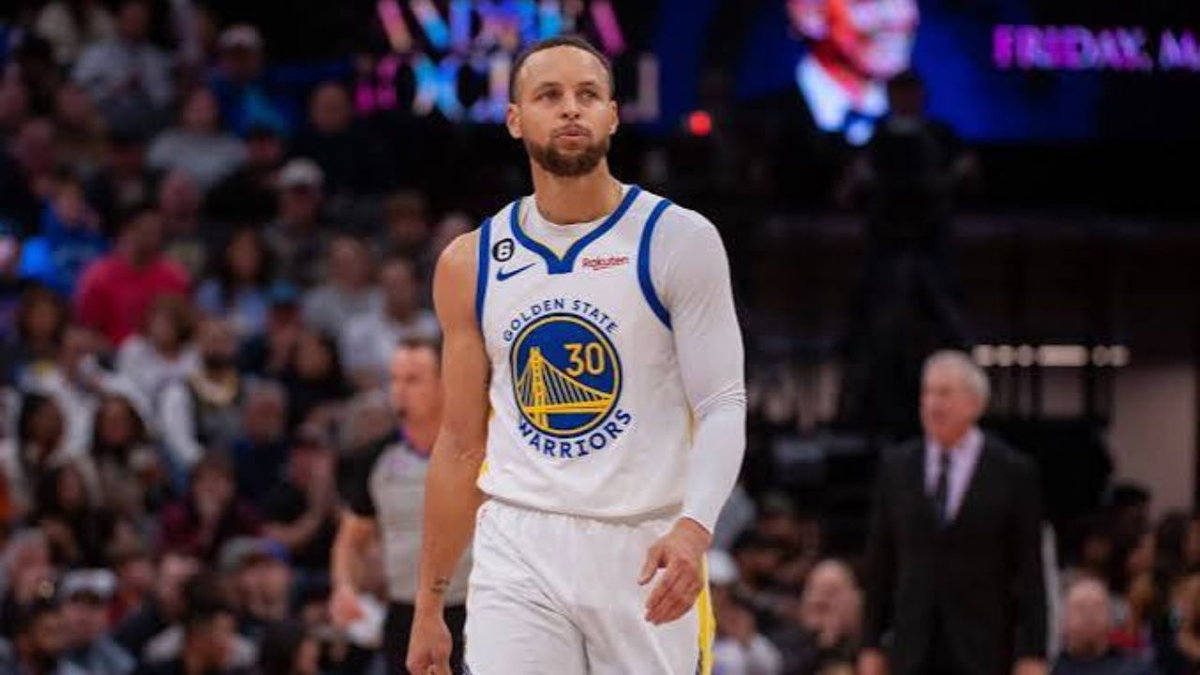
Stephen Curry once described the Bay Area in terms that went far beyond basketball.
Watch What’s Trending Now!
“Everything that we accomplished, and everything I know about myself as an NBA player was built with the love of Oakland behind me,” Curry said in 2022.
By March 2025, that connection had taken a new shape. Thirty Ink had unveiled plans for a five-story headquarters at 600 20th Street in San Francisco’s Dogpatch, a building designed to bring together Curry’s growing business operation. His company’s COO, Tiffany Williams, said the move would “cement” its commitment to San Francisco after Curry’s playing career.
Just four weeks later, the plan was gone. Thirty Ink spokesperson Michael Smith said, “Our dream of building a new Thirty Ink HQ at 600 20th Street has been destroyed by the [Nor Cal Carpenters Union].” And now, the building that was supposed to become the home of Curry’s business empire has been sold for $11 million.
The property records confirm the new owner is Utah-registered Dane Reinsurance Inc. The sale closes the chapter on a project that had already gone through a public labor fight, protests outside Thirty Ink’s SoMa office and an effort involving San Francisco Mayor Daniel Lurie and Warriors advisers to bring it back to life.
But to understand why the sale matters, it helps to go back to what Curry was trying to build there in the first place.
This was supposed to be much more than an office
Thirty Ink quietly purchased the 600 20th Street property in May 2024 for $8.5 million.
At the time, the site held a two-story commercial building dating to 1972. The plan was not to simply move Curry’s team into the existing space. The structure was supposed to be demolished and replaced with a five-story, 24,691-square-foot headquarters designed by architecture firm Midnight Dawn.
The scale of the plan made the property far more important than a typical corporate office.
Thirty Ink was serving as the hub for eight businesses and 13 entities connected to Curry’s commercial, creative and philanthropic work. The proposed building was designed to bring those operations under one roof.
There was a public exhibition gallery and event space on the ground floor. Another level was planned for laboratories, multimedia production studios and product testing. Corporate offices would occupy another floor, while a 4,700-square-foot, three-bedroom residence was planned for visiting partners and guests. The roof would also include an outdoor event space.
And the location was no accident. The property sat in Dogpatch, close to Pier 70 and within walking distance of Chase Center.
Curry wasn’t just planning a place for his employees to work. Thirty Ink was trying to establish a permanent San Francisco base for what had become a much larger operation.
That is what made what happened next so surprising.
Then the fight over labor changed everything
The problem began with negotiations over how the project would be built.
Thirty Ink had selected Achill Beg Construction as its general contractor, while discussions with Local 22 of the Nor Cal Carpenters Union centered on workforce ratios, contractor selection and union agreements.
Thirty Ink’s position was that the privately funded project did not have a legal requirement to use union labor. Even so, the company said it was willing to commit to a 40% union workforce.
Smith put that argument plainly in the statement announcing the cancellation:
“While a project of this size typically requires zero union workers, we committed to having a 40% union workforce.”
From Thirty Ink’s perspective, that should have been a meaningful compromise. The company said union organizers initially indicated that the arrangement could work before later pushing for a broader agreement covering the project’s trades.
The union saw the situation very differently.
Union spokesperson Sam Singer argued that the issue was not about giving a famous athlete special treatment. It was about protecting labor standards in San Francisco.
“Either you want to do what is right or you want to undercut the labor standards and hurt working men and women,” Singer said. “Local 22 of the Carpenters Union will not let anyone, even an NBA superstar, undercut labor standards.”
That disagreement had another major point of tension: Achill Beg Construction.
Union representatives questioned the contractor’s labor practices and argued that using a non-union contractor could weaken the wages, benefits and apprenticeship standards they were trying to protect.
So the two sides were looking at the same project from completely different directions.
Thirty Ink saw its 40% proposal as a voluntary commitment on a private development.
The union saw a partial union workforce as insufficient.
And the dispute was no longer staying behind closed doors.
Curry’s name was suddenly at the center of the fight
By late March 2025, the conflict had moved from negotiations to the streets.
Union picketers gathered outside Thirty Ink’s existing SoMa office rather than the empty Dogpatch property. Flyers targeted Curry by name and image as pressure mounted on his company.
For Thirty Ink executives, the public campaign became part of the reason the situation was no longer workable.
COO Tiffany Williams and lead negotiator Suresh Singh raised concerns about workplace safety and disruption. The pressure was especially striking because the dispute was over a development project that had not even begun construction.
Then came April 3.
An email sent to local media carried a blunt subject line:
“Urgent–Thirty Ink HQ Canceled.”
Smith’s statement went further, directly naming union organizing director Jacob Adiarte.
“[Jacob Adiarte] has personally gone out of his way to make it untenable for us to build in San Francisco,” Smith said.
The headquarters was finished before construction had even started.
But San Francisco wasn’t ready to let the project disappear that easily.
The city tried to bring Curry’s project back
The cancellation immediately created a new problem for people who wanted to see more private investment in San Francisco.
Mayor Daniel Lurie, Warriors policy advisers, Dogpatch business leaders and local developers became involved in efforts to find a way forward.
The goal was simple: find a compromise that could get Thirty Ink back to the table.
Among the ideas discussed were changing the general contractor, restructuring parts of the project and finding ways to offset the added costs associated with a full union agreement.
For a moment, the project had a possible second life.
Adam Gould of the Dogpatch Business Association warned that losing the development carried a message beyond one building.
“The rejection of [Thirty Ink’s] offer has not only led to the loss of a high-profile project but also perpetuates the perception that San Francisco is inhospitable to business investment.”
That made the failed headquarters part of a much bigger conversation about doing business in the city.
But the rescue effort could not undo what had already happened.
Thirty Ink did not re-engage after the public picketing, while union leadership continued to stand by its position on labor agreements. The negotiations stalled.
The planned five-story headquarters remained unbuilt.
And 600 20th Street sat without the future Curry had envisioned for it.
Until someone else came along.
Curry bought it for $8.5 million. Someone else now owns it for $11 million
In September 2026, property records confirmed that Thirty Ink had sold the Dogpatch property to Dane Reinsurance Inc. for $11 million.
On paper, that is a $2.5 million difference from the $8.5 million Thirty Ink paid in 2024.
But that number does not tell the whole financial story. The company also spent money on architectural work, planning, legal expenses and carrying the property during the period when the headquarters project remained unresolved.
The more important part of the transaction is what the property represents now.
Dane Reinsurance is connected through its executives to Corgi, an AI insurance startup. Michael Davis, Nicolas Laqua and Seth Heber Beddes are listed across the two companies.
Corgi has been pursuing a very different kind of San Francisco footprint: 24-hour cafes intended as places where technology workers, founders and engineers can work late into the night.
The company has not publicly confirmed that 600 20th Street will become one of those locations, so the exact future of the property remains unclear.
But the contrast is striking.
The site that Curry’s team once planned to turn into a permanent headquarters for eight businesses and 13 entities is now in the hands of a company tied to a startup with an entirely different vision for San Francisco.
And that brings the story back to Curry.
The sale does not mean Curry is leaving San Francisco
It would be easy to look at the Dogpatch sale alongside Curry’s other recent real estate moves and assume he is pulling away from the Bay Area.
The research does not support that conclusion.
Thirty Ink continues to operate from its SoMa offices, while Curry retains business interests in San Francisco. The Dogpatch project failed, but the company itself did not disappear from the city.
Curry’s Atherton estate was also sold earlier in 2026 for $29.1 million, but that transaction has not been tied to the collapse of the Dogpatch headquarters or shown to represent a broader exit from the Bay Area.
That distinction matters.
The failed headquarters was supposed to “cement” Curry’s commitment to San Francisco after basketball.
Instead, the building was never constructed.
The property is now gone from Thirty Ink’s portfolio.
The dream attached to that address is gone with it.
But Curry’s San Francisco story is not over. What has changed is the physical home he once planned to give his business empire.
The five-story headquarters that was supposed to bring his companies, creative work and long-term business plans together will never rise at 600 20th Street.
The building now belongs to someone else.
And after everything that happened there, that may be the clearest sign yet that Curry’s original San Francisco headquarters dream has reached its final chapter.