
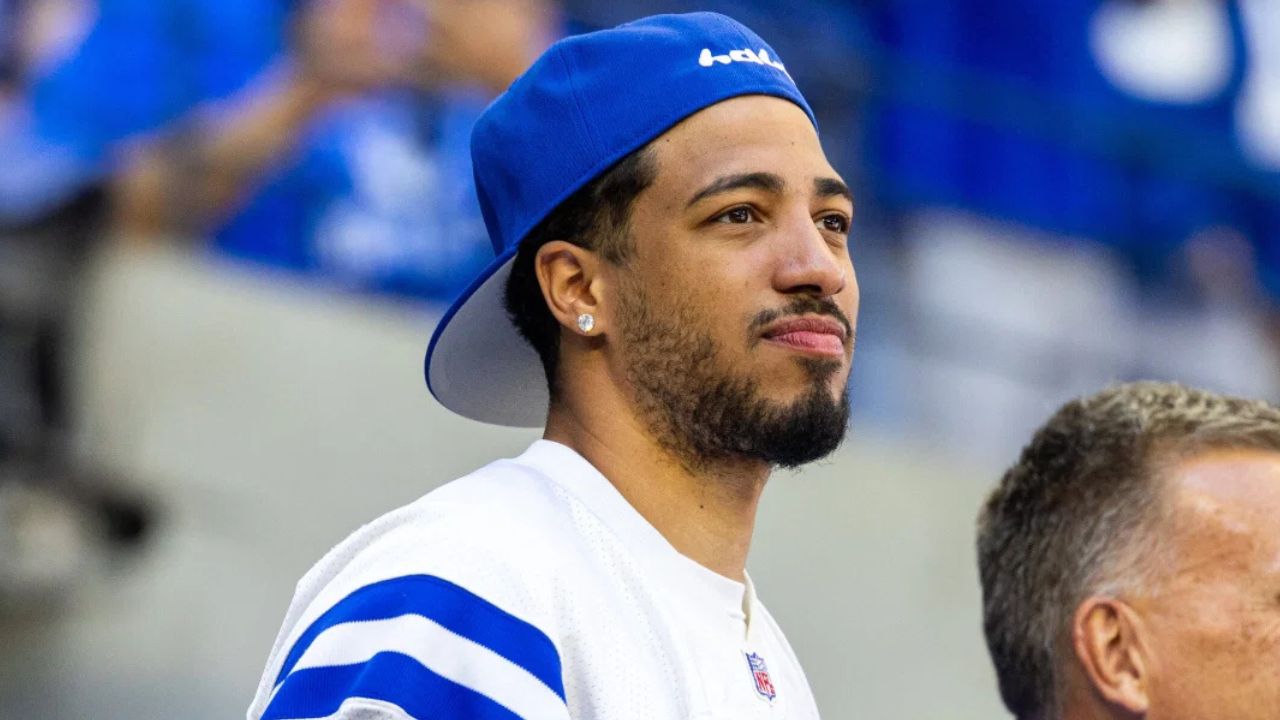
Artificial intelligence is increasingly finding its way into professional sports, from performance analysis to scouting and roster construction. While NBA teams have entire departments dedicated to evaluating players and potential trades, Tyrese Haliburton believes some decision-makers might also be turning to AI tools for quick answers. The Indiana Pacers guard recently raised the possibility of general managers using ChatGPT to identify trade targets and evaluate potential deals, although he admitted the idea makes him uncomfortable.
Watch What’s Trending Now!
The conversation came up during a podcast discussion about whether certain professions could remain protected from AI. The topic eventually shifted toward basketball when the hosts explored whether the sport and its surrounding business could avoid the technology’s growing influence. Haliburton did not rule out AI becoming part of front-office decision-making. In fact, he suggested that some NBA executives might already be using it to explore potential moves.
“There’s definitely GMs out there who are asking that question, which is, like, scary to think about,” Haliburton said on the Nothing Silent Podcast.
“Because, like, you can, like, AI doesn’t know everything, you know, and at the same time, like they’re wrong a lot of times.”
The discussion began with the possibility of general managers asking AI tools questions about potential trades. One of the hosts suggested that executives could use ChatGPT to identify players worth pursuing or determine which deals would make financial sense. Haliburton agreed that such questions were likely being asked somewhere around the league.
The appeal of using AI for these decisions is understandable. NBA trades involve several moving parts, including player salaries, contract years, salary-cap restrictions, draft picks, and roster requirements. Executives must evaluate whether a potential deal works financially while considering how an incoming player fits the team’s existing roster and long-term plans. AI tools could potentially help organize information and generate possible scenarios, giving front offices a starting point for further evaluation.
AI’s involvement in NBA roster construction is not entirely hypothetical. The Golden State Warriors used their proprietary machine-learning model to evaluate potential acquisitions ahead of the 2025 trade deadline, with the system identifying Jimmy Butler as an ideal fit.
General manager Mike Dunleavy Jr. acknowledged that AI was involved in that decision. But his own experience as Butler’s former teammate on the Bulls likely played a strong part in it. The example demonstrates how NBA front offices are already incorporating AI into their evaluation process, although the technology remains part of a broader decision-making system.
However, Haliburton questioned whether AI could reliably handle the basketball-specific details behind those decisions.
“Well, like there’s just certain aspects of like stats and stuff that they can’t necessarily read fully all the time,” Haliburton said.
A player’s statistical production can provide valuable information, but it does not automatically explain his role, fit, or impact within a particular team. A potential trade involves several factors beyond numbers, including chemistry, availability, playing style and a franchise’s direction. These are areas where basketball knowledge and judgment from scouts, coaches and executives remain important.
Haliburton also hopes AI does not become too influential in other areas of the sport. When the conversation shifted toward the possibility of technology replacing human involvement in basketball, he made his position clear.
“I hope not because I think that the human element of it is the most important.”
The hosts also discussed whether AI could eventually influence basketball commentary. Haliburton was not enthusiastic about automated commentary replacing human reactions.
“You want guys’ real reactions to certain things.”
His comments highlight a broader question facing professional basketball as AI tools become more accessible. Teams can use technology to process information and explore possibilities, but deciding whether a player belongs in a particular system still requires basketball judgment.
Importantly, Haliburton did not identify any specific executive or organization using ChatGPT to make trade decisions. He was discussing what he believes could already be happening around the league, rather than revealing a confirmed instance. Still, the Warriors’ example shows that AI-assisted evaluation is already part of NBA roster construction, giving Haliburton’s concerns a relevant real-world context.