
“It’s preseason, but it’s not preseason for setting a tone. We’re not taking any shit… If he did that to me, I would’ve reacted differently. But that’s just who I am.” Marcus Morris Sr. offered that blunt explanation after being ejected from a preseason game against the Washington Wizards in October 2019. His confrontation with Justin Anderson showed how quickly an exhibition game could turn physical, even before the regular season began.
Watch What’s Trending Now!
Preseason games are supposed to give teams time to work on rotations, build chemistry, and get ready for the games that count. But the tension can still spill over when players refuse to back down. Seven years later, another Wizards game offered a fresh example of just how quickly a preseason matchup can turn physical.
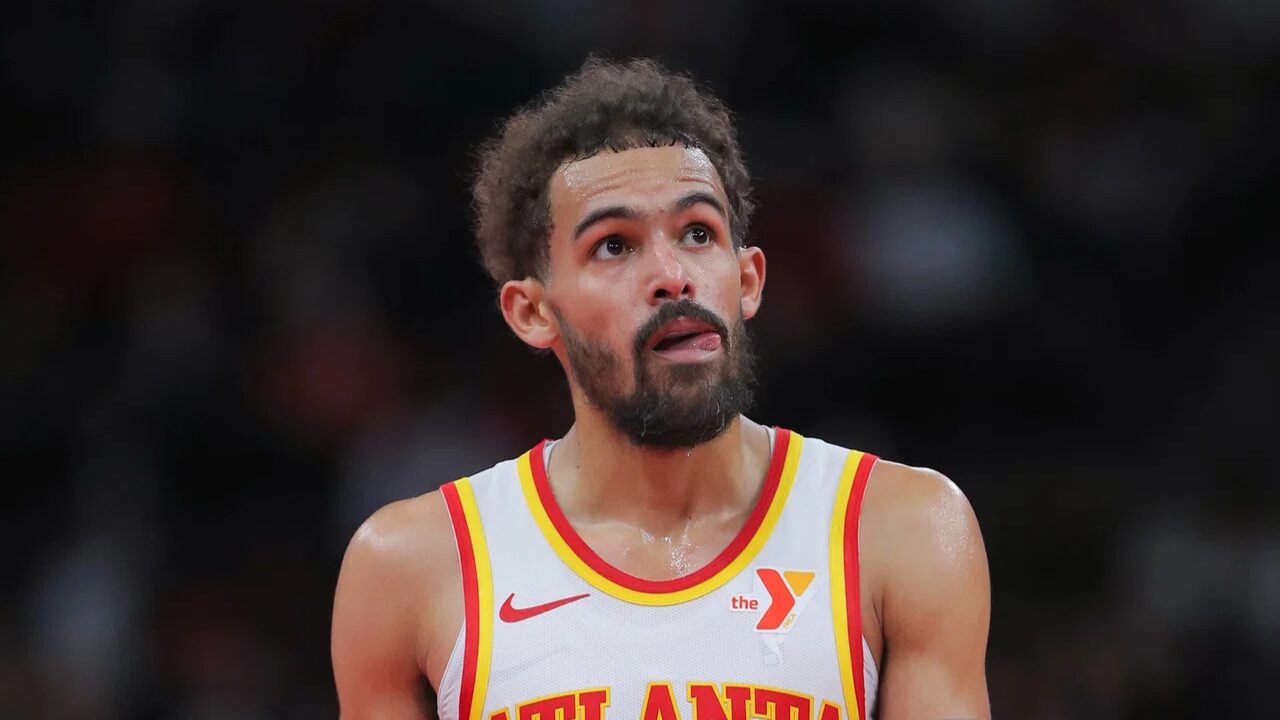
With Washington facing Detroit at Capital One Arena on October 10, Trae Young and Daniss Jenkins were both ejected after a third-quarter confrontation. The game had already featured an earlier scuffle involving Kyshawn George and Paul Reed, and the later clash brought Anthony Davis into the middle of the action. As Davis stepped between Young and Jenkins, he could be heard saying, “I know that he’s small, I know he’s small, but that’s my boy, okay? That’s my boy.”
The ejections became the game’s biggest talking point, but they were not the end of the story. Washington eventually beat Detroit 114-108 in overtime after surrendering a 20-point first-quarter lead. To understand how the game reached that point, it is worth going back to the first confrontation.
The first scuffle set the tone
The first confrontation came in the second quarter, when Washington’s Kyshawn George and Detroit’s Paul Reed got tangled up during a battle for position in the paint. George made upper-body contact with Reed, who took exception and stepped into him. The exchange quickly became physical enough for Anthony Davis to intervene.
Davis moved between the two players and pushed Reed back, while Detroit’s Ausar Thompson joined the effort to separate the group. Officials stopped play and assessed double technical fouls to George and Reed. Neither player was ejected, and the game continued.
That incident matters because it shows the physical tension was not limited to Young and Jenkins. But the two confrontations should not be treated as proof of a personal feud between Washington and Detroit. The available research does not establish a history of hostility between Young and Jenkins, and one preseason game is not enough to declare a rivalry.
The later confrontation was more costly. At the time, Washington had seen its 20-point first-quarter lead shrink to just two points. Detroit had cut the score to 62-60 with 8:18 left in the third quarter, following a transition dunk by Ron Holland. As Washington prepared to bring the ball up the floor, Jenkins made shoulder-to-chest contact with Young near the sideline.
Young responded with a two-handed shove. Jenkins shoved him back, and the officials blew their whistles to stop play. But the confrontation did not end there. Jenkins then circled around referee Matt Kallio and shoved Young in the upper back.
That second shove escalated the situation and brought Davis rushing in again. He positioned himself between the two guards as officials and teammates tried to separate them. The officials initially assessed double technical fouls to Young and Jenkins, but the players continued exchanging words during the stoppage.
Why both guards were ejected
The second set of technical fouls proved decisive. Young and Jenkins continued exchanging words during the stoppage, and referee Ben Taylor assessed another technical foul to each player. Under NBA rules, a player who receives two technical fouls in a game is automatically ejected.
The distinction is important because the confrontation did not end with the initial exchange of shoves. The players continued arguing after officials intervened, and the additional technical fouls sent both guards to the locker room.
For Detroit, the incident also came amid a broader pattern of physical play. The Detroit News reported that the Pistons had been involved in three altercations across their first two preseason games, raising questions about the team’s physical approach.
The pattern raises a more useful question than whether Washington and Detroit are developing a rivalry: is physical play becoming a defining feature of Detroit’s preseason approach? Two games cannot settle that question, but the repeated altercations make it worth watching.
Young finished with two points, two rebounds and eight assists in 23 minutes, shooting 1-for-4 from the field while committing five turnovers. Jenkins had 12 points on 4-for-6 shooting, including 3-for-5 from three-point range, and four assists in 17 minutes and 33 seconds.
Detroit erased the lead, but Washington had the final say
The ejections might have dominated the conversation, but the game still had a long way to go. Washington had opened with a 40-point first quarter, taking a 40-20 lead, only for Detroit to respond with a 30-point second quarter. By the time Young and Jenkins were sent off, the Pistons had pulled within two.
Detroit continued to push after the third-quarter stoppage. The Pistons outscored Washington 28-24 in the period and entered the fourth quarter with a 78-76 lead. What had started as a comfortable night for Washington had become a close contest, with the Wizards now needing to find offense without Young.
Detroit’s reserves helped keep the comeback alive. Ebuka Okorie finished with 14 points and six assists in nearly 27 minutes, while Tolu Smith III grabbed 13 rebounds, including eight on the offensive glass, in just over 15 minutes. Smith’s work on the boards gave Detroit extra possessions, an important contribution in a game where the Pistons had already erased a large deficit.
Washington, however, found a way to force overtime. The Wizards put together a late 8-2 run in the final two minutes of regulation to tie the game at 98-98. That late push shifted the focus away from the ejections and toward the players who still had to finish the job.
Tre Johnson and Will Riley each scored 15 points for Washington. Johnson made four of his six attempts from three-point range, while Riley went 8-for-8 at the free-throw line. Their production helped Washington stay in the contest even after its starting point guard had been removed.
Overtime brought another test. Washington outscored Detroit 16-10 in the extra period, with Johnson hitting a long three-pointer, Riley finishing a driving layup and converting the free throw, and Justin Champagnie adding a putback dunk. Chris Livingston and Felix Okpara also scored late as Washington pulled away for the 114-108 win.
That does not mean the ejections caused the game to swing in either direction. It does show why the final score and the full game sequence belong in the story. The altercations were the headline, but the basketball that followed determined the outcome.
Washington’s overtime win did not erase the questions raised by the ejections. The earlier confrontation between George and Reed had already shown how physical the game had become, while Davis’s intervention during the later clash added a personal dimension to the moment. But one preseason game is not enough to establish a rivalry between the teams.
For Detroit, the question is whether its physical approach carries into the regular season. For Washington, the game offered a different test: the Wizards lost Young in the third quarter, surrendered a 20-point lead, and still found a way to win in overtime. The result showed that the team had other players capable of contributing when the game became tight.
The final score was 114-108, but the game will also be remembered for the two ejections. Whether the confrontations become a footnote or the start of a bigger story will depend on what happens next.