
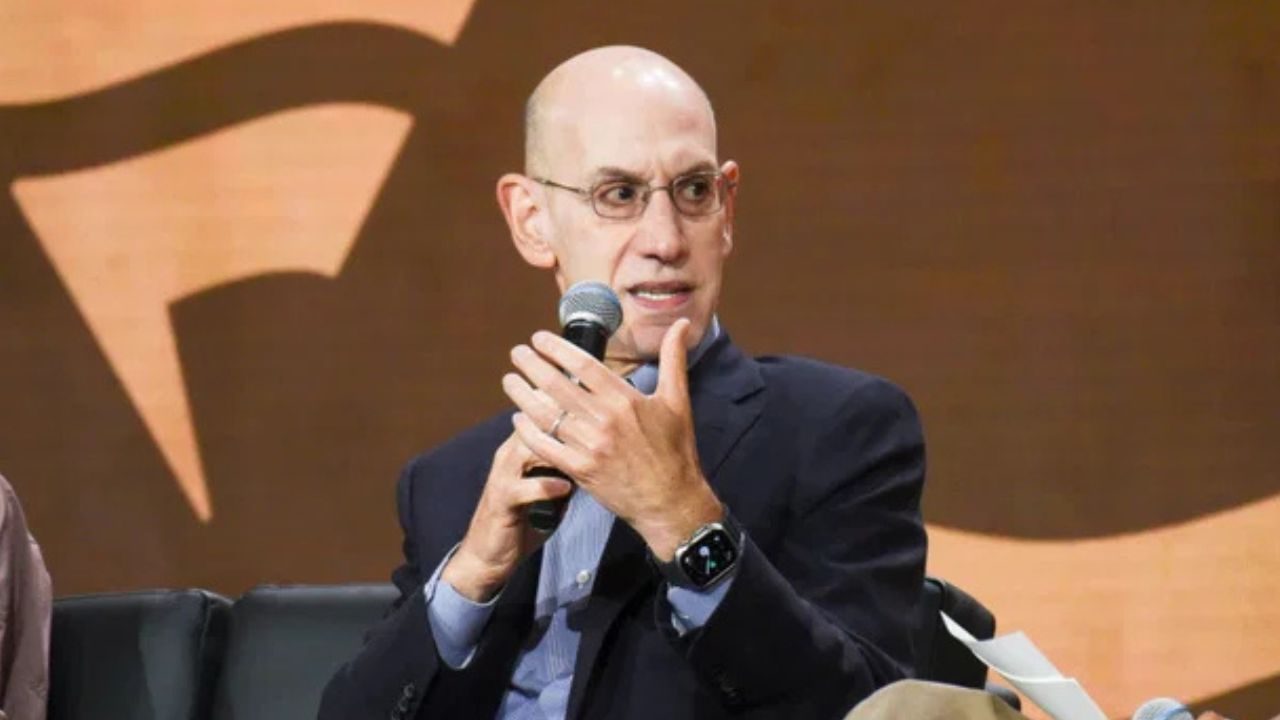
Bruce Brown played all 82 regular-season games last season, yet he entered the Knicks training camp without a guaranteed contract. His situation has exposed a growing debate over how the NBA’s financial rules affect established veterans. The league has now pushed back against claims that its second apron restrictions are hurting lower-and middle-income players.
Watch What’s Trending Now!
The league especially cited the $1.3 billion increase in annual salaries since the rules took effect as its defense.
NBA Communications published a statement on X after Brown questioned the new CBA following the Knicks’ preseason game against the Wizards.
The league wrote:
“Recent reports asserted that the second apron is hurting “lower” and “middle” class players. That’s untrue. Since the implementation of the second apron, the number of players on team rosters has remained the same, and annual salaries have increased by nearly $1.3 billion, resulting in pay increases of approximately 30% for all classes of players.”
The NBA did not mention Brown by name or explicitly say its statement was a response to his comments. However, the timing placed the league’s position directly alongside the veteran guard’s account of his free-agency experience.
“I played every single game last year. I thought I played well enough to have a guaranteed spot on a team. That wasn’t the case, so now it’s time to just fight and get a job,” Brown said after the Knicks’ loss to the Wizards. He also directly questioned the new CBA, saying it is good for max guys, new free agents and rookie extension guys.
“The middle guys, it kind of sucks for us. As you see, there’s not that many people getting that full midlevel (exception) anymore – or even the tax midlevel (exception). It’s tough,” Brown added.
Brown is not an inexperienced player trying to establish himself in the NBA.
He was an important part of the Nuggets’ 2023 championship team. He appeared in all 82 games for the Nuggets last season. And he averaged 8 points, 4 rebounds, and 2 assists in around 24 minutes per game.
Yet, rather than securing another guaranteed deal, the 30-year-old is competing for a place on NY’s roster on a non-guaranteed training camp contract.
Why has the NBA’s second apron changed the market for veterans?
The NBA’s argument is based on the league-wide financial picture.
Its statement cites rising annual salaries and an unchanged number of roster spots as evidence that the second apron has not collectively reduced opportunities for players. The overall compensation pool has continued to grow.
In short, the NBA believes the numbers do not support the suggestion that lower-paid players are losing out across the board.
But total figures don’t tell the entire story of an individual player’s job hunt.
The second apron penalties can make teams reluctant to take on additional salary or commit money to players whose roles they believe they can fill more cheaply.
That caution can influence decisions beyond teams that are already over the line. Front offices must consider whether signing a veteran today could restrict their ability to make a trade or retain a core player later.
In that environment, a minimum contract or a short-term commitment can appear more attractive than paying an established rotation player through a mid-level exception.
For Bruce Brown, the difference is clear.
He believes last season’s availability and production should have earned him a guaranteed place somewhere in the NBA. Instead, he must use the preseason to convince the Knicks that his experience and versatility justify a roster spot.
Given that the Knicks already have a ton of issues to solve. Firstly, with Karl-Anthony Towns’ impending contract extension, Brown may vanish into the shadows.
Both the NBA and Brown have a point.
League-wide salaries can rise while individual veterans find fewer teams willing to offer guaranteed money. The second apron does not explain every decision the front office makes. But its restrictions have become another factor in how teams evaluate depth, contract length, and the cost of their final roster spots.