“Makes Us All Look Bad”: Stephen A. Smith’s ‘Mob Boss’ Behavior Towards NBA Star Gets Called Out as Jaylen Brown Beef Escalates

Add us on Google
“Makes Us All Look Bad”: Stephen A. Smith’s ‘Mob Boss’ Behavior Towards NBA Star Gets Called Out as Jaylen Brown Beef Escalates
Add us on Google
Imago
Credits: X
Imago
Credits: X
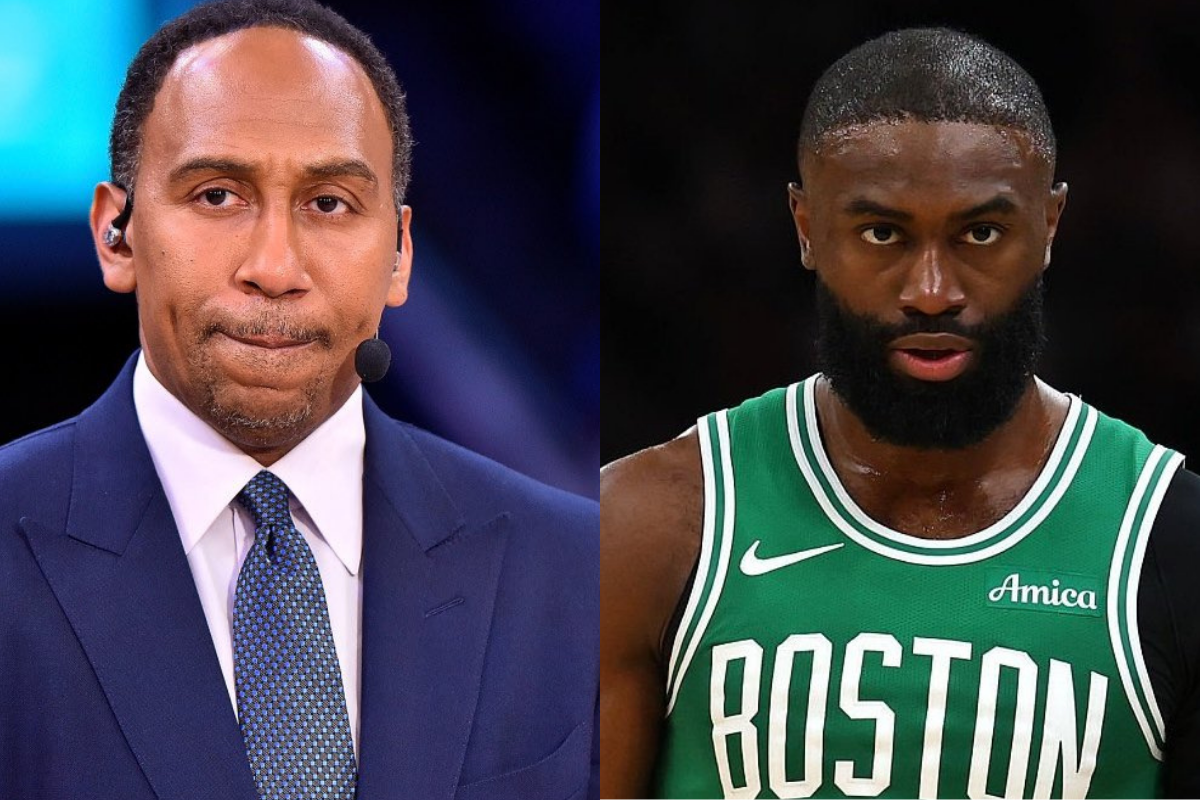
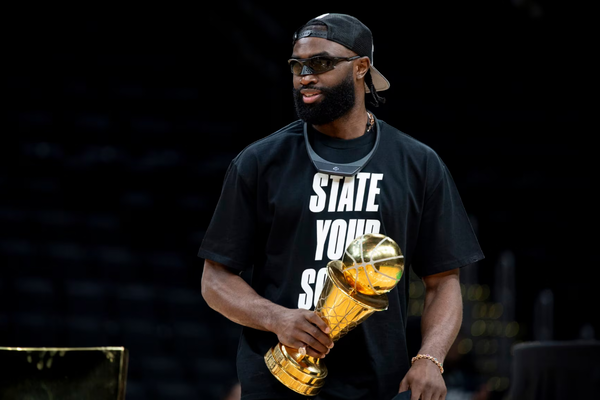
It started in 2024 when Stephen A. Smith went on air and said an NBA source had told him a Finals MVP wasn’t “marketable” because of his attitude. The player told him to “state your source.” Two years later, that dispute has escalated into one of the most public player-media feuds in recent memory, and now a fellow journalist has stepped forward to say the whole thing is an embarrassment to the profession.
Watch What’s Trending Now!
Nick Wright, on What’s Wright with Nick Wright, on Wednesday, did not take Jaylen Brown’s side. He made a more damaging argument. “Once upon a time, Stephen A. was a legitimately great reporter,” Wright said. “Put every level of work in imaginable to where he’s the biggest name in the space, and still works as much as anybody in the business at all times.” Wright was not dismissing Smith. He indicted him from a position of respect. “But talking to these guys like you’re a mob boss and they better watch what they say, there’s harm in it.”
“Talking to these guys like you’re a mob boss and they better watch what they say… it makes us all look bad.”@getnickwright reacts to Stephen A. Smith calling out Jaylen Brown pic.twitter.com/ewuSW4B9XO
— What’s Wright? with Nick Wright (@WhatsWrightShow) May 20, 2026
The specific behaviour Wright targeted was Smith’s implicit threat to deploy information as a weapon rather than report it. “I know stuff. I know technically it’s my job to report the things I know, but I know it, and I was keeping it in my back pocket in case I ever have to use it, like the big joker in a spades game,” Wright said, characterising Smith’s posture. “Give me a break. If you have real information about Jayson Tatum’s feelings about Jaylen Brown, you should report it. If you have real information about how the Celtics organisation feels about Jaylen Brown that you’re just sitting on, yes, you should report it. The answer is not: go to the mattresses and escalate.” He landed on the line that gives this article its headline: “It makes all of us look bad. And also, you’re the only guy who does it.”
The timeline that produced Wright’s intervention is well-documented. After Boston’s playoff loss to Philadelphia, Jaylen Brown said the 2025-26 season, played largely without an injured Jayson Tatum, was the “favorite” of his career. Smith criticised the comments on First Take on, telling Brown that he needed to “be quiet” unless he wanted to be traded. Brown responded on his Twitch stream with an expletive-laced counter, where he called Smith “the face of clickbait media” and repeated his standing offer: “You want me to be quiet and stop streaming? Well, I want you to be quiet and get off these networks, because you’re not using your platform to do real journalism.”
Smith then doubled down, insinuating that Tatum had not appeared on Brown’s stream because he was upset by things Brown had said, a claim that Brown challenged: “What type of journalism is this? Jayson Tatum hasn’t been on my stream, and this is what we’re talking about on First Take?” Wright’s point is that at every escalation, the professional obligation was the same: if Smith had the information, report it. Using it as leverage is not journalism. It is leverage.
“The Only Guy Who Does It”: What Wright’s Critique Reveals About the State of Sports Media
Wright’s most pointed observation was also his simplest. Not that Smith is wrong to cover Brown. Not that Brown is above scrutiny. But the specific behaviour of holding information hostage as a threat, rather than reporting it, sitting on it, or declining to confirm it, is something no other journalist in the sport does publicly. “You’re the only guy who does it.” That sentence carried its own verdict. If the behaviour were standard practice, it would be invisible. The fact that it stands out means it is an outlier, and outliers in a profession governed by sourcing ethics tend to stand out for a reason.
Imago
Credits: X
The feud’s roots stretch back to 2024, when Smith’s “not marketable” comment, sourced to an unnamed NBA contact, prompted Brown to challenge him publicly to name the source. Smith declined. Brown was subsequently fined $50,000 by the NBA for criticising officials after the Game 7 loss to Philadelphia, a real professional consequence that arrived in the middle of a media dispute, which further blurred the line between legitimate accountability and targeted pressure.
Boston Globe national basketball writer Gary Washburn offered the most pragmatic read on the situation: Jaylen Brown should move on, because engaging with Stephen A. Smith professionally is a fight with no exit ramp. Wright’s intervention suggested a third option, one that neither Brown nor Smith has reached for yet. Stop using information as a weapon. Report it or don’t. But the mob boss routine, as Wright put it, ends the same way for everyone watching: badly.
Written by

Edited by

Ved Vaze