Imago
Credits: IMAGN
Imago
Credits: IMAGN
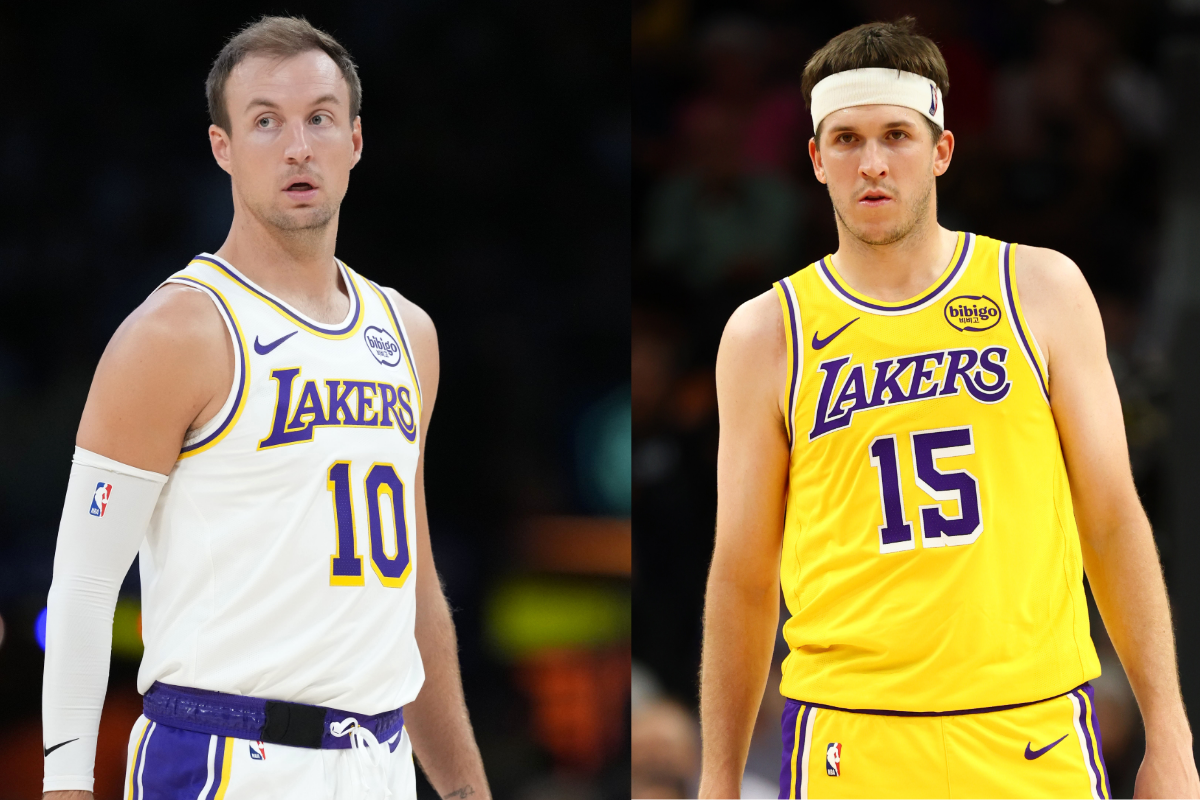
Through the first three games of the series between the Los Angeles Lakers and Houston Rockets, Luke Kennard had emerged as a central offensive piece, spacing the floor and converting at an elite level. In Game 5, that role changed abruptly following the return of Austin Reaves. Former NBA guard Jeff Teague argued that the shift disrupted the Lakers’ offensive structure at a critical point in the series.
Watch What’s Trending Now!
Speaking on the Club 520 podcast, Teague said, “I told y’all that as soon as they said Austin Reaves was playing Game 5, I got the Rockets. 4-for-16 is crazy. Luke Kennard didn’t get no touches.” Reaves, playing his first game since April 2 after missing nine games with a Grade 2 oblique strain, finished with 22 points but shot 4-for-16 from the field and 2-for-8 from three in 34 minutes. The Lakers lost 99-93, cutting their series lead to 3-2.
Jeff Teague says Austin Reaves returning from injury fu*ked up the flow for the Lakers:
“I told y’all that as soon they said Austin Reaves was playing game 5, I got the Rockets. 4 for 16 is crazy. Luke Kennard didn’t get no touches. Reaves said “I’m the real white guy here.”… pic.twitter.com/rFfhxaKfJi
— NBA Courtside (@NBA__Courtside) April 30, 2026
The shift is reflected in Kennard’s usage. After scoring a combined 64 points across the first three games, he finished Game 5 with one point and attempted just two three-pointers. Kennard played only four minutes in the second half after JJ Redick inserted Reaves into the lineup at halftime. Prior to Game 5, Kennard was operating at an estimated 81.4 percent true shooting in the series, functioning as a primary floor spacer. His reduced role altered the Lakers’ offensive balance.
Top Stories




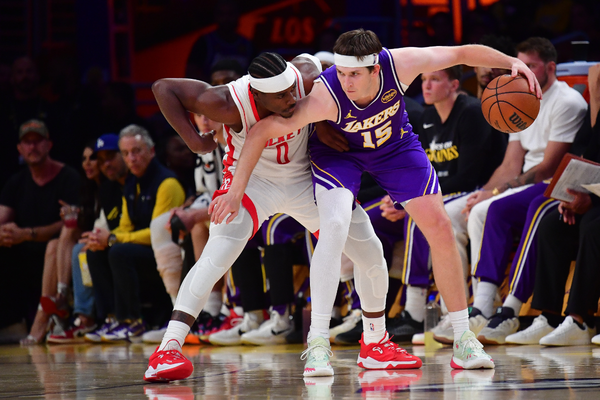
The team-level impact was clear. The Lakers shot 25.9 percent from three after shooting 38.2 percent across Games 1 through 3. They also committed 15 turnovers that led to 18 points for Houston. With Kennard off the floor, Houston defenders were able to help more aggressively in the paint, reducing driving space for LeBron James and limiting kick-out opportunities. Redick said postgame, “You hope 99 points allowed is enough to win, and we just couldn’t make shots.” He did not directly address the rotation change.
Kennard’s Production Without Reaves and Luka Doncic
Kennard’s role expanded significantly in the absence of both Dončić and Reaves earlier in the series. He scored 27 points in Game 1 on 9-for-13 shooting, including 5-for-5 from three, and followed that with 23 points in Game 2. Across the first three games, he shot 72.7 percent from three-point range. After Game 2, James said, “He’s super composed. I know he led the league in shooting percentage, and he’s a sniper. But he does so much more.”
Imago
Credits: IMAGN
Through four games, Kennard averaged 17.8 points, 4.8 rebounds, and 3.3 assists while playing 39.5 minutes per game. His presence forced Houston to stay attached to shooters on the perimeter. In Game 5, that spacing diminished. The Rockets adjusted by collapsing into the paint and switching more aggressively on the perimeter, with Tari Eason and Amen Thompson applying pressure. Houston won without Kevin Durant, with Jabari Smith Jr. scoring 22 points.
The series shifts back to Houston for Game 6. The Lakers must decide whether to prioritize shot creation through Reaves or spacing through Kennard. Game 5 highlighted the trade-off between those roles, and that decision could determine whether the series ends or extends.
Written by

Edited by

Ved Vaze