
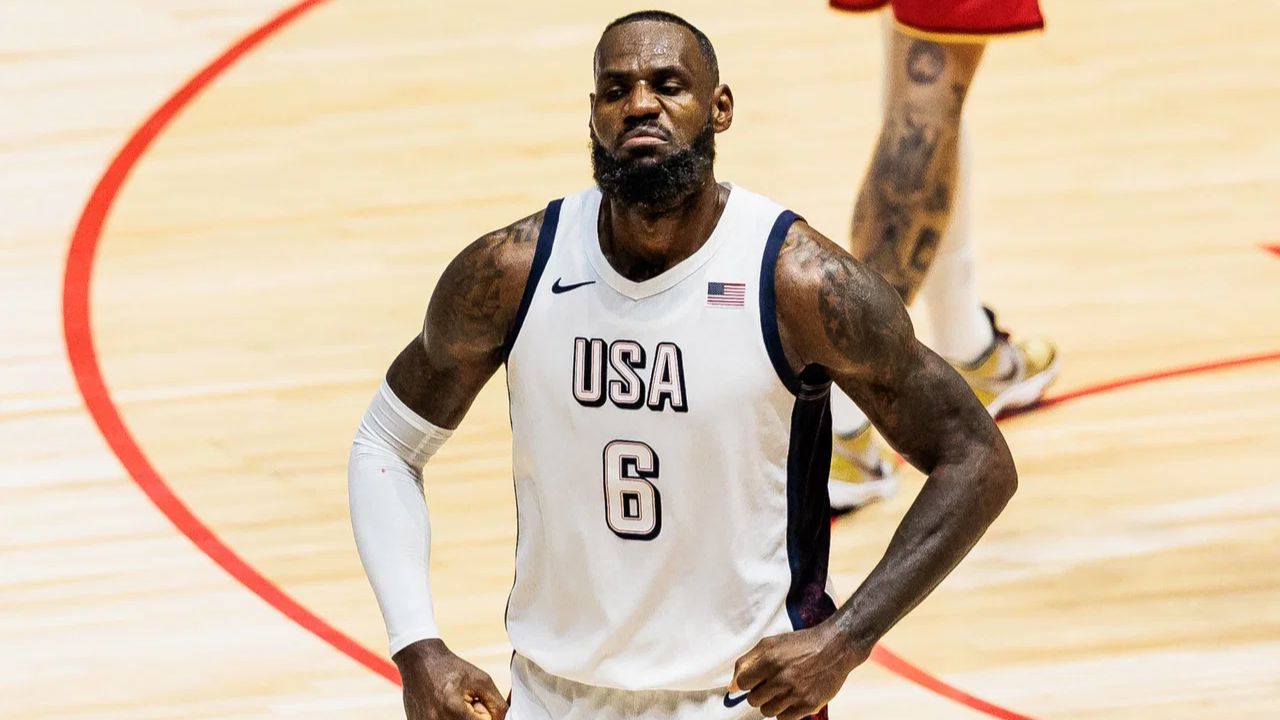
The grey area of prediction markets, celebrity endorsements, and free agency just got murkier. LeBron James’ endorsement deal with Polymarket for NFL promotions was already raising eyebrows. Now, NBA insider Brett Siegel has raised eyebrows across the NBA fanbase by sounding the alarm on a potentially dangerous precedent set by James’ new $15 million contract. While the landmark partnership pays James nearly four times his $3.88 million salary with the Philadelphia 76ers for the 2026–27 season, Siegel warned that the sheer magnitude of such off-court arrangements could usher in a subtle, legal workaround to strict collective bargaining constraints.
Watch What’s Trending Now!
Right after the details of James’ Polymarket deal were revealed, Seigel took to social media to analyze the financial optics. Siegel acknowledged that while James’ contract complies with current league guidelines, the broader implications pose a conceptual threat to competitive parity.
“As far as my knowledge goes, this doesn’t interfere with any CBA rules, but moving forward, these side deals players have with companies could directly lead to smaller contracts to help with cap relief, which in theory, is kind of like cap circumvention. Really weird times,” Siegel tweeted.
When questioned by a fan on how an endorsement could constitute salary cap circumvention without explicit financial ties or kickbacks from team ownership, Siegel elaborated on the mechanism that could allow star players to silently subsidize discount contracts:
“Well, here’s where my mind goes to: A player could take significantly less on a contract knowing they have a potential sponsorship lined up to forgive $10M+. Player then goes to team to let them know they’ll sign for less due to said side deals. Calls are made, and it’s done.”

Well, here’s where my mind goes to: A player could take significantly less on a contract knowing they have a potential sponsorship lined up to forgive $10M+. Player then goes to team to let them know they’ll sign for less due to said side deals. Calls are made, and it’s done.

How would it be cap circumvention if there are no financial ties to ownership?
Siegel’s warning highlights a growing anxiety among front-office executives that third-party corporate entities, completely unaffiliated with team owners, can effectively absorb the financial gap when marquee superstars elect to take steep pay cuts to build championship rosters.
The skepticism surrounding James’ $15 million Polymarket deal does not exist in a vacuum. It comes precisely as the NBA grapples with the fallout of the largest salary-cap circumvention scandal in league history.
Earlier this month, the NBA concluded a year-long investigation into the Los Angeles Clippers and Kawhi Leonard, uncovering a pattern of impermissible off-court income schemes facilitated by third-party sponsors such as the tree company Aspiration and the scoreboard manufacturer Daktronics.
In that landmark ruling, the league levied unprecedented sanctions against the Clippers, fining the franchise $30 million, stripping them of five consecutive first-round draft picks, suspending owner Steve Ballmer and key executives, and fining Leonard $700,000.
That investigation revealed how the Clippers’ front office actively steered team contractors and corporate partners to fund “no-show” endorsement contracts for Leonard to bypass cap constraints.
LeBron’s Polymarket deal is not a no-show deal. He joined Eli Manning and many other celebrities in a viral commercial and dropped his picks for the first week of the NFL season.
Amid backlash, FOS also confirmed, through sources at Polymarket, that James’ contract is strictly as an endorser and that he doesn’t hold any equity. They also said his promotions are strictly about football and the NFL, with no conflict with the NBA’s rules regarding endorsements on prediction platforms for active players.
But it’s hard not to view everything through the lens of circumvention in this environment. The league immediately flagged Gary Trent Jr.’s $64 million contract in July as suspicious and opened an investigation into the Bucks.
That proves the league office and executive suites are currently on high alert regarding off-court compensation.
James’ sharp earnings contrast has instantly drawn intense scrutiny. He signed a two-year, $8 million deal with Philadelphia in July, explicitly stating that he was prioritizing a fifth championship ring over maximum earnings. His pay cut allowed the 76ers to maintain depth alongside Joel Embiid, Tyrese Maxey, and Jaylen Brown and didn’t initially ruffle feathers.
Unlike the Clippers’ scandal, there is no evidence suggesting Philadelphia ownership or executives had any involvement in brokering James’ agreement with Polymarket, which centers exclusively on promoting American football.
However, as Siegel pointed out, the modern media landscape allows premier superstars to leverage massive global brand appeal off the court, effectively subsidizing a veteran minimum.
As the line between independent endorsements and competitive balance continues to blur under the second apron era, league officials may soon be forced to close potential loopholes before independent corporate sponsorships become the standard tool for roster building.