Lakers Legend Wants Team to Cut Ties With LeBron James: “Got to Build Around Luka Doncic, Austin Reaves”

Add us on Google
Lakers Legend Wants Team to Cut Ties With LeBron James: “Got to Build Around Luka Doncic, Austin Reaves”
Add us on Google
Imago
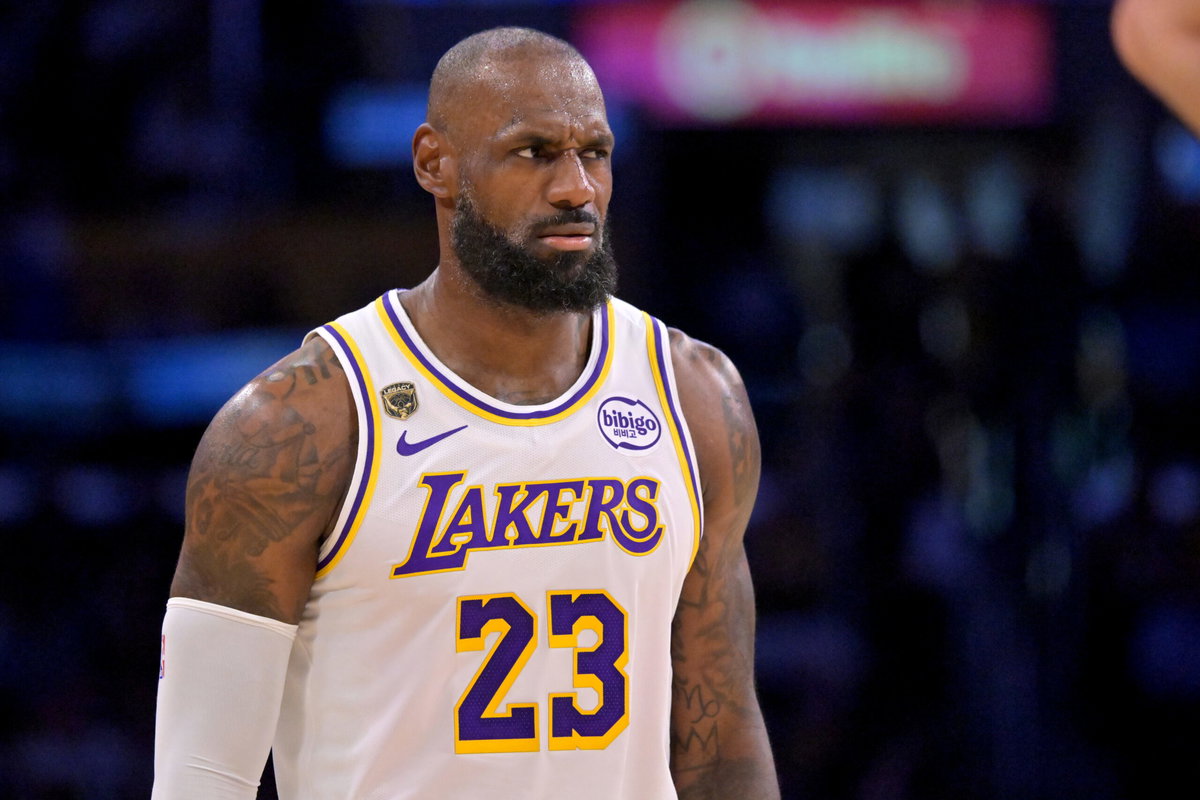
May 9, 2026; Los Angeles, California, USA; Los Angeles Lakers forward LeBron James (23) reacts after a foul in game three of the second round of the 2026 NBA Playoffs against the Oklahoma City Thunder at Crypto.com Arena. Mandatory Credit: Jayne Kamin-Oncea-Imagn Images
Imago
May 9, 2026; Los Angeles, California, USA; Los Angeles Lakers forward LeBron James (23) reacts after a foul in game three of the second round of the 2026 NBA Playoffs against the Oklahoma City Thunder at Crypto.com Arena. Mandatory Credit: Jayne Kamin-Oncea-Imagn Images
The pressure around the Los Angeles Lakers is no longer about simply staying relevant in the Western Conference. Not after they pulled off one of the boldest trades in franchise history — landing Luka Doncic from the Dallas Mavericks in a blockbuster three-team deal in February 2025, not after another season that exposed how fragile the roster construction has become around an aging core. And certainly not after a growing belief around the league that the franchise is already entering its next era, whether people are ready for it or not.
Watch What’s Trending Now!
That reality hit home hard once Lakers legend Byron Scott openly suggested the organization should move on from LeBron James entirely if it truly wants to compete for championships long term.
“You’re getting paid 50 million. You’re 41, 42, 43 years old, right? You got a three-headed monster like you’re talking about. The Lakers, if you want to move on and be a championship team for the next five, six, seven years, you’ve got to build around Luka Doncic, Austin Reaves.” He added, “You can’t do that if he’s still here. He’s 50 million. That comes off the cap. You can go get two really good basketball players. And young basketball players that can come in there and help.”
Byron Scott says no matter how LeBron James did this year, Lakers need to move on if they want to be a championship team:
“You getting paid 50 million. You’re 41, 42, 43 years old, right? You got a three-headed monster like you’re talking about. The Lakers if you want to move on… pic.twitter.com/xXZ153qZnr
— NBA Courtside (@NBA__Courtside) May 11, 2026
The comments instantly sparked debate because Scott was not questioning James’ greatness. Instead, he framed it as a cold basketball decision tied to the NBA’s increasingly brutal salary cap system and the Lakers’ shifting timeline.
Scott’s central point revolves around one number: $52.6 million. That’s the projected hit for James in the 2026-27 season, when he’ll be 42 years old.
Carrying that kind of money for a player in his early 40s severely limits what the Lakers can do to surround Doncic and Reaves with the two-way talent they desperately need.
This isn’t just a Lakers problem – it’s the new NBA reality. Look at what other teams have done when faced with similar crossroads: the Brooklyn Nets moved on from aging, high-salary stars like Kevin Durant and Kyrie Irving to reset their books and gain flexibility.
The Oklahoma City Thunder brilliantly shed pieces around aging veterans years ago to build their current superteam. Even the Golden State Warriors had to make tough calls around their aging core to stay nimble. History shows that clinging too long to one massive contract in the second-apron era often leads to mediocrity, not contention.
The logic hits even harder now that the NBA’s second apron restrictions are in full effect. Teams over that threshold lose key trade tools, exceptions, and future draft capital. Meanwhile, the Lakers are locked into big money with Doncic – their 27-year-old franchise centerpiece who just dropped 33.5 points, 7.7 rebounds, and 8.3 assists per game in the 2025-26 season.
Meanwhile, the Lakers’ overall structure still looked incomplete despite finishing 53-29 during the regular season. The offense ranked among the league’s best, but the defense collapsed into the bottom half of the NBA, finishing 19th overall.
That imbalance is exactly what Scott appears to be targeting.
From his view, shedding James’ deal could open the door to multiple younger, versatile wings and defenders instead of relying on a top-heavy trio. It’s not about erasing LeBron’s production – it’s about building a sustainable winner around Doncic’s prime.
Austin Reaves becoming part of the franchise core changes the conversation
Perhaps the most revealing part of Scott’s comments was not the mention of Doncic. It was the inclusion of Reaves. “You’ve got to build around Luka Doncic, Austin Reaves.”
That line signals how much Reaves’ status inside the organization has changed over the last two seasons. The 27-year-old guard averaged 23.3 points and 5.5 assists while emerging as one of the NBA’s better secondary creators. More importantly, his chemistry with Doncic became one of the few consistently positive developments for the Lakers.
Luka’s elite vision, step-back gravity, and passing pair beautifully with Austin Reaves’ off-ball movement, catch-and-shoot ability, and secondary creation. Reaves draws defensive attention, which opens driving lanes and kick-out opportunities for Luka Doncic, and the same dynamic works in reverse.
That offensive balance is what makes their partnership feel so seamless. Rather than competing for control of possessions, the two naturally flow into complementary roles within the same action.
They thrive in sets where Doncic orchestrates while Reaves operates as a shooter, cutter, or slasher. Reaves’ aggression and ability to attack closeouts complement Luka’s heliocentric style without slowing the offense through constant ball-stoppage.
Just as importantly, their chemistry extends beyond scoring. Their willingness to move the ball and read defenses together creates constant pressure on opposing coverages.
Luka has publicly said that playing with Reaves “makes my life easier” because Reaves is “super aggressive” and forces defenses into difficult choices. Reaves has echoed that sentiment, explaining how their passing and screening can quickly create 4-on-3 advantages whenever defenses trap either player.
Advanced lineup data only strengthened Scott’s case. According to the research, the Doncic-Reaves pairing posted a +9.2 net rating together. However, the lineups featuring Doncic, Reaves, and James collectively struggled throughout the season, posting a -9.6 net rating.
Defensively, the trio could not consistently contain elite perimeter offenses. Offensively, the overlap between James and Doncic occasionally pushed Reaves into a reduced role despite his breakout season.
At the same time, Reaves’ contract value makes him even more important in the modern CBA landscape. The Lakers can maintain flexibility around him while prioritizing defensive upgrades around Doncic’s heliocentric offense.
That is why Scott’s comments feel bigger than a simple hot take. They reflect a growing belief that the Lakers already know who their long-term foundation is.
Moving on from LeBron James still comes with enormous risk
Still, the counterargument remains massive. James may be entering his 40s, but his production has not collapsed. He still averaged 23.1 points and 7.8 assists while remaining one of the league’s most impactful offensive players.
Removing him also does not automatically guarantee the Lakers become deeper, younger, or better defensively. Championship teams are still built around elite stars, and voluntarily walking away from one of the greatest players in NBA history carries obvious risk.
Beyond basketball, James remains one of the most commercially powerful athletes in sports. His presence influences television ratings, merchandise sales, sponsorship attention, and the overall gravity surrounding the Lakers’ brand.
Even so, the organization’s broader direction appears increasingly clear. The Lakers already traded for Doncic to secure their next generational centerpiece. Reports throughout the season suggested the front office was prioritizing the “Luka era” in long-term planning. At the same time, James entered the year on an expiring timeline for the first time in his Lakers tenure.
That is why Scott’s comments landed with so much force. They did not sound like nostalgia-driven criticism from a former player. They sounded like an acknowledgment of where the franchise may already be headed. And for the Lakers, that reality could eventually force one of the hardest decisions in franchise history.
Written by

Edited by

Tanay Sahai