
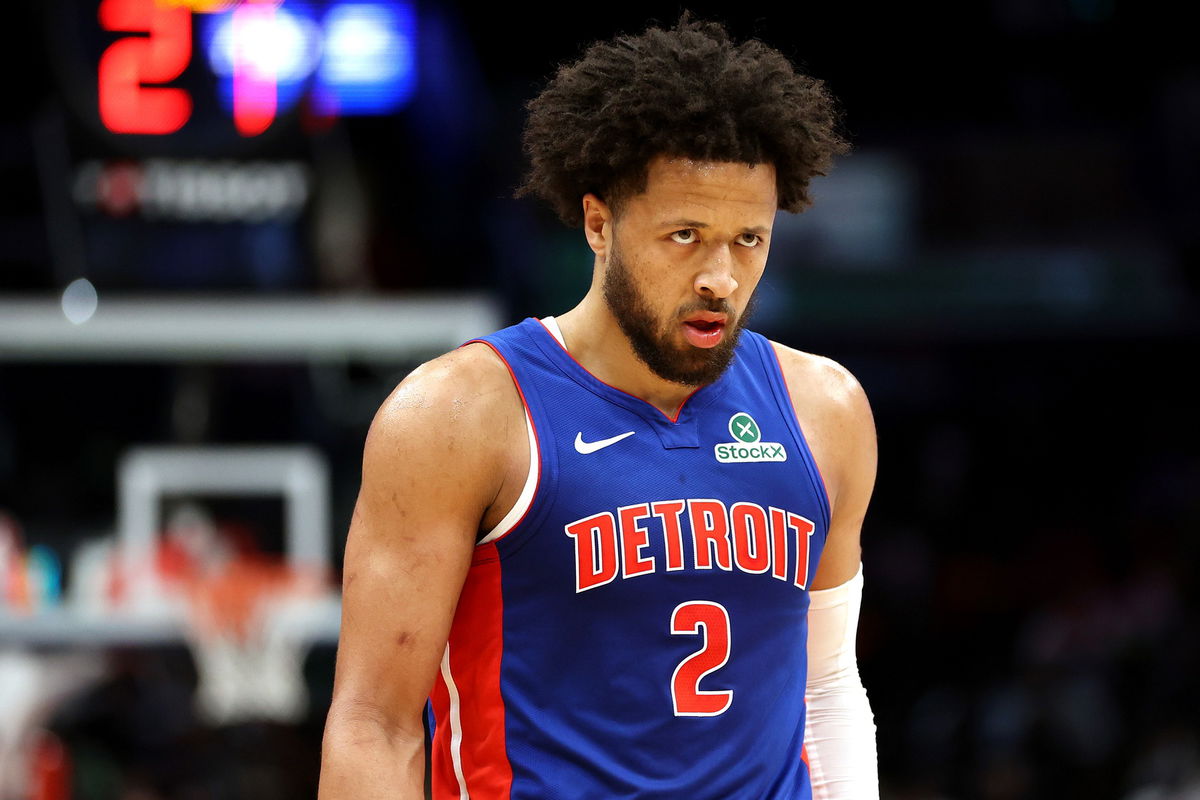
Hearing the words “collapsed lung” can never be pleasant. For Cade Cunningham, that diagnosis carried an unfathomable impact—one that the Pistons organization and Detroit fans could only sympathize with. It was far removed from a standard sports injury and something he wasn’t prepared for. For nearly three weeks, the Pistons fanbase held its breath alongside their franchise star. On Wednesday night, Cunningham finally exhaled. He returned to the floor for the first time since the injury and shared a heartfelt admission about the ordeal.
Watch What’s Trending Now!
As if he never left, the 24-year-old played an extensive 26 minutes, recorded 13 points, 10 assists, 5 rebounds, and a steal and block, looking every bit the All-NBA candidate in the Detroit Pistons’ 137–111 rout of the Milwaukee Bucks. Isaiah Stewart also returned after missing 13 games with a left calf strain. Spectacular as his comeback was, his post-game comments revealed a harrowing journey from a hospital bed to the hardwood.
“It was different than any injury I’ve ever had as far as how it progressed initially,” Cunningham admitted following his double-double. The injury, which occurred during a March 17 game against the Washington Wizards, understandably scared the young guard. “I was kind of beat up. I was panicking a lot, you know, just with what I was feeling and stuff. So, you know, they [the medical staff] helped get me comfortable and helped me get through that.”
Observers spotted Cunningham at the Pistons’ practice facility just days after the diagnosis. He wasn’t cleared to scrimmage, but he worked with trainers to manage his condition.

Cade Cunningham on his time away: “It was different than any injury I’ve ever had as far as how it progressed initially. From whenever I got hit to how I felt immediately to how I started to feel as time went on. Thanks to all the staff and medical that was around and helped.”
The recovery process brought its own challenges. Notably, it required Cunningham to do the one thing professional athletes find most difficult: nothing. “Once I got to the house, just a lot of resting. Couldn’t get my heart rate up, which was boring,” he said, managing to laugh about it.
Due to the nature of the lung injury, maintaining a low heart rate was critical. The entire city of Detroit feared the injury could worsen, but Cunningham found ways to cope with the anxiety.
Silver lining for Pistons in Cade Cunningham’s setback
With a serious condition and little to do, anxiety can easily take over. A strong support system surrounded Cunningham, including his teammates, and watching them compete kept his spirits high.
Almost too much at times. “My heart rate went up a few times watching the team, which was, you know…” We’d rather not, but… “It was fun. It was fun to be able to watch from a different perspective like that. I think I learned a lot and, you know, watching the team grow the way they did, handle business the way they did, was a lot of fun.”
His situation mirrors that of CJ McCollum, who dealt with a pneumothorax earlier in his career and successfully returned to form—offering a reassuring blueprint for recovery from such a rare condition.
His teammates stepped up in his absence. While many feared Cunningham’s MVP-caliber season was over at 61 games, the Pistons maintained their position atop the East and strengthened their case as title contenders. Daniss Jenkins capitalized on expanded minutes, while Jalen Duren helped anchor the interior presence.
Even without their primary playmaker, Cunningham’s presence at practices provided an emotional lift.
Everything built toward a memorable return. Cunningham’s comeback felt almost scripted. Playing in controlled bursts, he shot 6-of-11 from the field and orchestrated the offense with precision, helping Detroit build a commanding 75–57 halftime lead. Although some feared the team might lose its rhythm with him and Stewart back, the Pistons showed no signs of disruption.
They are now approaching their best record in two decades. At an impressive 58–22, Detroit is within striking distance of its first 60-win season since 2006.
If Cunningham appears in the final two games in Charlotte and Indiana, he will reach 64 games—still short of MVP eligibility. But after a diagnosis like that, individual accolades hardly matter. “I’ve had a great ramp up to where I am today,” he concluded. “I’m just happy and feel blessed to be back.”
CJ McCollum offers a compelling positive precedent, having successfully returned from multiple collapsed lung incidents during his career. In 2022, after missing 17 games (roughly six weeks), he made an immediate impact, scoring 16 points in 28 minutes in his return with the Portland Trail Blazers.
In 2023, while with the New Orleans Pelicans, he followed a three-week absence with a strong showing of 20 points and five assists against the Philadelphia 76ers, crediting an intense reconditioning process for his readiness.
Across these incidents, McCollum’s relatively quick turnarounds, often missing only short stretches, stress that, with elite medical care and disciplined rehab, players can return to full performance levels. However, teams typically ease them back with minutes restrictions early on, as seen in his initial games post-recovery.
The Pistons are now focused on getting the roster fully healthy for a deep postseason run. With Cunningham and Stewart back, this team could be one of the most dangerous in the Eastern Conference Playoffs.