
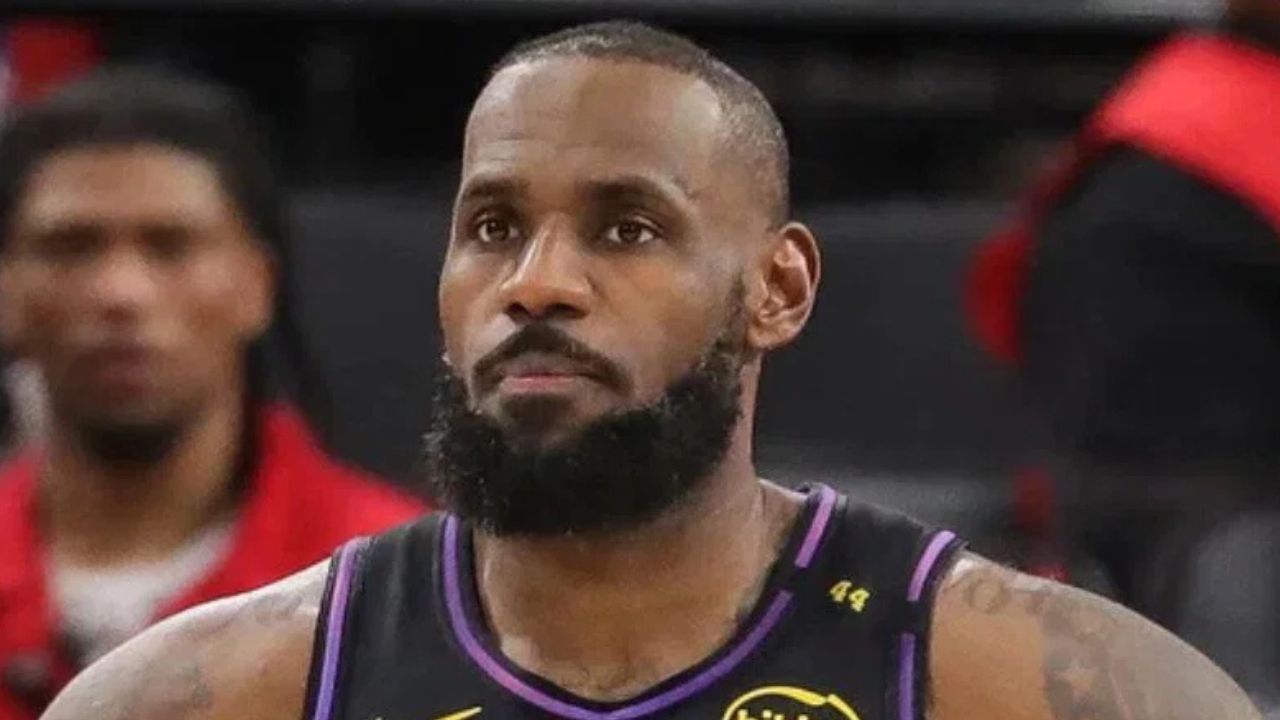
In May 2003, a room full of people reportedly groaned when the New York Knicks’ draft position was revealed. According to ESPN’s Brian Windhorst, LeBron James’ Nike deal had included a bonus if New York drafted him, making the lottery a moment worth watching for more than one reason.
Watch What’s Trending Now!
Windhorst recalled that the bonus was agreed upon the night before the lottery. The Knicks ended up with the ninth pick, while Cleveland selected LeBron first overall. New York chose Michael Sweetney, and a future that some had hoped would begin at Madison Square Garden took a very different path.
More than 23 years later, LeBron returned to the Garden as a Philadelphia 76er, only to face “We don’t want you” chants and a heated exchange with a Knicks fan. The timing made the scene even more striking: New York was celebrating its first NBA championship in 53 years, a title that LeBron and his agent said had changed his free-agency plans. Philadelphia then spoiled the celebration with a 106-100 victory.
The exchange came with 54.5 seconds remaining in the first half, as Jalen Brunson stood at the free-throw line and Knicks fans chanted MVP. LeBron appeared to trade words with a fan seated in the second row, drawing attention away from the action on the court.
The exact words remain unconfirmed because the exchange was not clearly captured on audio. Social media lip-readers interpreted LeBron’s response as a profane remark about being from Ohio rather than the West Coast. NBC broadcaster Mike Tirico also reported that a fan had taunted LeBron about his helicopter and reminded him that living in New York did not mean he would be cheered at the Garden.
Spike Lee, seated courtside, stood up as the exchange unfolded. NBC analyst Reggie Miller noticed the filmmaker’s reaction and said:
“Guess who’s playing peacemaker? Spike Lee… He’s over here playing peacemaker. Boy, I’ve seen everything.”
The scene was striking on its own, but the chants that followed made the reception even harder to ignore. When LeBron went to the free-throw line, sections of the crowd chanted, “We don’t want you!” The crowd also cheered when he missed a free throw, making it clear that his return to the Garden would not be a sentimental homecoming.
There was a reason the moment carried more weight than an ordinary exchange between a player and a heckler. LeBron had spent years speaking warmly about Madison Square Garden, and only weeks earlier, he had explained just how much the arena had meant to him.
At Philadelphia’s media day on September 28, LeBron admitted that he had once pictured himself finishing his career in New York. He did not describe it as a completed plan or a formal agreement, but his words made his admiration for the Garden unmistakable.
“I had visions of playing in [Madison Square] Garden and finishing my career in the Garden. One of the best places I’ve ever played. I think it’s the No. 1 arena in the world, as far as for a basketball player.”
That admission makes the reception he received on October 20 all the more ironic. The arena he called the best in the world had become the setting for a public rejection, and the reason he never joined the Knicks was tied directly to the championship they were celebrating.
LeBron explained that the Knicks’ title changed the decision he had been considering. New York had beaten San Antonio in the Finals, ending a 53-year championship drought, and he felt joining the team afterward would not go down well with its fans.
“But after they beat San Antonio, I was like, ‘Hey, I can’t.’ I couldn’t do it.”
His agent, Rich Paul, was even more direct when discussing the decision on his “Game Over” podcast. Paul said the Knicks would have been LeBron’s destination had they not won the championship, making the title the turning point in the free-agency story.
“If the Knicks hadn’t have won the title, there would be no board of teams. He’d be going to the Knicks.”
The distinction matters. LeBron did not sign an agreement with New York, and the Knicks did not seriously pursue him to the finish line. Reports indicated that the two sides checked in during free agency, but a deal was considered very unlikely. The Knicks prioritized continuity after winning the title, while LeBron moved forward with other options.
Philadelphia ultimately signed him to a two-year deal worth just under $8 million, with a player option for the second season. His final list reportedly included the 76ers, Cleveland, Golden State, Miami and Minnesota, with New York no longer in consideration.
The Knicks’ championship had therefore changed more than the mood around the Garden. It had removed the destination LeBron had imagined from his final set of options, leaving him to begin a new chapter in Philadelphia. By the time he returned to New York, he was no longer a potential addition to the champions. He was an opponent walking into their biggest celebration of the year.
The ceremony before tipoff was a reminder of what New York had achieved. The Knicks raised their championship banner and distributed rings, with franchise legends Bill Bradley, Earl Monroe and Walt Frazier taking part. The crowd had every reason to celebrate, and LeBron’s presence gave the night an additional storyline.
The game itself did not go according to the home team’s script. Philadelphia won 106-100, with Tyrese Maxey leading all scorers with 28 points. LeBron finished with 14 points and nine rebounds, while Jalen Brunson recorded 21 points on six-for-19 shooting.
LeBron’s own reaction afterward was brief. Asked about winning on the night of the Knicks’ celebration, he told NBC:
“It’s pretty special.”
The result gave the evening a fitting twist. The Knicks were celebrating a title that had helped close the door on LeBron joining them, while the player who had once pictured himself finishing his career at the Garden left with a victory over the champions.
The argument with the fan may have been the most visible moment of LeBron’s night, but it was not the only reason the scene resonated. His history with New York stretched back to the 2003 draft lottery, and his own words confirmed that the possibility of finishing his career at Madison Square Garden had once crossed his mind.
The exact words exchanged with the fan remain uncertain, and neither LeBron nor Spike Lee publicly addressed the confrontation afterward. What is clear is that the reception was hostile, the championship had shaped LeBron’s free-agency decision, and Philadelphia walked away with the win.
More than two decades after the Knicks’ draft position reportedly prompted a groan in a room hoping to see LeBron in New York, he returned to Madison Square Garden as an opponent. The arena he called No. 1 was celebrating the title that kept him away, and the night ended with the 76ers spoiling the party.