
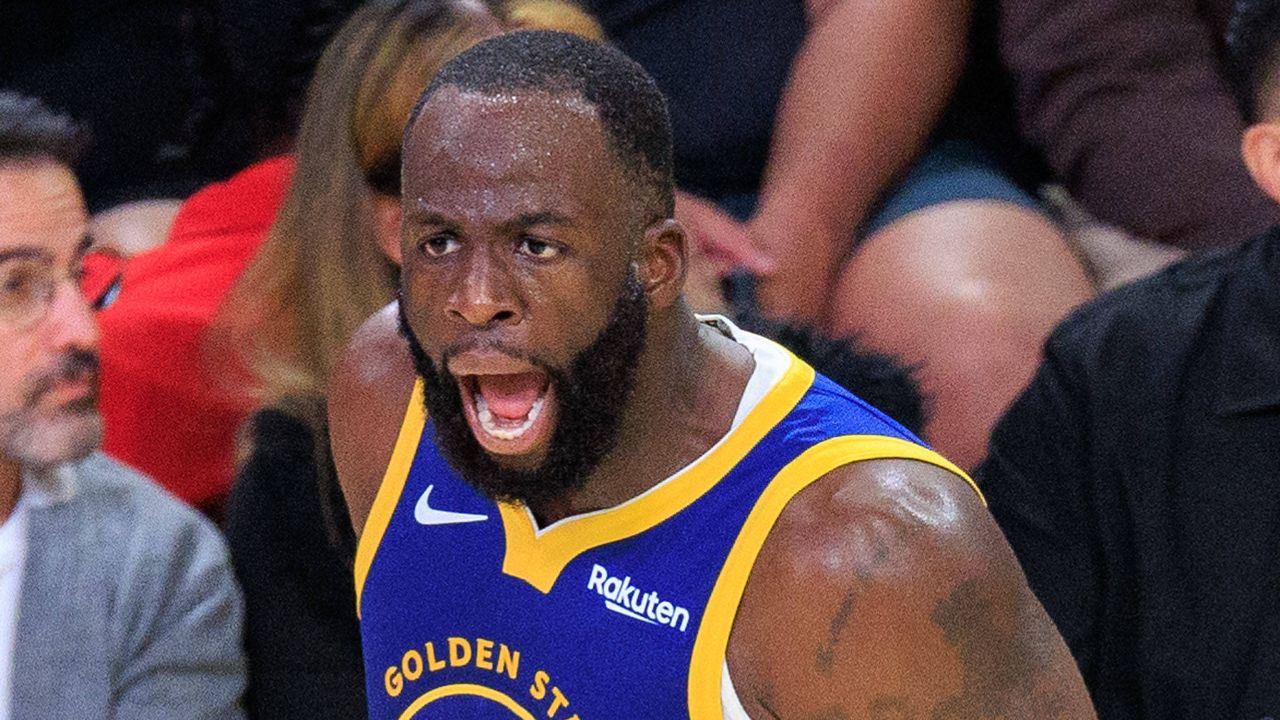
The Warriors have built much of their identity around Stephen Curry’s brilliance and Draymond Green’s ability to make the pieces around him work. But Green’s latest ejection against the Phoenix Suns has reopened a familiar debate: how much longer can his on-court value outweigh the distractions that keep following him? With his offensive production barely registering early in the season, the veteran forward is facing another round of questions:
Watch What’s Trending Now!
What is he actually giving the Warriors?
“When was the last time we discussed Draymond Green and brought up him for his basketball and not fighting?” Kendrick Perkins questioned, speaking on ESPN’s First Take.
“At some point, he has to deliver on the floor, and when you look at the start of this season, Draymond Green has been non-existent. He has done absolutely nothing for the Golden State Warriors. To me, he has been a liability more than an asset. And when you look at Steph, yes, he’s always gonna protect Draymond Green because of their brotherhood.”
The comments came after Green’s third-quarter dramatics against the Phoenix Suns.
A collision involving second-year center Khaman Maluach escalated when Draymond Green grabbed the big man and brought him to the floor. Dillon Brooks then became involved, and the exchange turned into a jersey-grabbing scuffle before officials ejected Green.
Once again, the conversation around the four-time champion shifted from his defensive work to his temper.
There is a statistical basis for questioning his scoring. Green had made only seven field goals through his first six appearances of the 2026–27 season. Contrastingly, Charles Bassey matched that total in 23 minutes after Green’s ejection.
It’s a striking comparison if the measure is simply putting the ball in the basket.
But that is also a narrow way to judge Draymond Green’s role. The team doesn’t expect him to carry the offensive load. His value has never depended on high shot volume.
Steve Kerr’s move toward a 5-Out offense has made that distinction more visible. The Warriors want to reduce turnovers and create wider driving lanes, which means that Green has been asked to sprint to the corners and take rhythm threes rather than operate as the same transition playmaker on every possession. That’s the major change that the team proposed ahead of this season.
But did it work?
The adjustment has not produced much scoring so far. Still, it does not erase the work Draymond Green does as a short-roll passer, defensive organiser and player who can guard opponents bigger than himself.
That playmaking remains important because Green often functions as the connective piece between Curry and the rest of the lineup. So far, in the six outings, he has averaged 6.3 assists per game.
When defenses trap Curry or crowd his shooting space, Green can receive the ball, read the rotation and deliver it to a cutter or open shooter. Those possessions may not show up as points for Green. But they are part of how the Warriors create good looks. Moreover, on the defensive end, most of his work doesn’t reflect on the board.
His assists and defensive assignments need to be considered alongside his shooting numbers. And it’s not treated as separate from his overall value.
The Warriors also have a new source of scoring.
Rookie Yaxel Lendeborg has had an unexpected start. With him averaging 21.5 points per game, he has helped provide the spacing and offensive punch the team needs. That production reduces the pressure on Draymond Green to become a scorer.
It also gives Kerr room to use him for the skills that have made him essential: reading the floor, finding cutters and directing the defense.
Perkins is right to demand that Draymond Green keep his focus on basketball. Yet the seven made field goals tell only part of the story. His assists, defensive assignments, and ability to contain bigger players remain central to what the Warriors ask of him.
The next few games will show whether he can stay on the floor and make those contributions without another disciplinary incident.