
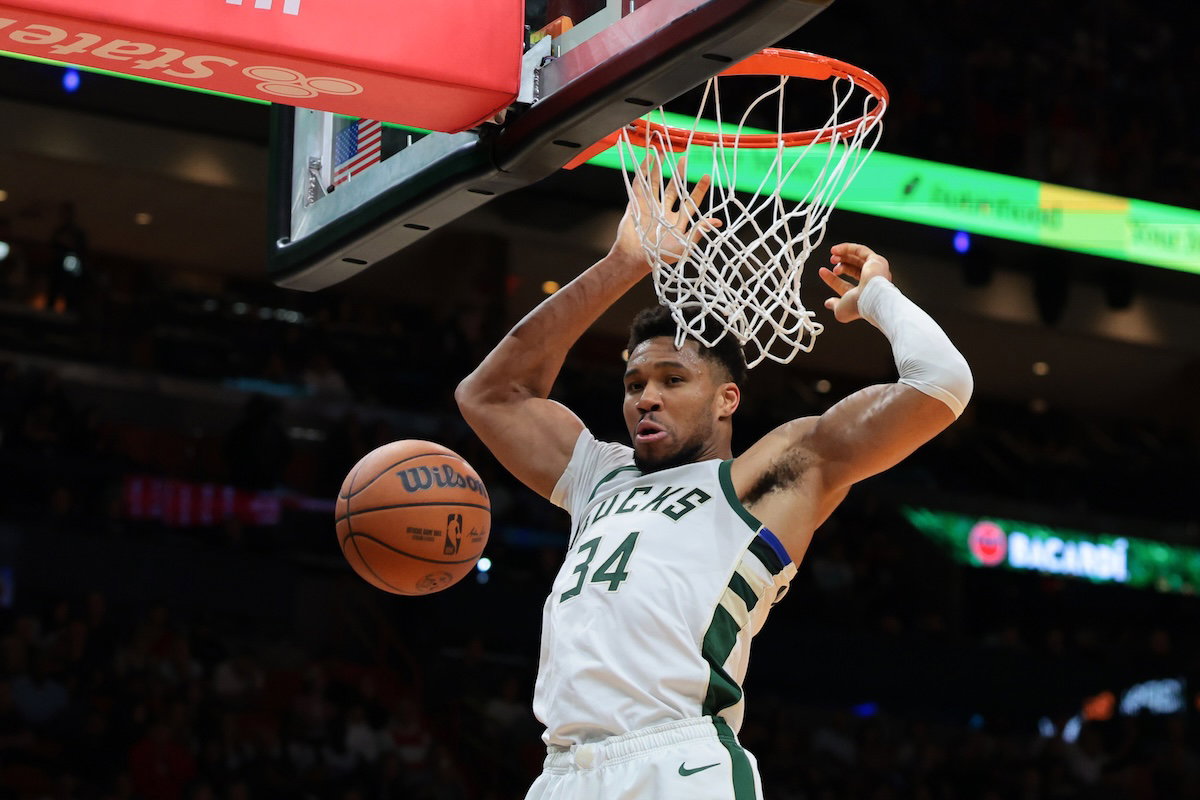
The Miami Heat finally got the superstar they have been chasing for years. On paper, adding Giannis Antetokounmpo should instantly vault them back into the championship conversation. But history has shown that landing the biggest name in a blockbuster trade is often the easy part. Building a title contender around that player is where the real work begins.
Watch What’s Trending Now!

BLOCKBUSTER: The Milwaukee Bucks are trading franchise icon Giannis Antetokounmpo and Bobby Portis to the Miami Heat for Tyler Herro, Kel'el Ware, Jaime Jaquez Jr., Kasparas Jakucionis, 3 first-round picks (including No. 13), 1 pick swap and 1 second-rounder, sources tell ESPN.

To be clear, Miami absolutely had to make this trade. The previous core had reached its ceiling, and opportunities to acquire a player of Antetokounmpo’s caliber rarely come around. Yet this is one of those rare franchise-altering moves that creates almost as many questions as it answers. The Heat got the star. Now comes the harder part: proving the roster around him is good enough to contend.
Will This Star Duo Fit Together
Heat fans have seen both sides of this equation before. The LeBron James-Dwyane Wade-Chris Bosh era eventually became a dynasty because all three stars adjusted their games to fit together, while more recent Miami teams often relied on talent over seamless offensive cohesion. Simply collecting stars is not enough. The challenge is figuring out whether those stars elevate one another or force compromises that make the team easier to defend.
One thing you need to win big is a synergistic fit between your marquee players. After some rough patches, Jalen Brunson and Karl-Anthony Towns learned to complement each other perfectly in their recent championship run. The same is true with Jayson Tatum and Jaylen Brown (more on how the Boston Celtics were affected by all this at a later time). Stephen Curry and Draymond Green were always a match made in Heaven, as was the case with Jamal Murray and Nikola Jokic.
I, for one, am a strong proponent of the theoretical fit between Antetokounmpo and his new co-star, Bam Adebayo. Both of those players (spoiler alert) cracked my 2025-26 player ranking top 20, and Adebayo’s skill set should amplify Antetokounmpo’s strengths, while masking his weaknesses.
In recent years, Antetokounmpo has been known to take his foot off the gas defensively during the regular season. Adebayo prides himself on being an elite defensive anchor (ranking in the 91st percentile in DEF EPM every year of his career, per Dunks & Threes) who can help quarterback the team through the 82-game portion of the schedule. Then, in the postseason, when Antetokounmpo is ready to rumble, the two can coalesce to form one of the deadliest defensive duos in the association (it’ll also be nice to have two Wemby stoppers on the roster). And with the increased physicality the game has seen over the last few years, it’ll come in handy to have two elite rebounders on the roster (both in the top five percentile in defensive rebounding rate).
Offensively, Antetokounmpo is at his best with a floor spacing five who can help open up the lane for his stampedes to the rim. Adebayo has slowly been evolving into a strong shooting center, with last season being his best volume 3-point season yet. After never attempting more than 3.1 threes per 75 possessions, Adebayo smashed his previous career-high, tallying 5.9 attempts per 75.
With that said, while it seems like Adebayo is turning the corner as a shooter, we’ve seen countless occasions where a player improves their regular season marksmanship only to fall back into old habits when teams dare them to double down on their growth in the postseason. Has Adebayo really improved enough to make people pay for not guarding him in the most high-leverage moments? That remains to be seen.
Who Is Going To Handle The Ball Down The Stretch?
To acquire Antetokounmpo, the Heat had to completely gut whatever depth they had. They especially took a hit in the perimeter creation category. Tyler Herro, Jaime Jaquez Jr., and Kasparas Jakucionis, for all their shortcomings and uncertainties, were guys who could don that mantle who will no longer be around. Antetokounmpo is a better offensive player than all of those guys, but even he needed Jrue Holiday and Khris Middleton to organize possessions in crunchtime situations down the stretch.
As it stands, the Heat’s best options to fill this role are Norman Powell (who they still need to re-sign, by the way) and Davion Mitchell. Powell is an excellent scorer (95th percentile scoring volume, 81st percentile scoring efficiency), but leaves a lot to be desired as a playmaker (12th percentile assist-to-turnover ratio, per Cleaning the Glass). Meanwhile, Mitchell is more of a game-manager than a game-changer.
The Heat have some room to add more to this roster, but it is hard to imagine that they can net a high-end creator at this stage of the game, especially after all the assets they just gave up to add Antetokounmpo.
Where Are The Role Players?
Along with having great chemistry between your stars, you also need to have depth. This usually comes in the form of young bulls who are willing to get their hands dirty and take on the ancillary duties needed to win big games (shooting, spacing, perimeter defense, rebounding, etc.).
Andrew Wiggins isn’t necessarily young (this year was his age-30 season), but he knows what it takes to be a three-and-D ace in a championship run. One could argue that he’ll be the third-most important player on the team this season. Mitchell is a born scrapper. The same can be said for someone like Dru Smith. Pelle Larsson has been a nice find for the Heat, but he hasn’t been the sharpshooter that he was in college (career 32.8% 3-point shooter since being drafted), and his defensive impact is only marginal.
I’ve always been weirdly fond of Simone Fontecchio (6’7 with a 6’11 wingspan) because he’s huge and can shoot the crap out of the ball (37.5% from three last year). He’ll be helpful if he comes back. Nikola Jovic and Bobby Portis (the other incoming piece of this deal) will give you some size and scoring off the bench. But what else can this Heat front office add to the mix before the start of the season?
It helps that Adebayo is willing and able to execute a lot of role player responsibilities. But what happens to this top-heavy unit if/when Antetokounmpo misses time during the regular season (he’s missed 15 or more games in four of the last five seasons)? In a league where you can’t pick up free wins against teams that are purposely trying to lose, do the Heat have enough to stay afloat?
Like I said, the Heat made the right call trading for Antetokounmpo. But they are far from riding off into the sunset of championship contention. For this gamble to truly pay off, they need the Antetokounmpo/Adebayo pairing to play out the way conventional wisdom says it should, secondary pieces to step up in a big way, a couple of home runs in free agency, and, of course, good injury luck. Even then, a deep playoff run isn’t guaranteed for this group (heck, they aren’t even guaranteed to host a playoff series).
Still, this deal automatically makes the Heat one of the most interesting teams to monitor heading into next season, which isn’t something we’ve been able to say since their Cinderella run in 2023.