
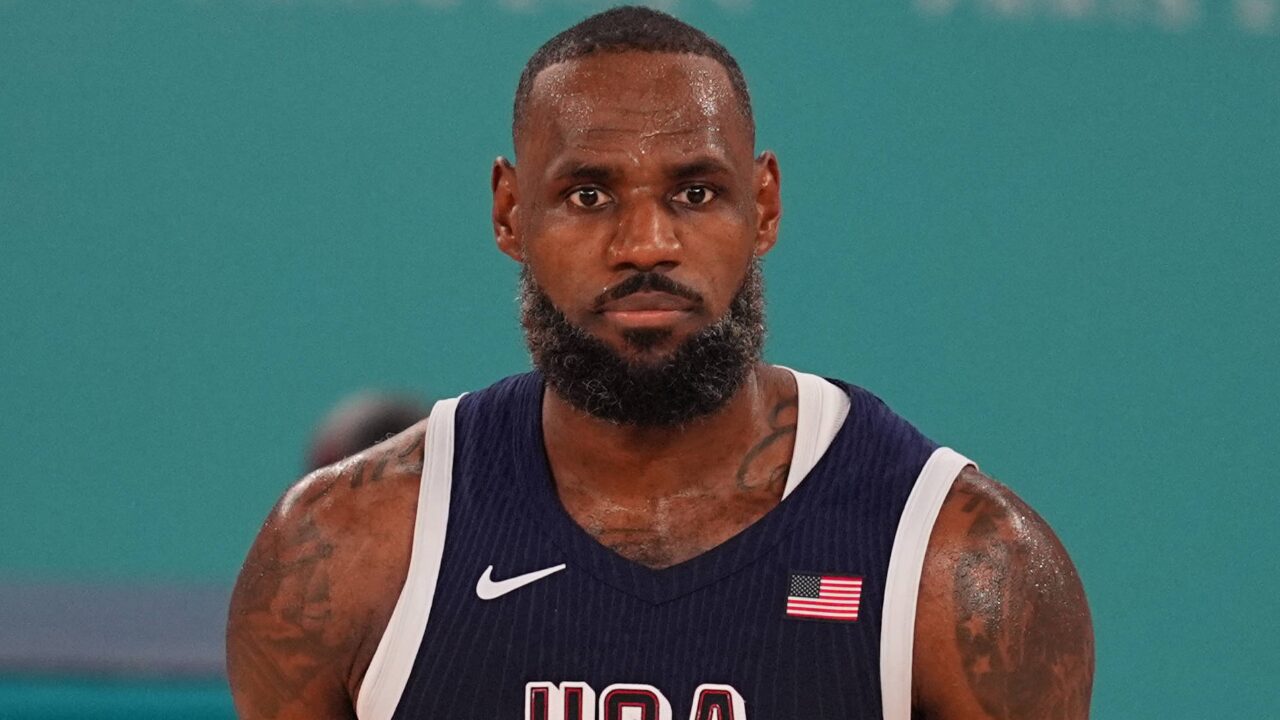
Adam Silver was ready to finish the 2026-27 schedule, but one decision was still in the way: LeBron James had yet to pick his next team. The NBA commissioner said he was waiting on James’ decision before finalizing the league’s national television schedule, with broadcast partners also having a say in the marquee slate. Philadelphia 76ers eventually got the answer.
Watch What’s Trending Now!
Almost overnight, the Sixers went from 14 national TV appearances last season to the league maximum of 34. Their new calendar also came with some very LeBron-sized stages: an opening-night meeting with the defending champion New York Knicks at Madison Square Garden and a Christmas Day return to Los Angeles to face the Lakers. That is where Monse Bolaños sees something more than the usual LeBron effect.
“Man, the favoritism is so real. It’s crazy. It seems: why is the NBA scared to let go of LeBron? I don’t know. ‘Cause that’s what it seems like, right?” Monse Bolaños said on The Odd Couple after examining the Sixers’ schedule. “Like they’re afraid that once he’s gone, that’s it. The league is not going to be what it is. And I don’t know why they feel like that, especially with what we saw even just last year with the NBA finals with the Spurs and the Knicks and how much people were into that NBA Finals.”
There is a reason that part of her argument lands. The New York Knicks and San Antonio Spurs gave the league a timely reminder of its appeal. Their 2026 NBA Finals drew 20.6 million viewers per game across five contests, making it the most-watched Finals since 1998. Game 5 alone averaged 24.5 million and peaked at 33 million. Neither LeBron nor the Lakers was involved.
That makes the timing of Bolaños’ criticism more interesting. The NBA had just watched Jalen Brunson and Victor Wembanyama drive the league to its biggest Finals audience in nearly three decades, yet Philadelphia was now being positioned for maximum exposure the moment LeBron arrived.
“Like, why are they scared to let go, to move on? It is part of life. And at this point, it makes no sense because you said it perfectly in our pre-show meeting that I don’t know how much LeBron brings in positive stuff to the league in the last couple of years,” Monse Bolaños added.
“Like, why are they scared to let go, to move on? It is part of life. And at this point, it makes no sense because you said it perfectly in our pre-show meeting that I don’t know how much LeBron brings in positive stuff to the league in the last couple of years,” Monse Bolaños added.
The schedule itself gives her something to point to, although calling it the NBA’s “easiest” schedule would go too far. Philadelphia’s workload is lighter than it was a year ago in a few key areas. The Sixers have 13 back-to-backs after playing 16 last season, when those 16 were tied for the league high. Their longest road trips are also five games, compared with two six-game trips on last year’s calendar. The early calendar is another part of the puzzle.
Philadelphia spends most of the opening stretch inside the Eastern Conference before its first Western Conference games arrive in late November, keeping the long-haul travel out of the first part of the season. The more substantial West Coast trip comes around Christmas, when the Sixers visit the Lakers before continuing on the road.
Those gaps can mean more recovery time, especially for a roster built around 41-year-old James and Joel Embiid. But there is an important distinction here: fewer back-to-backs and a more favorable travel pattern do not prove that the NBA designed the schedule to protect either star. There is no evidence that James asked for fewer back-to-backs or that Adam Silver specifically reduced Philadelphia’s workload for him.
What is much harder to dismiss is the change in the Sixers’ visibility. Philadelphia had 14 national-TV games in 2025-26. This season, it has 34, the maximum allowed, putting the Sixers alongside the Knicks, Lakers and Spurs as the league’s most heavily featured teams. Reuters reported before the schedule was released that Silver was waiting for James’ decision before finalizing the national slate.
And the marquee dates make the LeBron effect even clearer. His Philadelphia era opens at Madison Square Garden against the reigning champions, moves to a home opener against Cleveland and then sends him back to Los Angeles on Christmas Day. The NBA isn’t merely giving the Sixers more television time; it has built several of the season’s biggest storylines around James.
So Philadelphia gets plenty of spotlight without carrying quite the same compressed workload it did last season. That combination is what makes the schedule worth questioning. The evidence supports a clear LeBron effect on Philadelphia’s visibility and some real improvement in its rest profile. What it does not yet establish is the leap Bolaños is making: that the NBA deliberately softened the Sixers’ competitive path to appease James.