
Imago
Oct 25, 2025; Denver, Colorado, USA; Phoenix Suns forward Dillon Brooks (3) during the first half against the Denver Nuggets at Ball Arena. Mandatory Credit: Christopher Hanewinckel-Imagn Images
Imago
Oct 25, 2025; Denver, Colorado, USA; Phoenix Suns forward Dillon Brooks (3) during the first half against the Denver Nuggets at Ball Arena. Mandatory Credit: Christopher Hanewinckel-Imagn Images
,The final buzzer did not end the tension. Phoenix closed out a 106–102 win over Brooklyn, but the game’s most consequential moment may have come after the scoreboard stopped running. With emotions already high from a night filled with technical fouls, Dillon Brooks took his frustration public, and that decision now carries consequences beyond the box score.


The whistle was only the start. Brooks was assessed a technical foul during the game, his 15th of the season, leaving him one away from an automatic suspension. Afterward, he made it clear he believed the call was wrong and should be overturned.
Watch What’s Trending Now!
“Well, that’s getting rescinded,” Brooks told reporters. “The same foul that Curtis gave me before, and a month ago, I got rescinded. I’m gonna get rescinded again. I feel like that play wouldn’t have happened if they blew their whistle with the foul call.”
The play in question occurred late in the second quarter. With under 30 seconds remaining, Nets rookie Egor Demin appeared to grab Brooks before stumbling and falling. Officials did not initially call the foul and instead issued Brooks a technical. After review, the original foul was assessed.
Dillon Brooks was given a technical foul for this play…
His 15th tech this season, he is one away from suspension. pic.twitter.com/v2BkOI9gI1
— PHNX Suns (@PHNX_Suns) January 28, 2026
That sequence alone drew attention. It was not the only one Brooks referenced. “The first one with the groin, hitting the groin,” Brooks said, pointing to an earlier moment involving Michael Porter Jr. and Royce O’Neale. “Curtis is in the same spot. Why are we not reviewing that? Why is it not a foul? Why is there no call on the play?”
Brooks framed both moments as inconsistencies, not accidents. That framing matters.
Publicly questioning officiating decisions, especially by name, is something the NBA has historically punished regardless of intent. Even if Brooks believes his technical will be rescinded, his comments exist separately from the on-court ruling. The league has consistently drawn a line between disputing calls during play and criticizing officials afterward.
That precedent is already established this season. Earlier this month, Jaylen Brown was fined $35,000 for public comments criticizing officiating. Brooks’ remarks follow the same pattern. He questioned judgment, consistency, and communication, all on the record.
That places him squarely in 5-figure fine territory. The timing compounds the risk. With 15 technicals already on his ledger, Brooks cannot afford escalation. Any additional discipline, whether a fine or another technical, tightens the margin further.
At this stage, the league’s response becomes the next pressure point.
Dillon Brooks Calls Out How Referees Communicate and Who Gets Listened To
Rather than walking his comments back, Brooks widened the lens. According to him, officiating communication varies based on player status, not just circumstances.
“It’s great when you’re an All-Star,” Brooks said. “But when you’re not an All-Star, you get the bottom of the barrel. Maybe they need to go to a communication class or something like that.” He stopped short of accusing referees of bias. Still, the implication was clear. Brooks believes reputation determines who gets explanations and who does not.
He also acknowledged that he understands how reputation works. Brooks admitted it took him years to earn respect after entering the league. He has learned to play through it, even if that means accepting consequences.
For now, he is waiting on two decisions. Whether the technical foul is rescinded. And whether the league decides his words crossed the line.
Imago
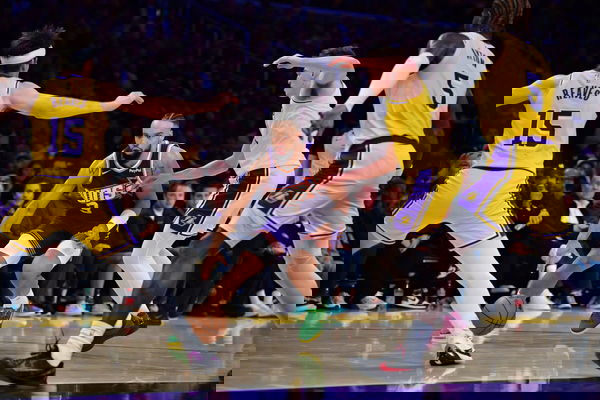
Dec 1, 2025; Los Angeles, California, USA; Phoenix Suns forward Dillon Brooks (3) moves to the basket against Los Angeles Lakers guard Austin Reaves (15) forward Dalton Knecht (4) and center Deandre Ayton (5) during the first half at Crypto.com Arena. Mandatory Credit: Gary A. Vasquez-Imagn Images
Brooks’ situation now sits with the NBA office. If the technical stands, he remains one away from suspension. If the comments are reviewed independently, a fine similar to Brown’s becomes a realistic outcome based on recent precedent.
Either way, the moment has already shifted from disagreement to discipline risk. Brooks made his case. The league now decides whether it becomes costly.
Written by

Edited by

Ved Vaze