
In the summer of 2014, Pat Connaughton was throwing fastballs that reportedly reached 96 mph for the Aberdeen IronBirds, a minor league team in the Baltimore Orioles’ system. The Orioles had selected him in the fourth round of the MLB Draft, offering the Notre Dame athlete a chance to pursue professional baseball.
Watch What’s Trending Now!
Connaughton signed with the Orioles for a $428,100 bonus, but basketball remained his first love. A year later, he was selected 41st overall in the 2015 NBA Draft, beginning a journey that would eventually take him to an NBA championship with Milwaukee.
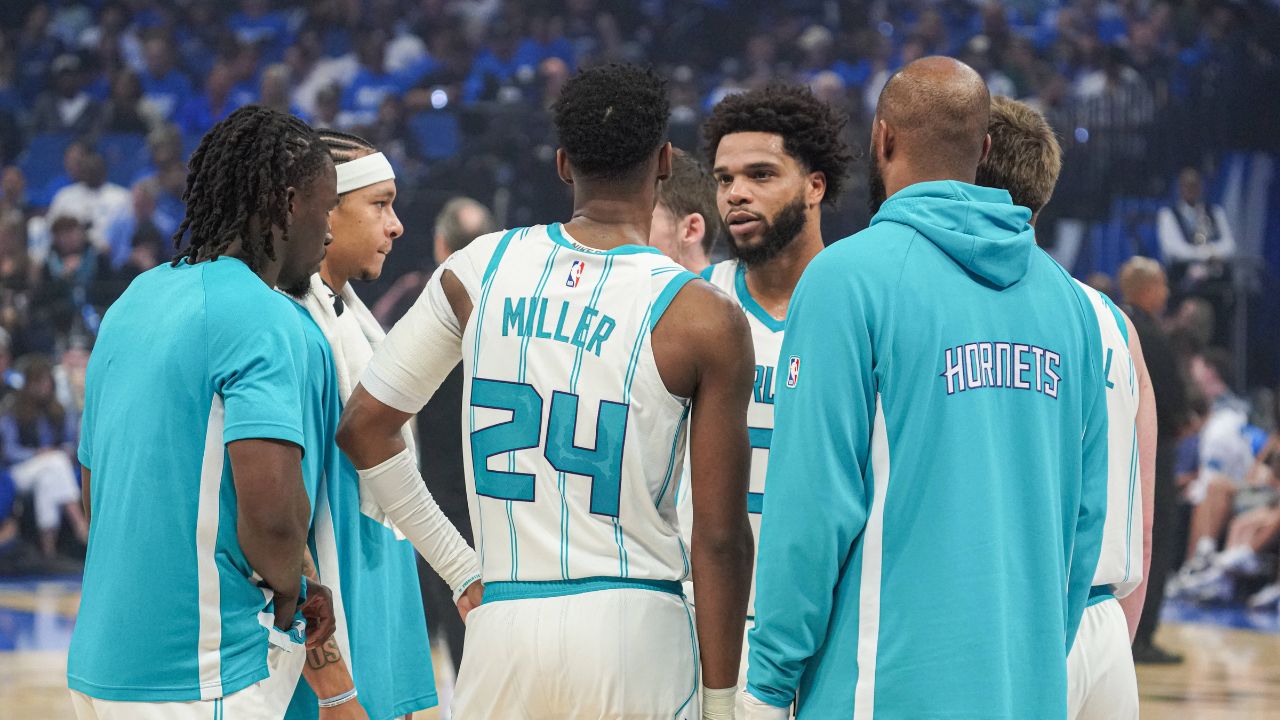
More than a decade later, the 33-year-old faces another uncertain chapter. The Charlotte Hornets have waived Connaughton ahead of the 2026–27 season, with his $3.8 million non-guaranteed contract making him the team’s most straightforward roster cut. His departure raises a familiar NBA question: when a team must choose between a veteran’s experience and its own financial and developmental priorities, how much does a championship résumé really count?
During Connaughton’s time in Charlotte, head coach Charles Lee had praised the veteran’s professionalism, saying, “He’s a true pro.”
Lee knew exactly what Connaughton could offer. The two were together in Milwaukee during the Bucks’ 2021 championship run, when Connaughton played all 23 postseason games and averaged 6.9 points and 4.4 rebounds.
A Championship Role That Changed Over Time
Connaughton’s value in Milwaukee went beyond his regular-season numbers. He became a dependable reserve who could defend, rebound, and knock down timely three-pointers, giving the Bucks another option when their rotation needed a boost.
His best years in Milwaukee showed how effective that role could be. In 2021–22, he averaged 9.9 points and 4.2 rebounds in 26 minutes per game, shooting 39.5% from three-point range. He had earned a regular place in the rotation after arriving in the league as a second-round pick.
The 2021 Finals offered a clear example of what he could contribute on the biggest stage. In Game 5 against Phoenix, Connaughton scored 14 points and grabbed six rebounds in 33 minutes, making four of his six three-point attempts as Milwaukee took a 3–2 series lead.
Those contributions helped the Bucks finish their championship run, and Connaughton became part of a group that knew how to win together. Five years later, however, his role in Charlotte had become far less certain.
The Numbers Tell a Different Story
Connaughton’s final season in Charlotte produced career-low scoring numbers. He averaged 2.6 points and 1.5 rebounds across 42 appearances, playing just 7.1 minutes per game without making a start.
Those figures suggest a player who had fallen out of the regular rotation. Yet his shooting numbers complicate the picture, because Connaughton converted 40.4% of his three-point attempts in 2025–26, a better rate than he recorded in several of his more productive Milwaukee seasons.
His effective field-goal percentage also reached 57.1%, reflecting the value of his shooting despite the limited workload. The difference was largely in opportunity: a player averaging seven minutes per game has far fewer chances to build a meaningful scoring total than one playing 20 or more.
That does not mean Charlotte made the wrong decision. Shooting percentages over limited attempts do not tell the whole story, and the team had to consider its full rotation rather than one statistical strength. But the numbers do suggest that Connaughton’s departure should not automatically be treated as evidence that he could no longer contribute on an NBA court.
The more important question is why Charlotte decided his remaining value was not worth keeping his contract on the roster.
The $3.8 Million Decision
The answer begins with Connaughton’s contract. His deal carried approximately $3.8 million for the 2026–27 season, but the salary was non-guaranteed, giving Charlotte a relatively straightforward way to clear a roster spot without taking on the same financial commitment it would face with a guaranteed contract.
With the league requiring teams to reduce their standard-contract rosters to 15 players ahead of opening night, Charlotte had to make a final decision. Connaughton was reportedly the only player on the roster with a non-guaranteed standard contract, making his release the most direct option.
That distinction matters because roster decisions are not based solely on who can play basketball. Teams must weigh guaranteed salaries, future development, available minutes, and the flexibility to make further moves during the season.
Waiving Connaughton allowed Charlotte to avoid guaranteeing his salary while keeping its other roster commitments intact. There is no publicly established evidence that a locker-room issue or a personal disagreement drove the decision, so his release should not be framed as a breakdown in relationships.
Instead, the move illustrates how quickly the business side of the NBA can outweigh a player’s past achievements. Connaughton had been part of a championship team and was still respected for his professionalism, but his contract offered Charlotte a practical solution to its roster crunch.
Why Tidjane Salaün Matters
The roster decision also highlights Charlotte’s investment in younger players, particularly Tidjane Salaün. The 21-year-old French forward was selected sixth overall in the 2024 NBA Draft and remains a developmental prospect the Hornets have reason to evaluate.
President of Basketball Operations Jeff Peterson made that commitment clear when discussing Salaün’s progress at the team’s 2026 Media Day.
“Tidjane, he’s another guy who continues to get stronger in the weight room. The guy works his butt off on the court as well. He loves it. He is a sponge, he’s trying to learn.”
Peterson also stressed that Salaün would have to earn his opportunities rather than receive minutes simply because of his draft position.
“He’s excited to go out there and try to earn minutes this season. He knows that it’s a big season for him, and excited to see him play.”
Keeping Salaün gives Charlotte another opportunity to assess a young player whose long-term ceiling remains uncertain. Connaughton, meanwhile, was a known quantity with limited playing time and a contract that offered the team an easy way to reach its roster limit.
The comparison is not a direct one. Salaün is a forward, while Connaughton has primarily played as a guard and wing, so they do not offer identical skills or compete for precisely the same role on the floor.
Still, their contrasting situations reflect the choices facing Charlotte. A veteran can provide experience and a dependable professional presence, but a young first-round pick offers the possibility of future development. With limited roster places available, the team chose to preserve the latter.
A Difficult Opening for Charlotte?
Connaughton’s departure comes as Charlotte prepares for its season opener against the Brooklyn Nets on October 21. The Hornets have also been managing availability concerns involving players expected to play important roles in their rotation.
Coby White missed the preseason while dealing with a left calf strain, leaving uncertainty around his availability for opening night. Kon Knueppel also managed a hamstring issue, creating further questions about Charlotte’s options if its regular rotation is not fully available.
Those concerns make the decision to part with a veteran guard worth examining, but they do not automatically mean the Hornets made a mistake. Connaughton averaged just 7.1 minutes per game last season, suggesting he was unlikely to be a major part of the rotation even before the final roster decision.
Dennis Schröder and rookie Christian Anderson Jr. could have larger responsibilities if White is unavailable, while Charlotte will need its available wings to provide shooting and defensive support. The effectiveness of those options will depend on their ability to handle real regular-season minutes rather than simply their preseason performances.
The Hornets’ challenge is to get through the opening stretch without allowing injuries to expose weaknesses in their depth. Whether Connaughton would have made a meaningful difference is difficult to establish, but his experience would have offered another option if the backcourt became stretched.
What Comes Next for Connaughton?
The Hornets waived Connaughton on October 16, leaving him subject to the NBA’s waiver process. Whether he becomes a free agent or is claimed by another team will determine his next step, and no confirmed deal with another team has been established.
His 40.4% three-point shooting last season provides a potential selling point for teams looking for a reserve who can space the floor. His championship experience and reputation as a professional teammate could also help, particularly for a team seeking depth late in its rotation.
The challenge is finding a roster spot where those strengths translate into a meaningful role. Connaughton’s limited minutes in Charlotte show that experience alone cannot guarantee playing time, and teams considering him will have to decide whether his shooting and versatility meet their needs.
His release does not necessarily mark the end of his NBA career, but it does leave him facing another fight to earn a place in the league. The next opportunity may depend less on his championship history than on whether a team sees a specific role he can fill.
For Charlotte, the decision was a matter of roster construction and financial flexibility. For Connaughton, it is another crossroads in a career that began with a choice between two professional sports.
He once turned away from a future in baseball to prove he belonged in the NBA. Now, after reaching the sport’s highest level with Milwaukee, he must find another team willing to give him a chance to contribute.